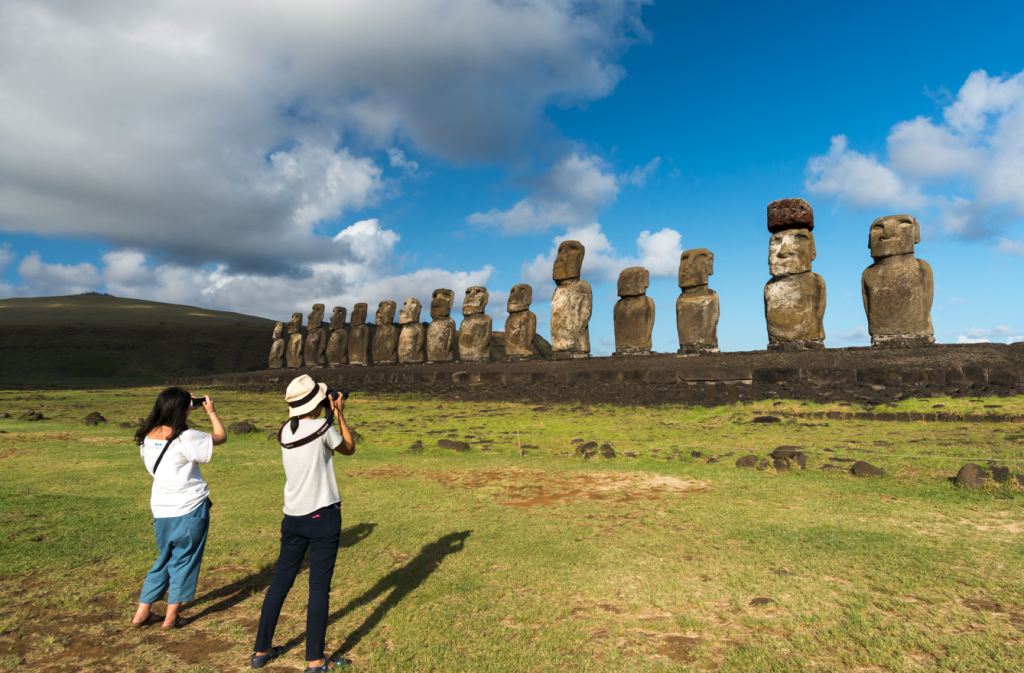

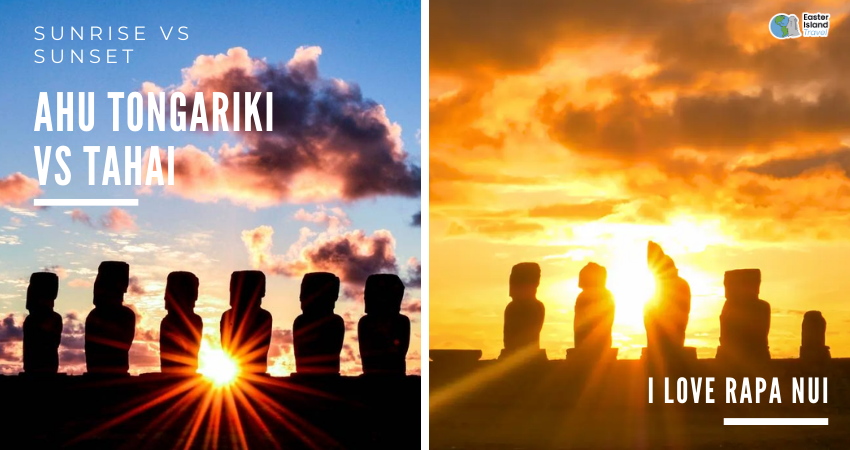
When planning a trip to Rapa Nui – Easter Island, one of the most common questions travelers ask is: Where can you see the best sunrise or sunset in Rapa Nui?
The island offers many scenic viewpoints, but two experiences stand out for their visual impact, archaeological importance, and landscape coherence: the sunrise at Ahu Tongariki and the sunset at Tahai.
Both are considered among the best places to watch the sun in Rapa Nui. However, the experience changes significantly depending on the time of day and the site you choose.
Understanding these differences helps visitors make an informed decision and fully appreciate their time on the island.
Sunrise at Tongariki: The Best Sunrise in Easter Island
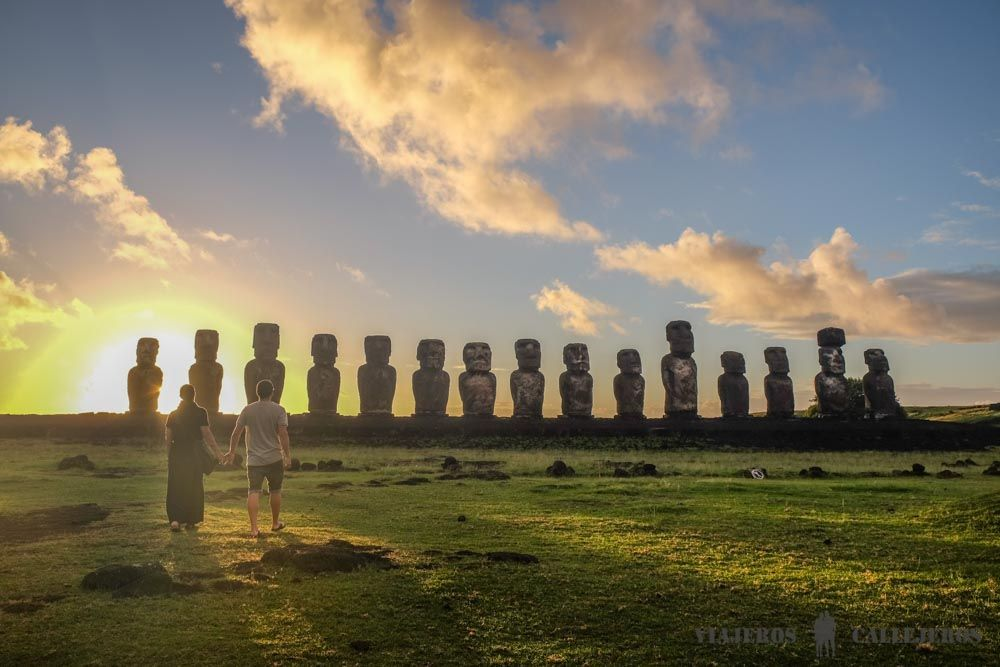
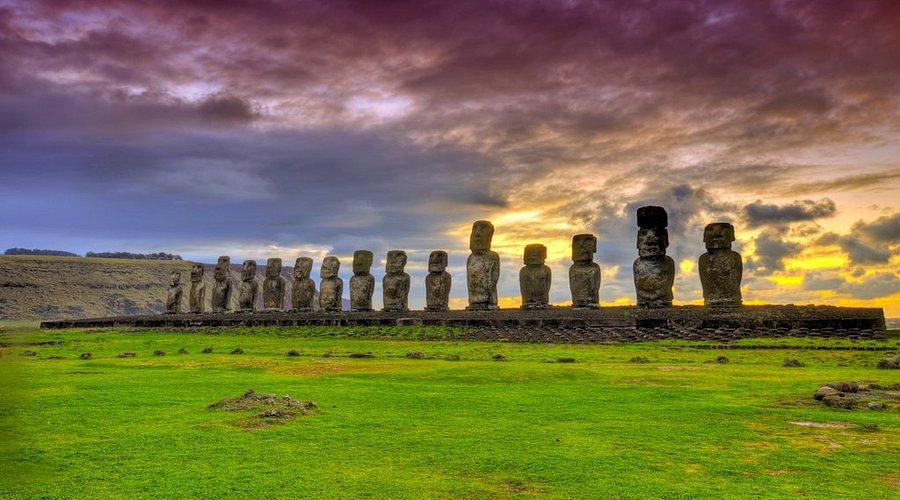
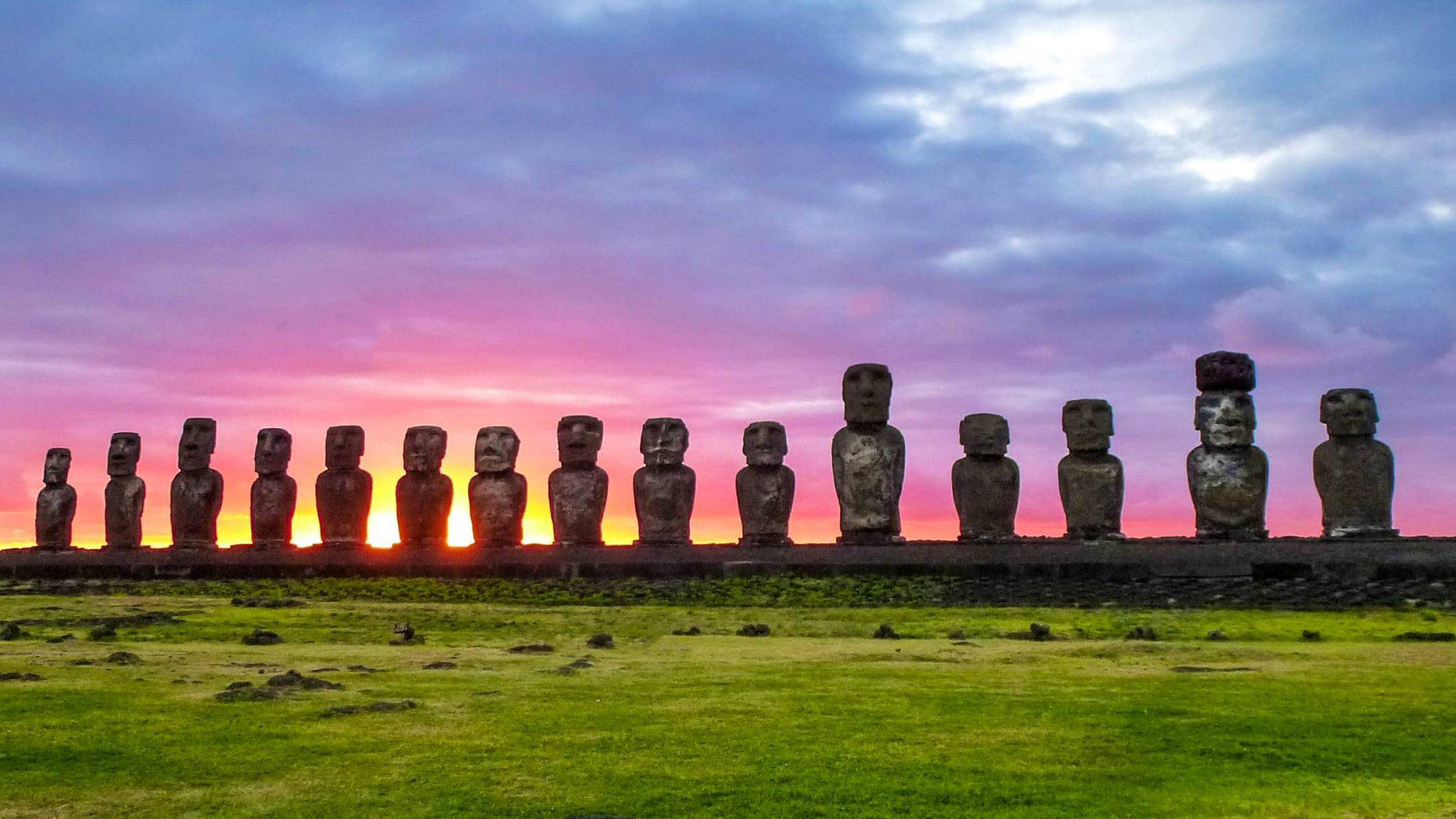
For many visitors, the sunrise at Tongariki is the most iconic image of Easter Island.
Located on the island’s eastern coast, Ahu Tongariki is the largest ceremonial platform (ahu) in Rapa Nui. It features 15 moai aligned on a restored stone structure. These monumental sculptures represent high-ranking ancestors and, like most moai, they face inland, not toward the ocean.
Why is Tongariki the best place to watch the sunrise in Rapa Nui?
The answer lies in its geographical orientation.
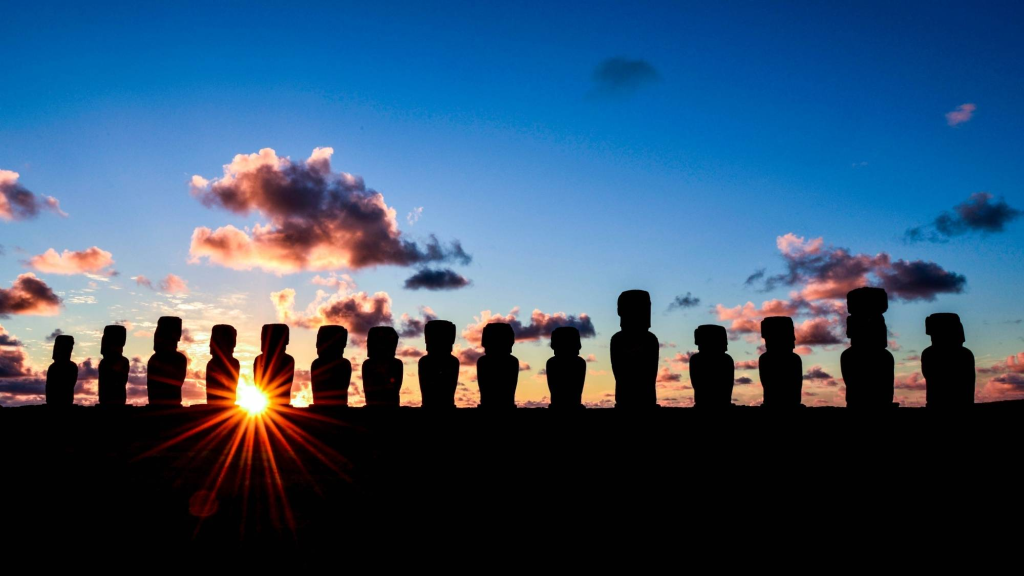
Because Tongariki faces east, the sun rises directly from the ocean horizon behind the moai. During the first moments of daylight:
- The figures appear in silhouette.
- The sky shifts gradually from deep blue to golden tones.
- The light slowly reveals the carved details of the volcanic stone.
From a photography perspective, it offers dramatic contrast and a naturally balanced composition. From a cultural perspective, the experience deepens when one understands that the moai symbolized protection and ancestral presence for their communities.
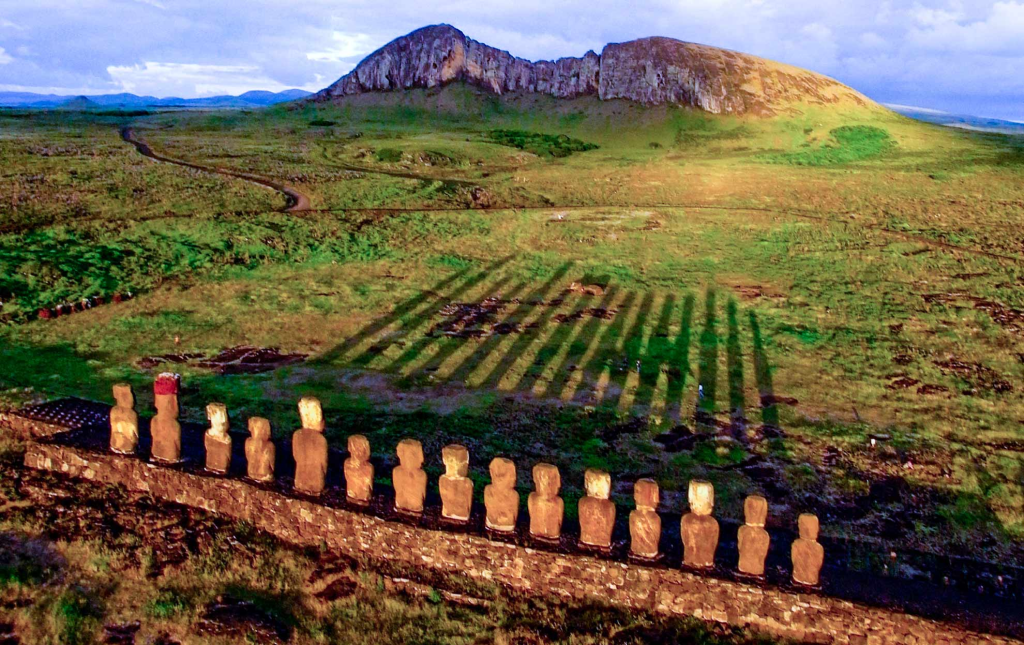
Tongariki is also located near Rano Raraku, the quarry where most of the island’s moai were carved. This proximity reinforces the historical significance of the area: visitors are not simply observing a scenic sunrise, but standing within a landscape that reflects complex social organization, engineering skill, and spiritual worldview.
Practical considerations
- Departure from Hanga Roa is required early in the morning (approximately 25–30 minutes by vehicle).
- Weather conditions should be checked in advance, as wind can vary.
- The atmosphere is generally quieter and less crowded than sunset locations.
For travelers searching for the best sunrise in Easter Island, Tongariki is the most consistent and visually powerful option.
Sunset at Tahai: Where to Watch the Best Sunset in Rapa Nui
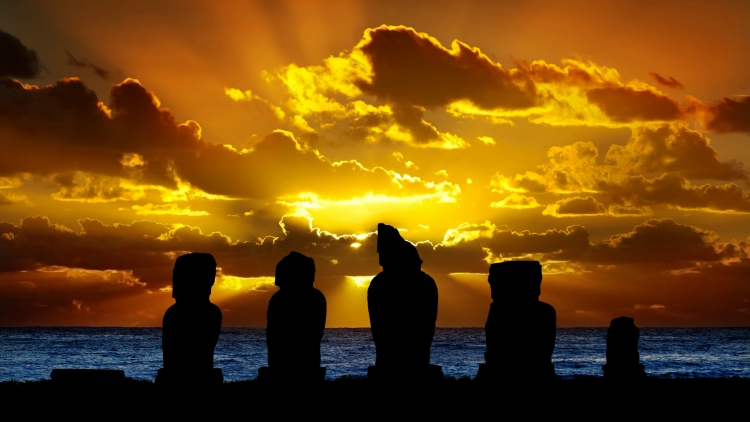
If the question is where to watch the sunset in Rapa Nui, the most reliable answer is Tahai.
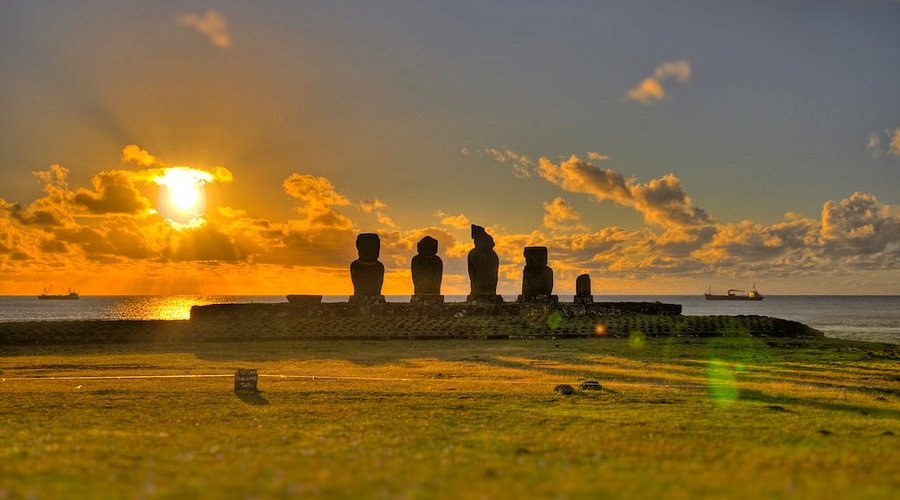
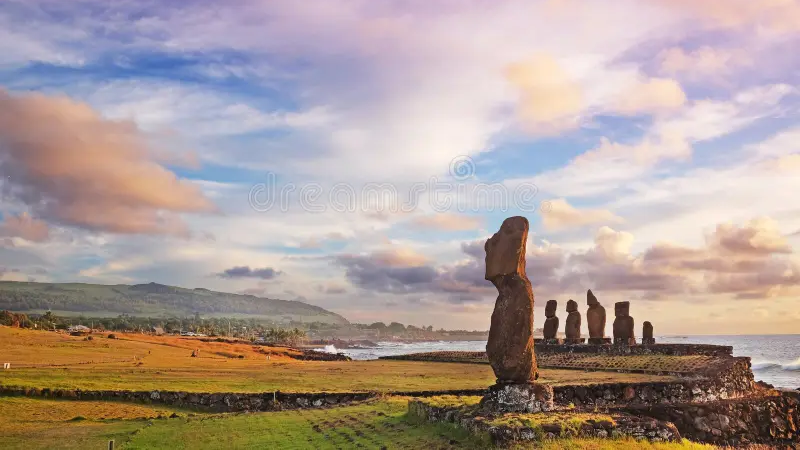
Located just minutes from Hanga Roa, Tahai is a ceremonial complex with easy access and western orientation, making it the island’s most popular sunset viewpoint.
The complex includes several restored ahu, among them Ahu Ko Te Riku, known for its reconstructed moai with restored coral eyes, offering a clearer idea of how these sculptures originally appeared.
What makes the sunset at Tahai special?
Unlike Tongariki, here the sun sets directly in front of the complex, descending over the Pacific Ocean. This creates:
- Skies in orange, pink, and deep red tones.
- Defined silhouettes of the moai against the horizon.
- Warm reflections across the ocean surface.
The environment is typically more social and relaxed. Travelers and residents gather to close the day in an open and accessible space. No early wake-up or long drive is required.
From a historical perspective, Tahai was an important residential and ceremonial area. Its restoration during the 20th century played a crucial role in preserving the island’s archaeological heritage. The site also includes the tomb of American archaeologist William Mulloy, who dedicated much of his life to the conservation of Rapa Nui’s cultural legacy.
For those prioritizing accessibility, comfort, and vibrant colors, Tahai is widely considered the best sunset location in Easter Island.
Key Differences: Experience, Logistics, and Atmosphere
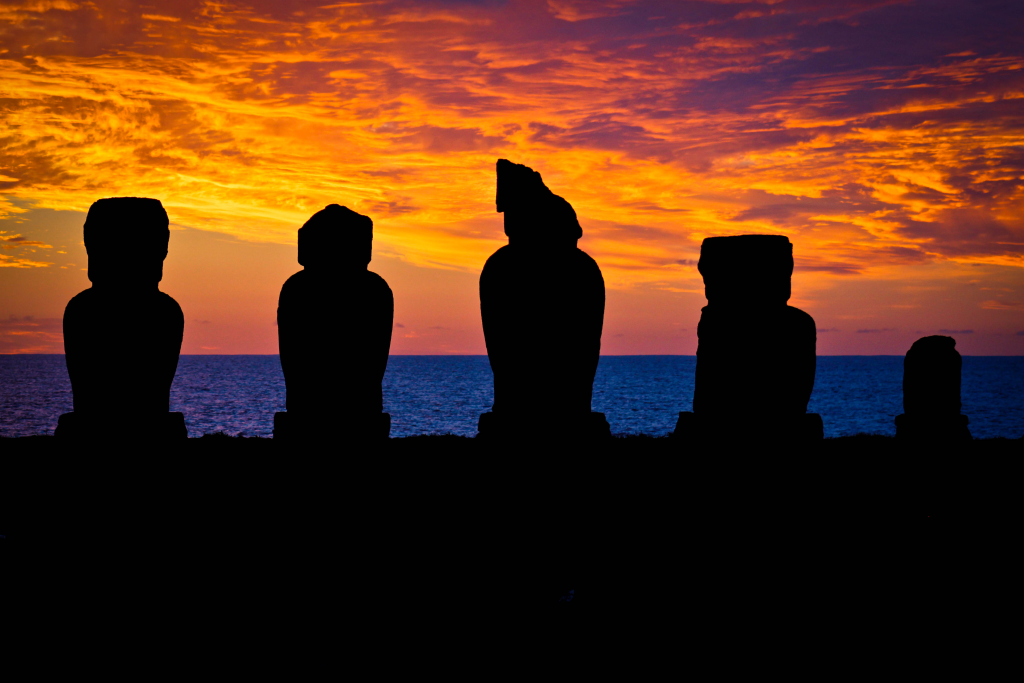
Although both sunrise and sunset revolve around the same natural phenomenon (the movement of the sun) the experience differs considerably.
Sunrise at Tongariki
- The sun rises behind the moai.
- Light transitions are gradual and soft.
- The setting feels expansive and monumental.
- Requires early planning and transportation.
Sunset at Tahai
- The sun sets in front of the moai.
- Colors tend to be more intense and saturated.
- Easy access from Hanga Roa.
- Atmosphere is more relaxed and communal.
The decision is not about which is “more beautiful,” but about what type of experience the traveler is seeking.
Sunrise offers scale, silence, and a sense of beginning.
Sunset provides visual drama, accessibility, and a contemplative end to the day.
Beyond the View: Understanding the Cultural Context
Rapa Nui was a society deeply connected to its natural environment. While not every ahu is precisely aligned astronomically, the relationship between orientation, territory, and symbolism is evident throughout the island.
The moai do not face the sea; they face inland. This was not an aesthetic decision but a cultural one. They represented ancestors who watched over and protected their people.
Observing how light interacts with them (whether rising behind or disappearing in front) also means observing how landscape and memory intersect.
When this context is understood, the experience shifts. Visitors move beyond searching for the perfect photograph and begin interpreting the site.
Which One Should You Choose?
The choice ultimately depends on the traveler’s profile.
Those who value silence, soft morning light, and a sense of vastness often prefer the sunrise at Tongariki.
Those who favor convenience, vibrant skies, and an easily accessible location often choose the sunset at Tahai.
In a well-planned itinerary, however, both moments complement each other. They do not compete; they reveal different dimensions of the same cultural landscape.
In Rapa Nui, the sun does more than illuminate stone. It reveals history, orientation, and memory.
And whether at sunrise or sunset, the experience is rarely forgotten.