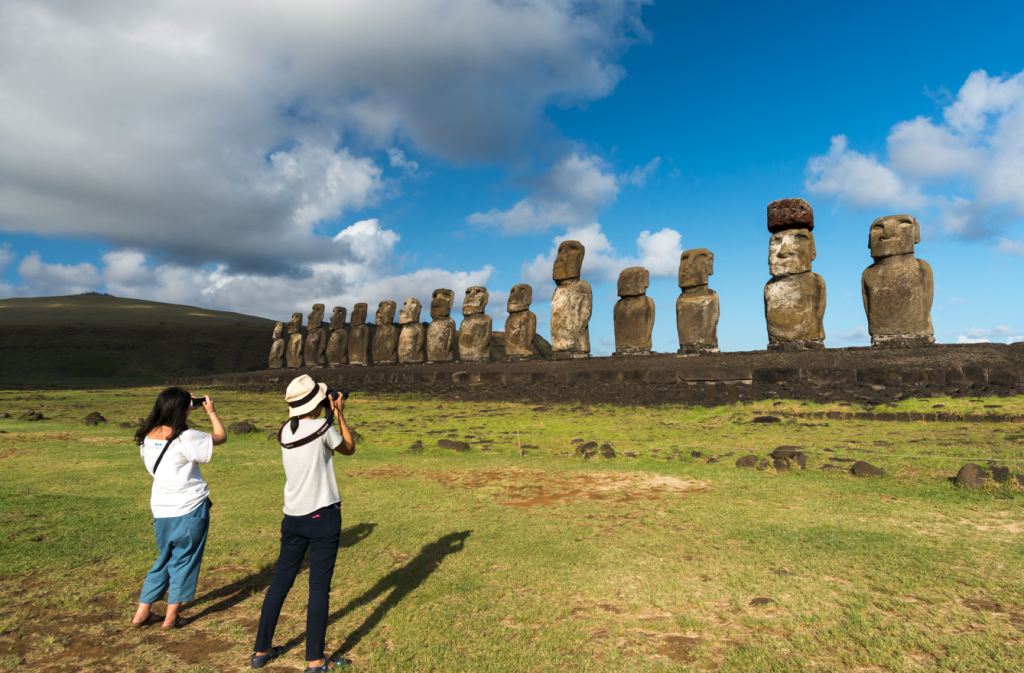

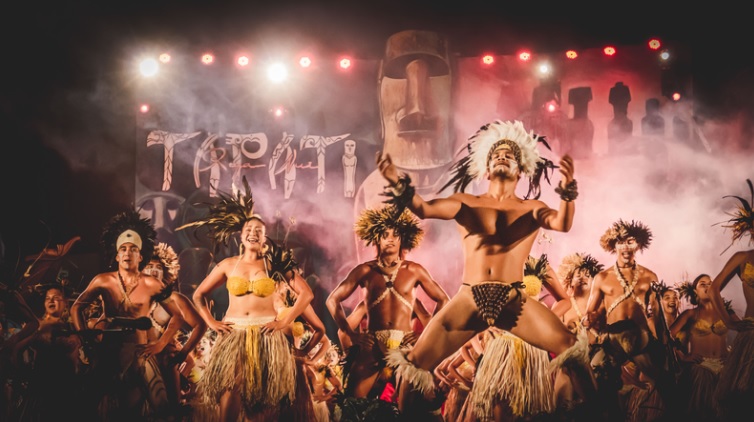
Every February, Rapa Nui comes alive with one of the most important cultural celebrations in Polynesia: Tapati Rapa Nui. For visitors, it is much more than a festival—it is a unique opportunity to witness ancestral traditions, physical strength, competition, and deep cultural pride.
Among the most impressive aspects of Tapati are its traditional extreme sports: physical challenges whose origins go back hundreds of years. These competitions were not created for entertainment, but as ritual expressions of survival, identity, and honor.
Although Easter Island Travel does not organize or participate in the Tapati competitions, our local guides play a key role in helping visitors understand where these traditions come from, how they were practiced in the past, and how they connect to the archaeological sites visited during our tours.
This article will help you understand:
- What the Tapati extreme sports are
- Where and why they originated
- How you can learn their history while exploring Rapa Nui with expert local guides
What Is Tapati Rapa Nui?
Tapati Rapa Nui is an annual cultural festival that celebrates the identity, history, and ancestral knowledge of Rapa Nui. It brings together families, clans, and visitors to honor traditions passed down through generations.
Originally, Tapati competitions were closely linked to:
- Physical endurance
- Survival skills
- Tribal prestige
- Spiritual beliefs
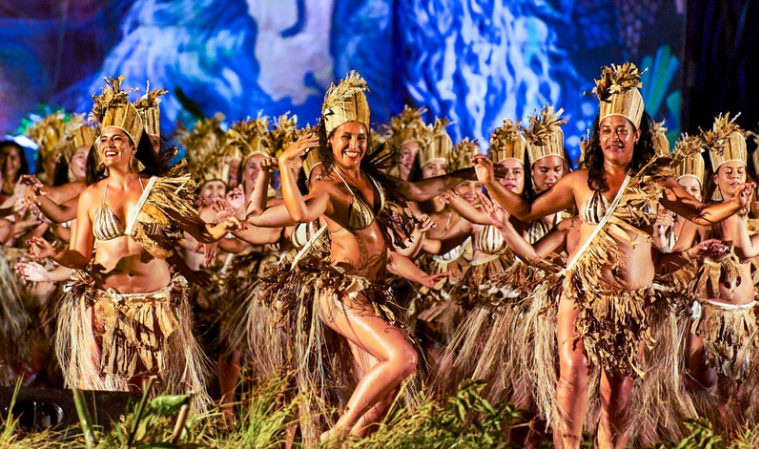
Many of today’s “extreme sports” were once tests of strength, courage, and skill that defined leadership and respect within ancient Rapa Nui society.
Traditional Extreme Sports of Tapati
Haka Pei: Ancestral Bravery at Its Most Extreme
Haka Pei is without a doubt one of the most iconic, spectacular, and anticipated competitions of Tapati Rapa Nui. This ancestral sport combines adrenaline, tradition, and courage, and represents one of the most intense expressions of Rapa Nui culture.
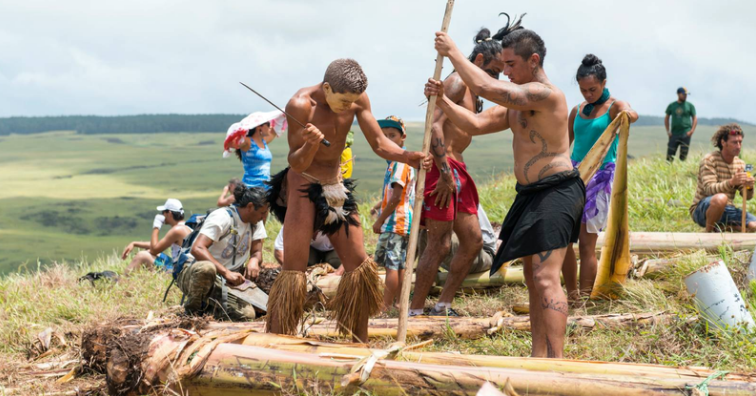
During the competition, young participants race down the steep slope of Maunga Pu‘i volcano, sliding on a handmade sled (pe‘i) made of bound banana tree trunks. They reach impressive speeds—sometimes exceeding 80 km/h (50 mph)—with minimal protection, challenging gravity, wind, and their own physical limits.
More than an extreme sport, Haka Pei has deep ritual origins. In ancient times, it formed part of initiation rites in which young men demonstrated bravery, strength, and physical readiness to take on roles within the community. Today, competitors descend wearing hami (traditional loincloths) and takona (ancestral body paint), reinforcing the connection between past and present.
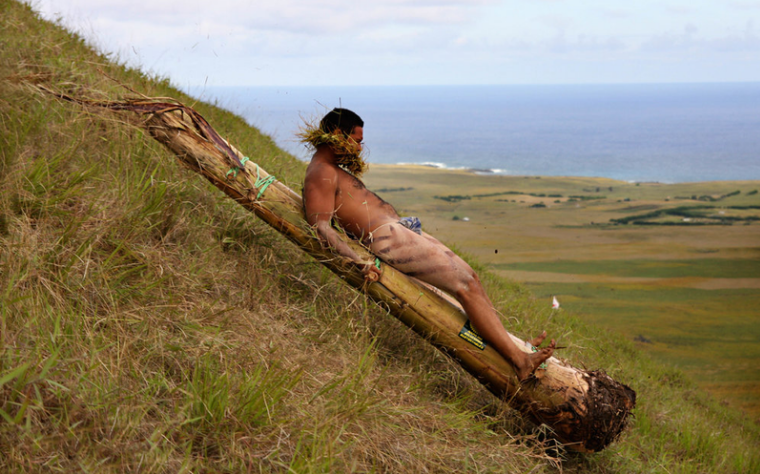
The goal is to travel the greatest possible distance during the descent, turning Haka Pei into a powerful mix of risk, celebration, and cultural pride—and the most thrilling event of the festival.
📍 Cultural context during our tours:
Although Haka Pei only takes place during Tapati, our local guides explain its historical roots and social meaning while visiting ceremonial sites and ancient villages. These places help visitors understand how physical endurance, competition, and honor played a central role in ancestral Rapa Nui society.
Hoe Vaka: The Ancestral Seafaring Spirit of Rapa Nui
The He’a’ati hoe vaka, is one of the most visual and symbolic competitions of Tapati Rapa Nui. This event revives the deep connection between the Rapa Nui people and the ocean, reminding us that navigation skills were essential for survival, fishing, and exploration over centuries.
During Tapati, teams of six paddlers—men and women competing separately—race traditional outrigger canoes (vaka ‘ama) over distances of 3 to 5 kilometers in the waters of Hanga Roa, facing waves, wind, and physical endurance. Individual Vaka V1 races also take place, highlighting personal skill and technique.
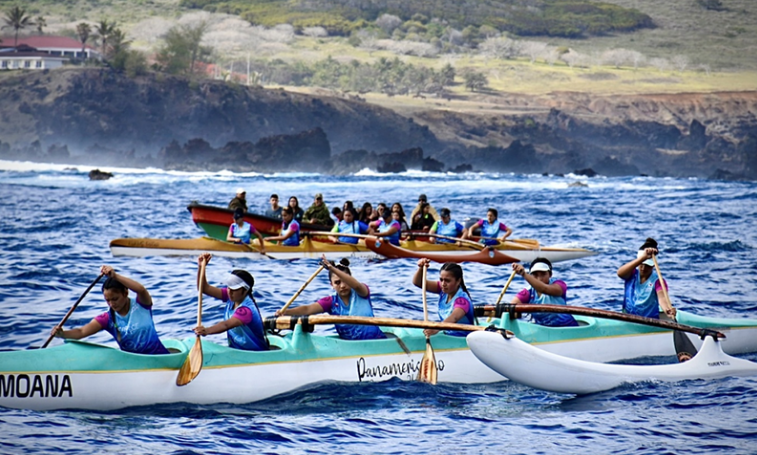
More than a race, Vaka Ama represents:
- Polynesian navigation knowledge passed down through generations
- Teamwork, coordination, and discipline
- Deep respect for the ocean as a source of life and spiritual connection
📍 Cultural connection through island tours:
While our tours do not include water sports, local guides explain the importance of Rapa Nui maritime culture when visiting coastal ceremonial sites such as Anakena or Tahai, where ancient villages were strategically located with direct access to the sea. These places help visitors understand how the ocean shaped daily, spiritual, and economic life on the island.
Tau’a Rapa Nui: Strength, Endurance, and Ancestral Tradition
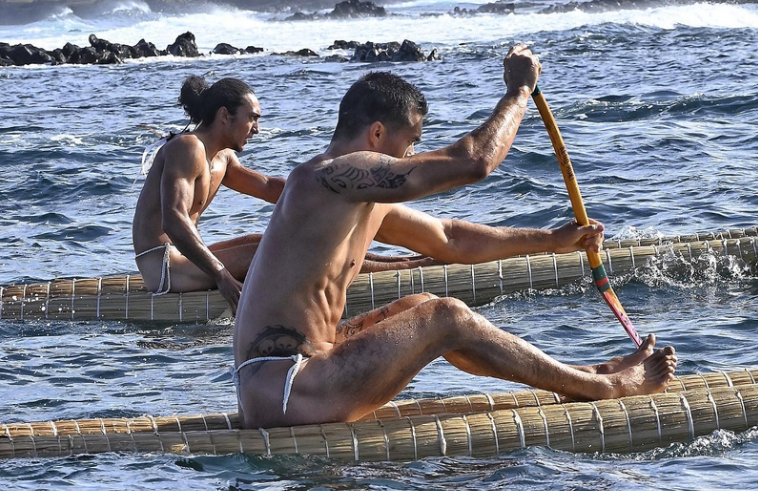
Tau’a Rapa Nui is one of the most demanding and emblematic competitions of Tapati Rapa Nui, inspired by the physical abilities and competitive spirit of ancient island society. This traditional challenge tests strength, endurance, and cultural connection through an intense ancestral triathlon.
The competition combines paddling a totora reed boat (vaka ama) from the ocean to shore, a demanding foot race carrying heavy banana bunches (aka venga), and open-water swimming using totora reed floats (pora), just as ancient Rapa Nui people once did. Each stage symbolizes the relationship between the people, the sea, the land, and communal physical labor.
📍 Where its story is understood:
During Tapati and while visiting archaeological sites, ancient villages, and ceremonial areas, local guides explain the cultural meaning of Tau’a, its modern incorporation into the festival, and how these challenges reflect ancestral values such as endurance, discipline, and pride of belonging.
Ā’ati Hoi: Tradition, Skill, and Speed
Ā’ati Hoi is one of the most exciting and anticipated competitions of Tapati Rapa Nui, where local riders demonstrate skill, control, and a strong bond with their horses in thrilling races full of energy and emotion.
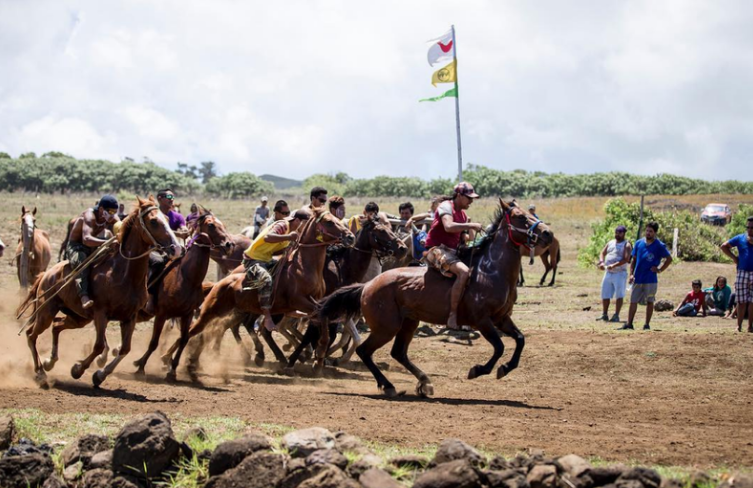
Although horses arrived on the island after European contact, they became deeply integrated into local culture and are now an essential part of Tapati traditions. Ā’ati Hoi tests not only speed, but also the rider’s mastery of terrain, balance, and connection with the animal—reflecting discipline, courage, and community pride.
📍 Understanding its cultural evolution:
During Tapati and throughout our island tours, local guides explain how Ā’ati Hoi represents the evolution of Rapa Nui culture—integrating later influences while preserving ancestral identity. This balance between tradition and adaptation is what makes Tapati a living, evolving cultural expression.
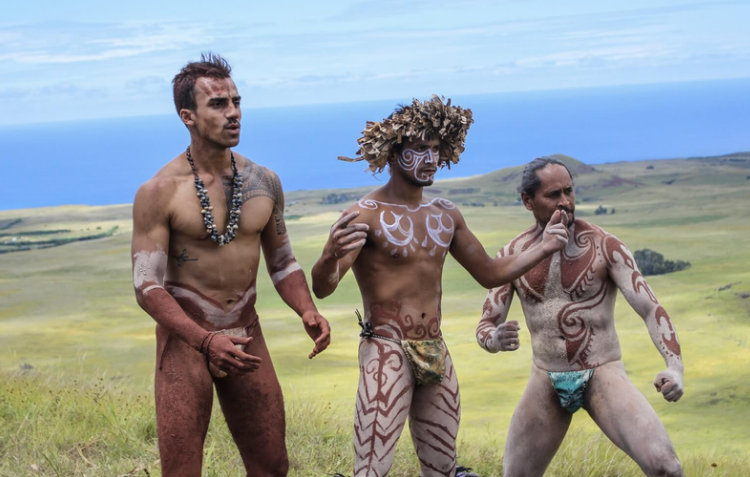
One of the most powerful aspects of Tapati is that these traditions are inseparable from the land itself. The competitions are not random—they take place in areas historically connected to survival, leadership, and ceremony. This is where cultural tours become essential.
How Tour A Helps You Understand Tapati Traditions
Tour A is designed as a cultural and archaeological introduction to Rapa Nui, ideal for first-time visitors—especially during Tapati season.
Although the tour does not include Tapati events, it visits key locations where guides explain the origins and meaning behind these extreme sports.
Key sites visited on Tour A:
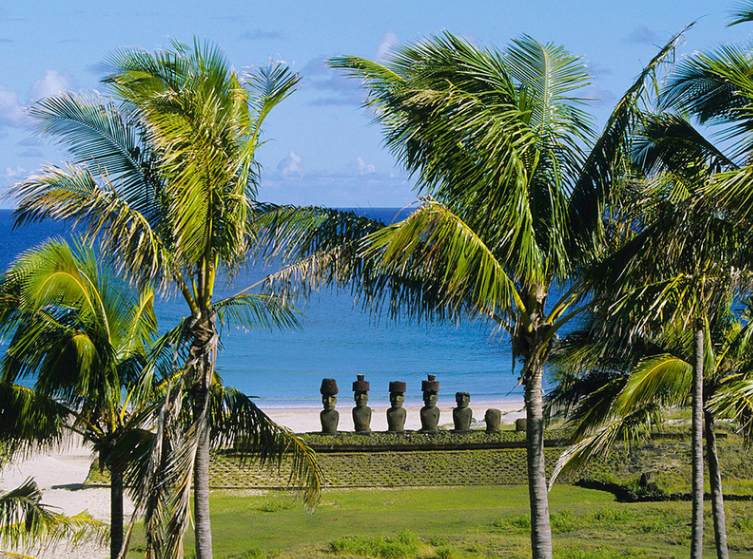
- Anakena: Once the capital of ancient Rapa Nui society, representing origins, leadership, and settlement. Guides explain how physical strength and competition were essential for survival and status.
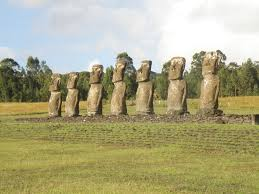
- Ahu Akivi: The only moai facing the ocean, symbolizing exploration and balance. Guides often connect this site to navigation skills reflected in Hoe Vaka.
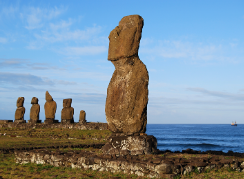
- Tahai: An ancient village complex where daily life, training, and ceremony coexisted, helping visitors understand how endurance and discipline shaped everyday life.
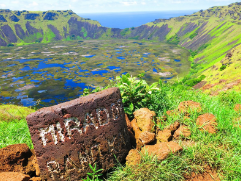
- Rano Kau and Orongo: Perhaps the strongest connection to Tapati traditions. Orongo was the ceremonial village of the Birdman Competition (Tangata Manu), one of the most demanding ancestral challenges, requiring physical endurance, strategy, and spiritual preparation. Guides explain how modern Tapati competitions preserve these same values of strength, courage, and honor.
Why Local Guides Make the Difference in Rapa Nui
Watching Tapati competitions is undoubtedly powerful—the energy, colors, strength, and emotion are felt everywhere. But understanding what you are seeing—its origins, meaning, and cultural context—is what truly transforms the experience.
That is where local Rapa Nui guides make all the difference.
They do more than share historical facts. They pass on oral history transmitted through generations—stories not always found in books or signs, but still alive within the community. Through them, each competition, dance, or ritual gains depth and meaning, connecting past and present.
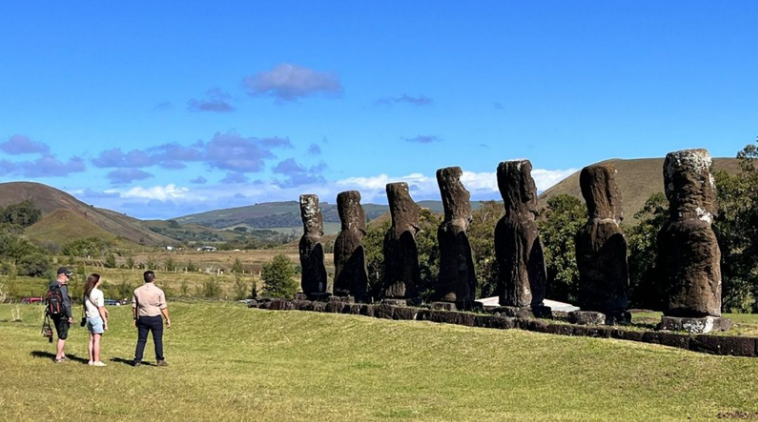
Local guides also help distinguish between ancestral traditions and modern adaptations, allowing visitors to appreciate Tapati with respect and understanding rather than surface-level interpretation.
For travelers seeking authentic, conscious, and culturally respectful experiences, exploring the island with local guides is essential. At Easter Island Travel, our private tours prioritize this approach: small groups, personalized pacing, and expert guidance that turns each journey into a meaningful experience—not just a sightseeing trip.
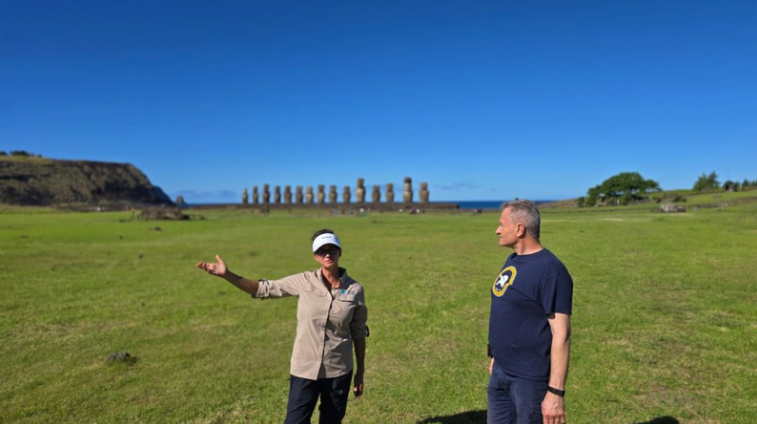
Because in Rapa Nui, visiting places matters—but understanding their history and people is what makes the journey unforgettable.
Visiting Rapa Nui During Tapati: What You Should Know
Traveling to Rapa Nui during Tapati is a unique experience filled with celebration, living culture, and strong community participation. To enjoy it fully, planning ahead is essential.
Tapati is the island’s most important cultural event, and visitor numbers increase significantly. Hotels, restaurants, and tours often fill up quickly, especially private and customized experiences.
To help you plan, we provide a digital PDF schedule with the days, times, and types of Tapati activities. This is a useful guide for coordinating your tours with the main festival events.
However, Tapati is a living and dynamic celebration. Event schedules may change due to weather conditions or organizational decisions. For this reason, we always recommend following the official Tapati channels for real-time updates:
During the festival period, the cultural and archaeological sites of Rapa Nui National Parkremain open and accessible, allowing visitors to explore the island’s history beyond the competitions.
Starting your trip with a cultural tour is highly recommended to:
- Understand the historical and cultural context of Tapati events
- Appreciate the deeper meaning behind each competition, dance, and ritual
- Avoid confusion or misinformation and experience the festival respectfully
With good planning—and with us guiding you—Tapati becomes more than a spectacle. It becomes a deep cultural experience that connects you with the living history of Rapa Nui.
At Easter Island Travel, we do not organize Tapati events, but we help visitors understand the cultural roots behind what they are witnessing through private tours led by expert local guides.
Whether you visit Rapa Nui during Tapati or at any time of year, knowing the stories behind the traditions completely transforms the experience.
That’s why we always recommend starting your journey with a cultural tour alongside local guides—to truly connect with the history and spirit of the island.
So, what are you waiting for? Is your visit already planned?
We’ll be waiting for you in Rapa Nui. 🌺