
After Ana Te Pahu, Ana Kakenga is the most visited and one of the most spectacular caves on Easter Island. Located about 4 km (2.5 miles) north of Ahu Tahai along the coastal trail, it is one of the highlights of our private Rapa Nui Cave Trip tour.
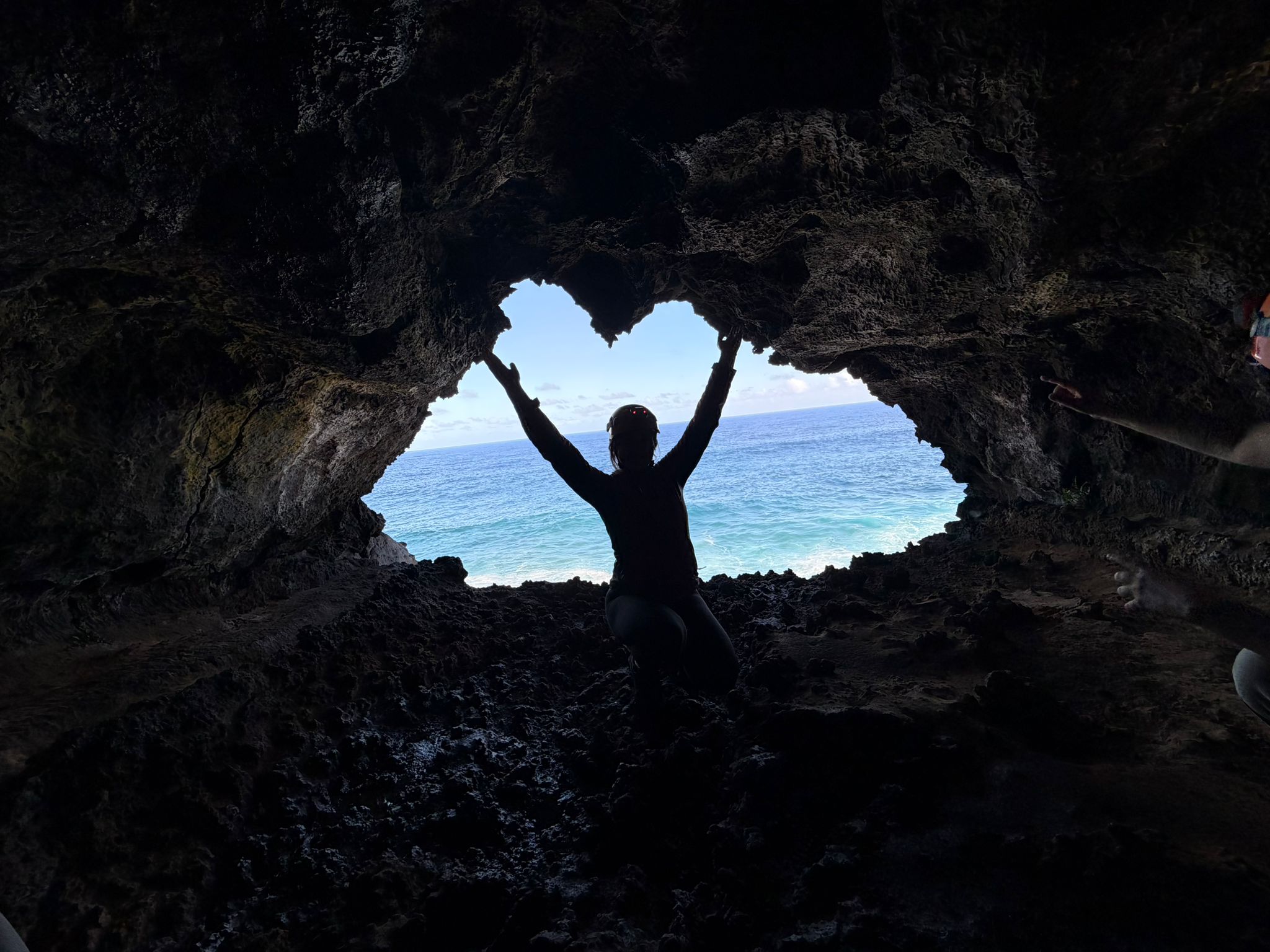
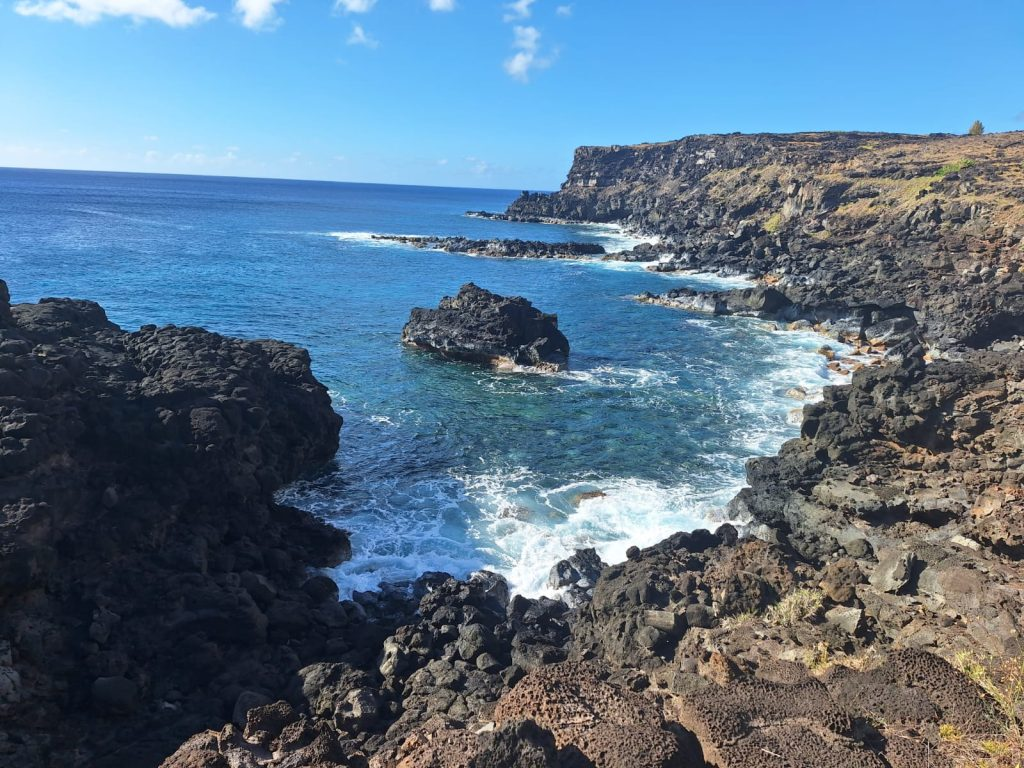
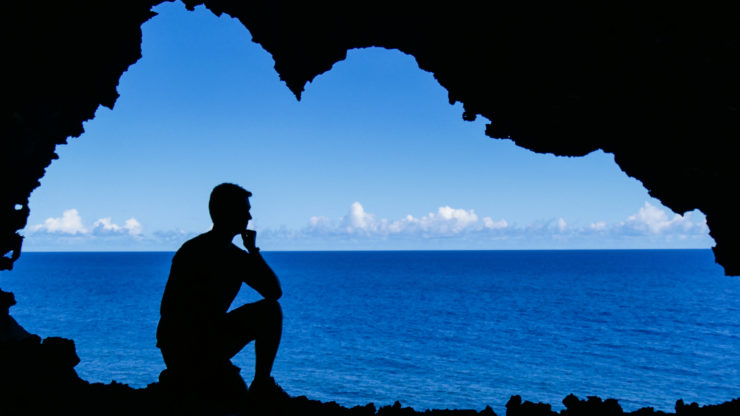
What makes it unlike any other cave on the island is its dramatic ending. The lava tube opens into two natural windows overlooking a cliff approximately 30 metres (98 feet) above the Pacific Ocean. Straight ahead lies the open ocean, while to the right, Motu Tautara rises against the deep blue horizon.
What is Ana Kakenga?
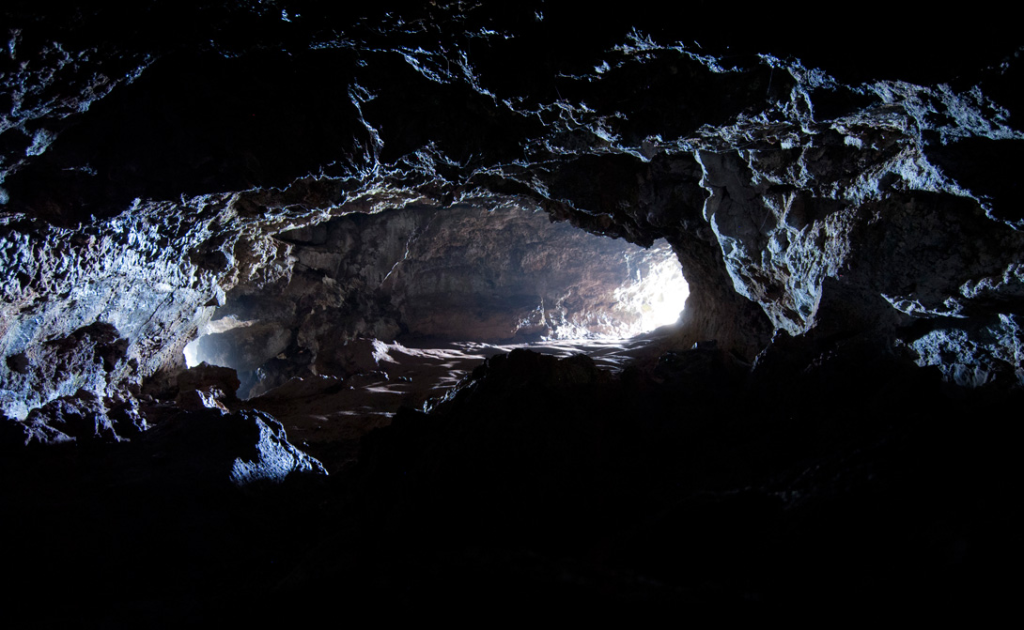
Known in Rapanui as Ana Kakenga, or “The Two Windows” in English, this lava tube stretches approximately 50 metres (164 feet) along the northwestern coast of Rapa Nui, about 4 km (2.5 miles) north of Ahu Tahai. After Ana Te Pahu, it is the island’s most visited and one of its most impressive caves.
What sets Ana Kakenga apart from every other underground formation on Rapa Nui is its remarkable ending. The tunnel opens into two natural windows carved into a sea cliff around 30 metres (98 feet) above the Pacific Ocean. The views from these openings are unlike almost anywhere else in the world.
The cave is part of our private Rapa Nui Cave Tour, which also includes visits to Ana Te Pahu and Ana Te Pora.
How This Lava Tube Was Formed
Ana Kakenga is a lava tube, a natural tunnel formed during a volcanic eruption. As a flow of basaltic lava moves across the landscape, its surface cools rapidly when exposed to the air, creating a solid crust. Meanwhile, molten lava continues flowing beneath this rocky roof like an underground river. Once the eruption ends, the liquid lava drains downhill, leaving behind a hollow tunnel.
The entire island of Rapa Nui was formed through a succession of volcanic eruptions over hundreds of thousands of years. This volcanic origin explains the large number of caves and lava tubes found across the island. To date, dozens of underground systems have been explored, with a combined length exceeding 10 kilometres (6.2 miles), making Rapa Nui home to one of the most remarkable volcanic cave networks in Polynesia.
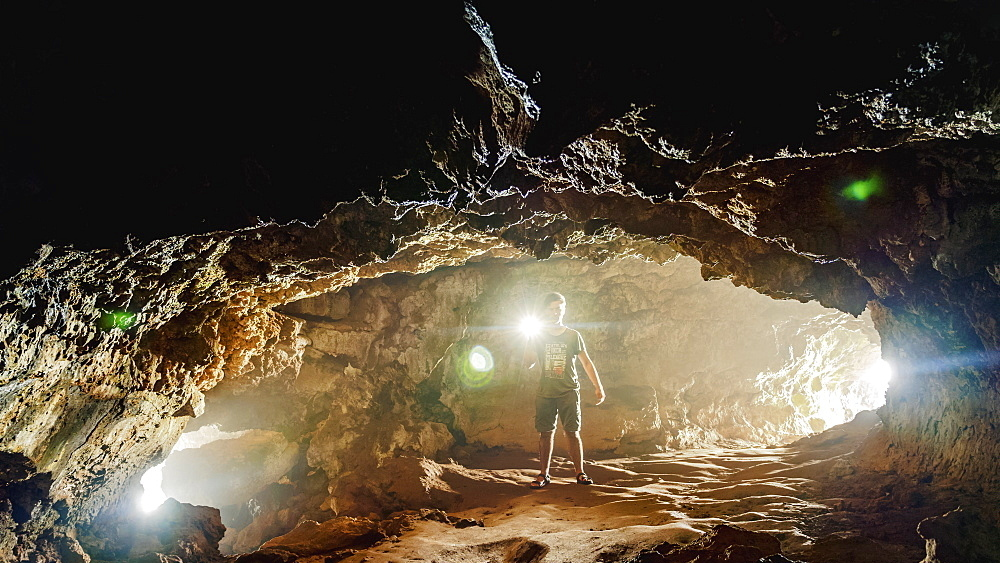
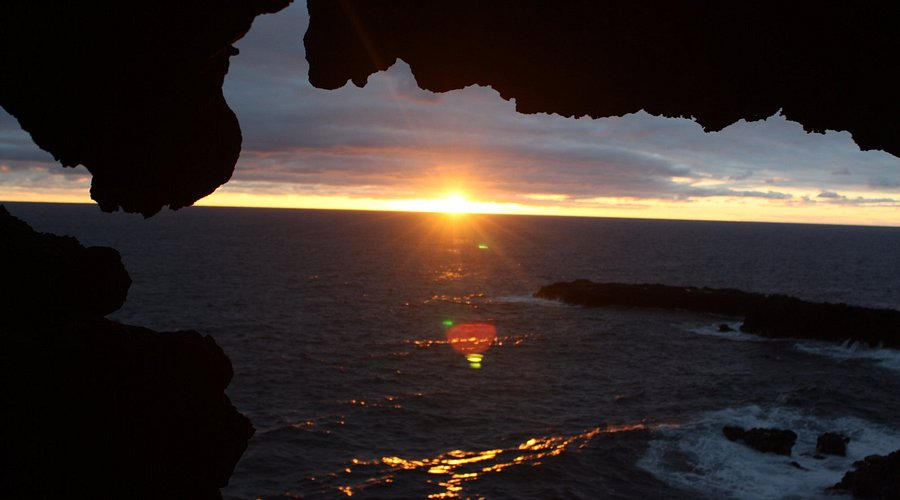
Ana Kakenga is one of the lava tubes that eventually reached the edge of the island’s western sea cliffs. Here, the lava found its way to the ocean and, after draining away, left behind the two openings we now know as the famous Two Windows. Over thousands of years, wind and the relentless force of the waves gradually eroded the rock, widening these openings and shaping the spectacular viewpoints that overlook the Pacific from inside the cave.
Every visitor who looks through one of these windows is witnessing the result of a geological process that began hundreds of thousands of years ago, when incandescent lava flowed through this very passage on its way to the sea.
Ana Kionga, a Refuge Cave
Ana Kakenga was more than just a natural formation. It is believed that for centuries it served as an Ana Kionga (a refuge cave), used by different Rapanui clans during the internal conflicts that marked the island’s later history.
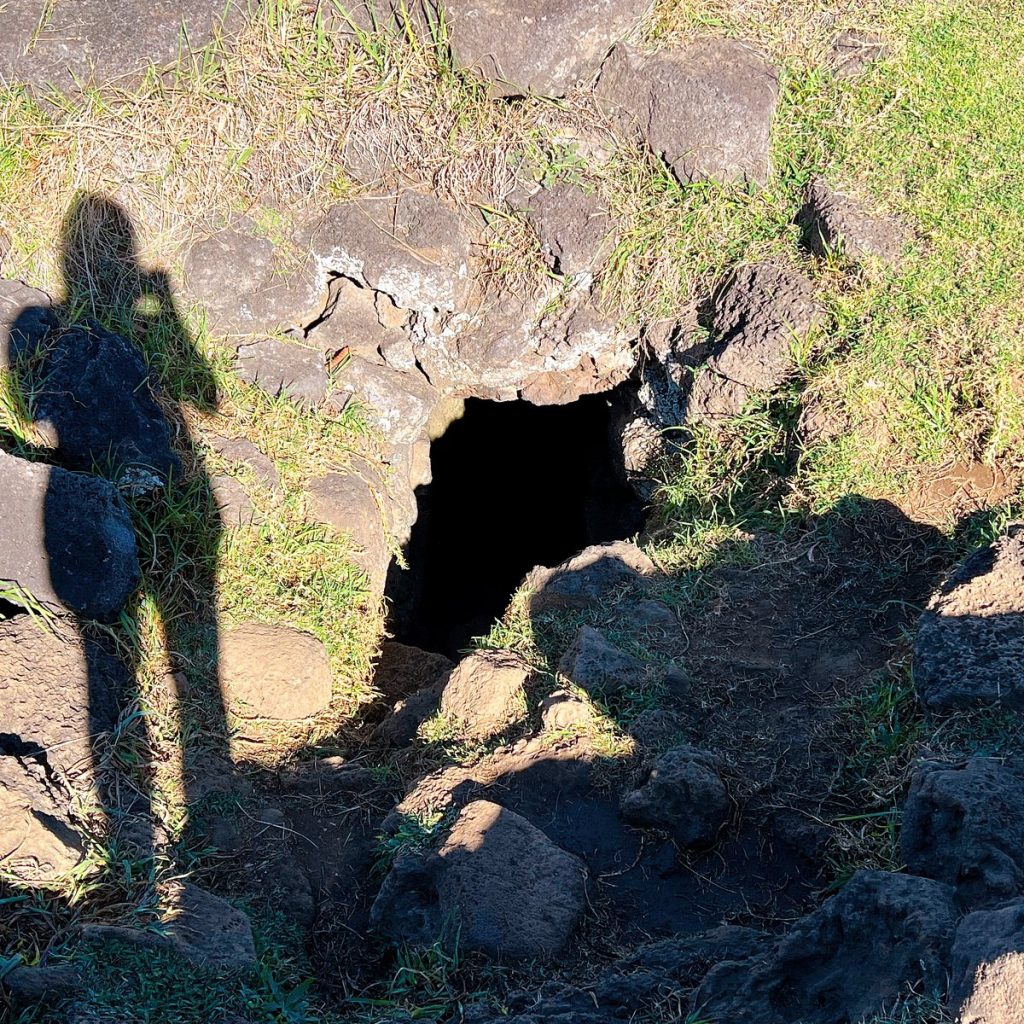
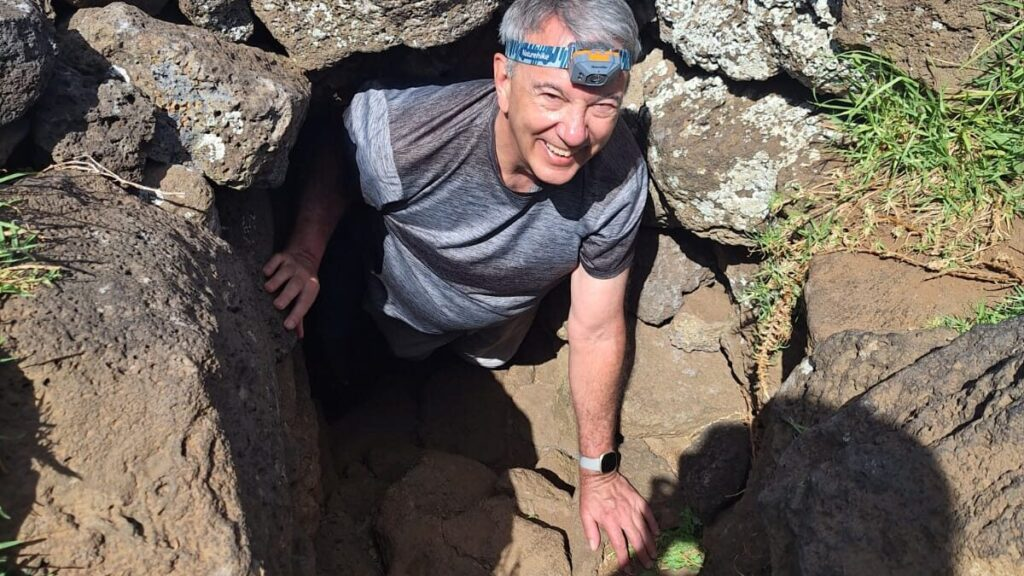
Evidence of this can still be seen at the entrance. The stone slabs (paenga) surrounding the original access are not natural. They were deliberately placed to narrow the cave entrance, reduce its visibility from outside, and make it more difficult for potential attackers to enter. From a defensive standpoint, a passage wide enough for only one person at a time is far easier to defend than a broad opening.
The same principle applied to concealment. Sitting at ground level, with no signage and surrounded by uneven volcanic terrain, the entrance to Ana Kakenga resembles little more than a small burrow rather than the access to a cave large enough for people to shelter inside. Anyone unaware of its location could easily walk straight past without noticing it.
The Two Windows: What You’ll See
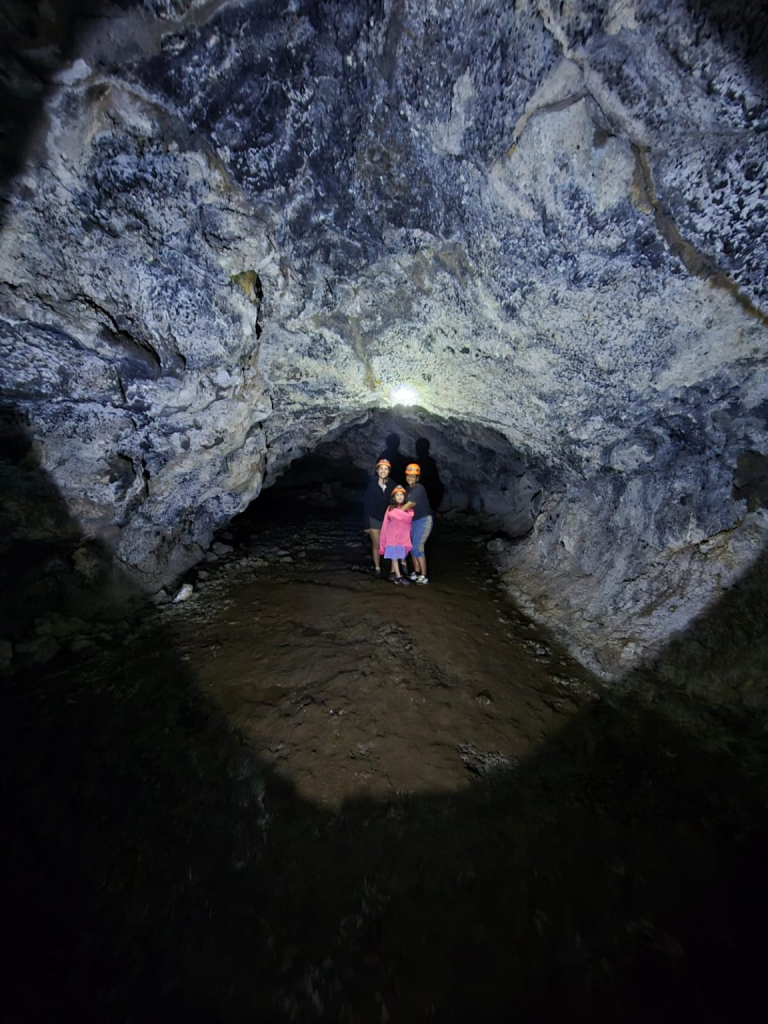
Once past the narrow entrance, the lava tube opens up enough to allow visitors to move comfortably through the interior. At the end, the tunnel splits into two branches, each leading to one of the cave’s iconic windows.
Right Window
Measuring approximately 2 by 2 metres (6.5 by 6.5 feet), the right window frames a spectacular view of Motu Ko Hepo and Motu Tautara, a small offshore islet featured in ancient oral traditions. In some versions of the conflict between Hetereki and Ta’e Reka, documented by Barthel, Felbermayer and Routledge, this stretch of coastline appears as part of the setting where these events took place. Although the cave itself does not play a central role in the story, the landscape visitors admire today is the same one witnessed by the people behind those ancestral traditions.
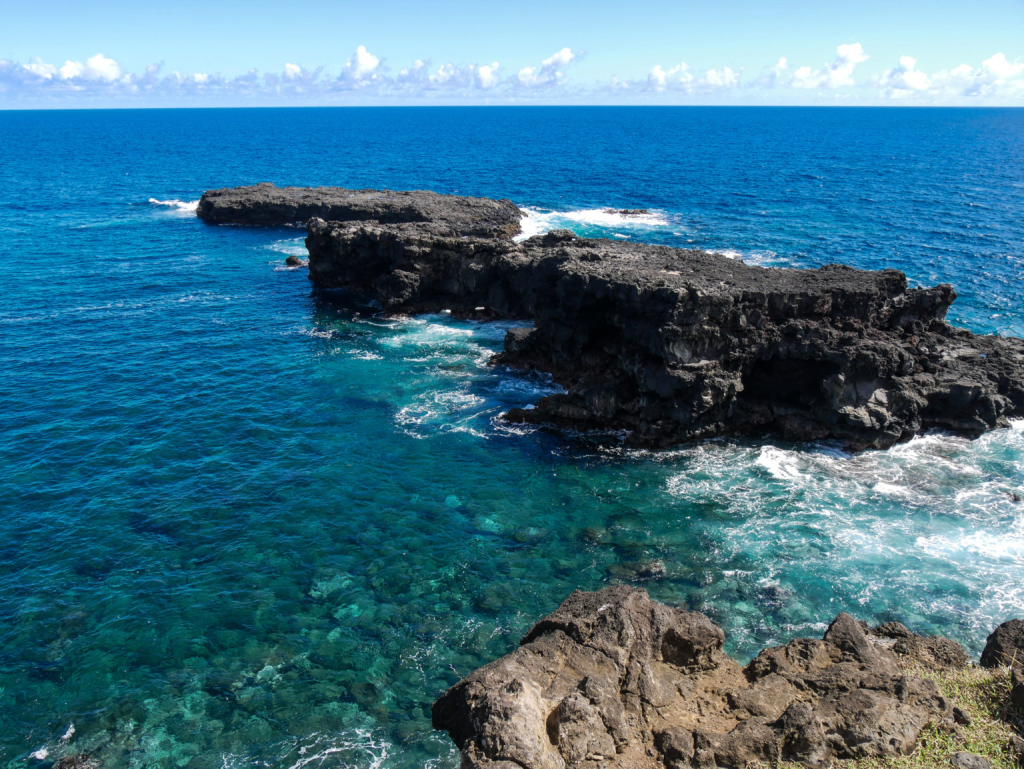
The right window is also the most photographed, as the offshore islets add depth to the composition and the afternoon sunlight enters directly through the opening.
Left Window
The left window has a more elliptical shape and looks directly out over the open Pacific Ocean. From here, the sound of waves crashing against the cliff nearly 30 metres (98 feet) below echoes through the cave. The view is broader, with the deep blue ocean filling the entire horizon.
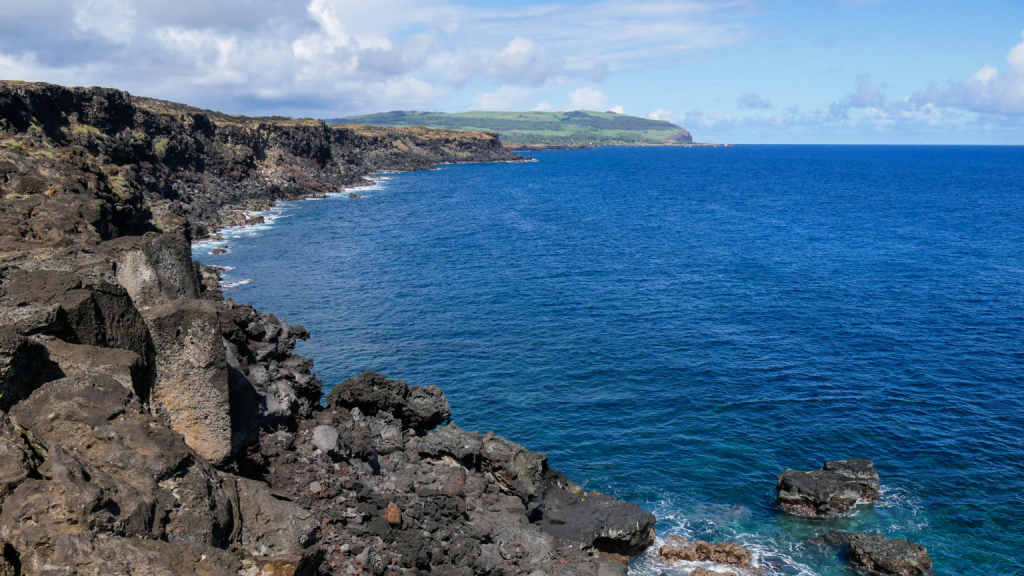
Both windows sit approximately 30 metres (98 feet) above sea level. Visitors can carefully approach each opening, but caution is essential. There are no railings or protective barriers, and the cliff edge is completely exposed.
How to Get to Ana Kakenga
Ana Kakenga is located on the northwestern coast of Rapa Nui, about 4 km (2.5 miles) north of Ahu Tahai. There are two ways to reach the cave:
From Ahu Tahai along the coastal trail: A scenic 4 km (2.5-mile) hike follows the island’s northern cliffs, passing through Hanga Kio’e. The walk takes approximately 50 minutes and includes uneven sections of volcanic rock, so trekking or hiking shoes are strongly recommended.
From Ahu Akivi: This inland route passes through Ana Te Pahu and Ana Te Pora before reaching Ana Kakenga. This is the option we use on our private Cave Expedition Tour, as it allows visitors to experience all three caves in sequence while gaining a deeper understanding of their geological and cultural significance.
In both cases, a valid Rapa Nui National Park ticket must be presented at the park checkpoint before starting the hike. Tickets should be purchased in advance, either in Hanga Roa or through the official website at www.rapanuinationalpark.com, as there is little to no mobile or internet coverage in this area of the island.
The trail itself is not signposted, and the cave entrance is unmarked. Without local knowledge or a guide, it is surprisingly easy to walk right past it without ever noticing it.
What to Bring and How to Prepare
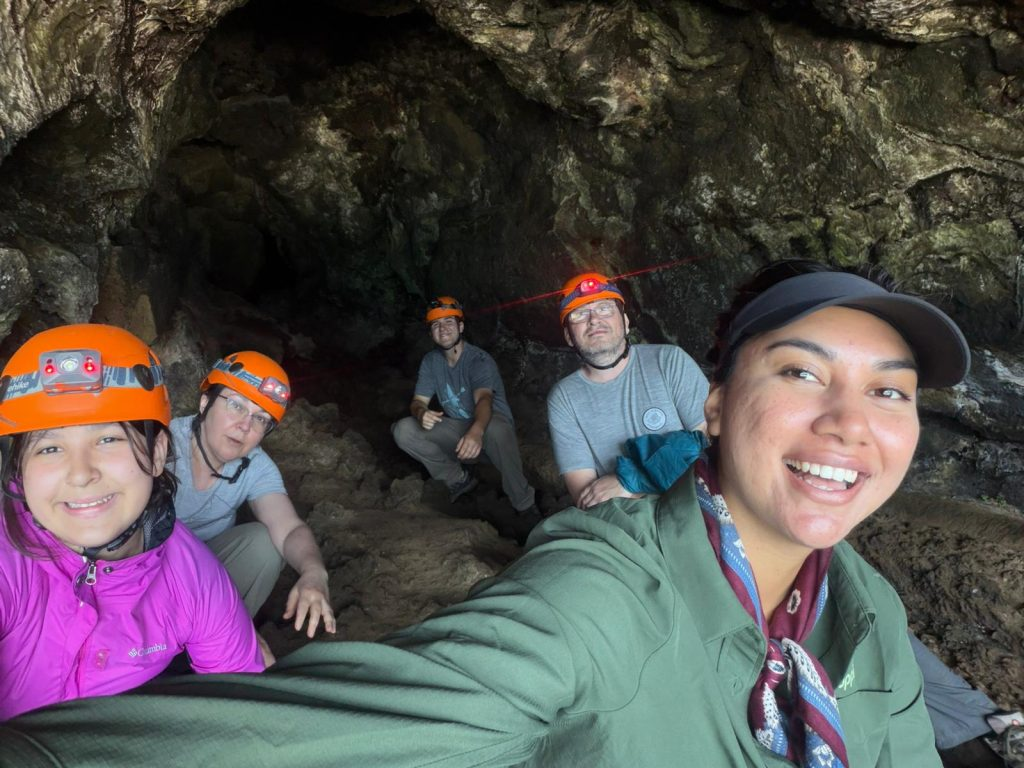
On our private tours, we take care of the essentials so you can enjoy the experience safely and comfortably. In accordance with the current regulations of Rapa Nui National Park, access to the island’s caves is only permitted with a certified guide and the required safety equipment. That’s why we provide every guest with a helmet, flashlight, and rain poncho, and keep our groups small, with a maximum of eight guests per guide, ensuring a safer, more personalized experience while helping protect this unique natural environment.
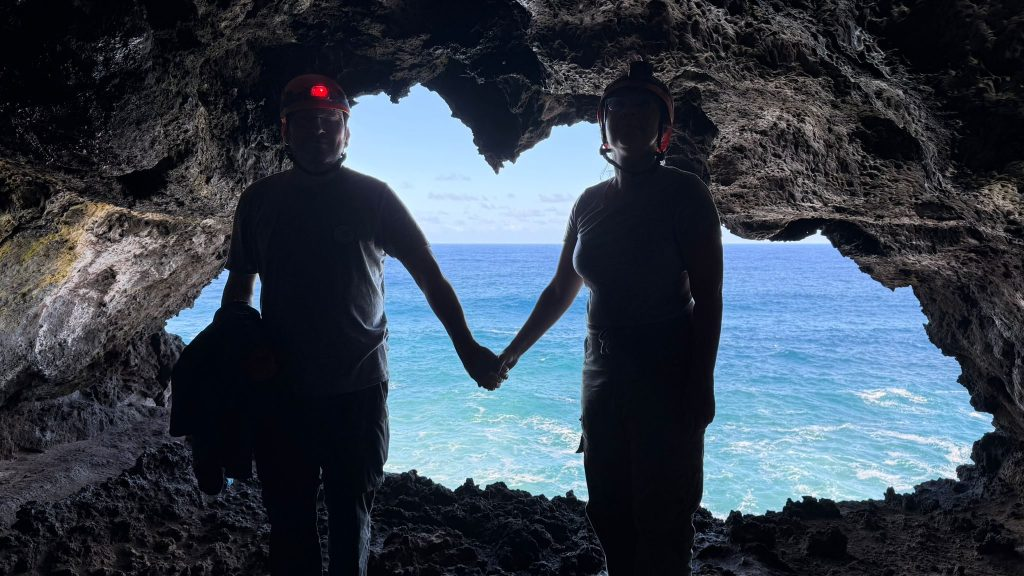
To make the most of your visit, we recommend wearing comfortable clothing that allows you to move freely, along with closed-toe shoes that provide good grip, ideally hiking or trekking footwear. Both the access trail and the cave itself feature uneven volcanic rock, and some sections may become damp or slippery depending on the weather conditions.
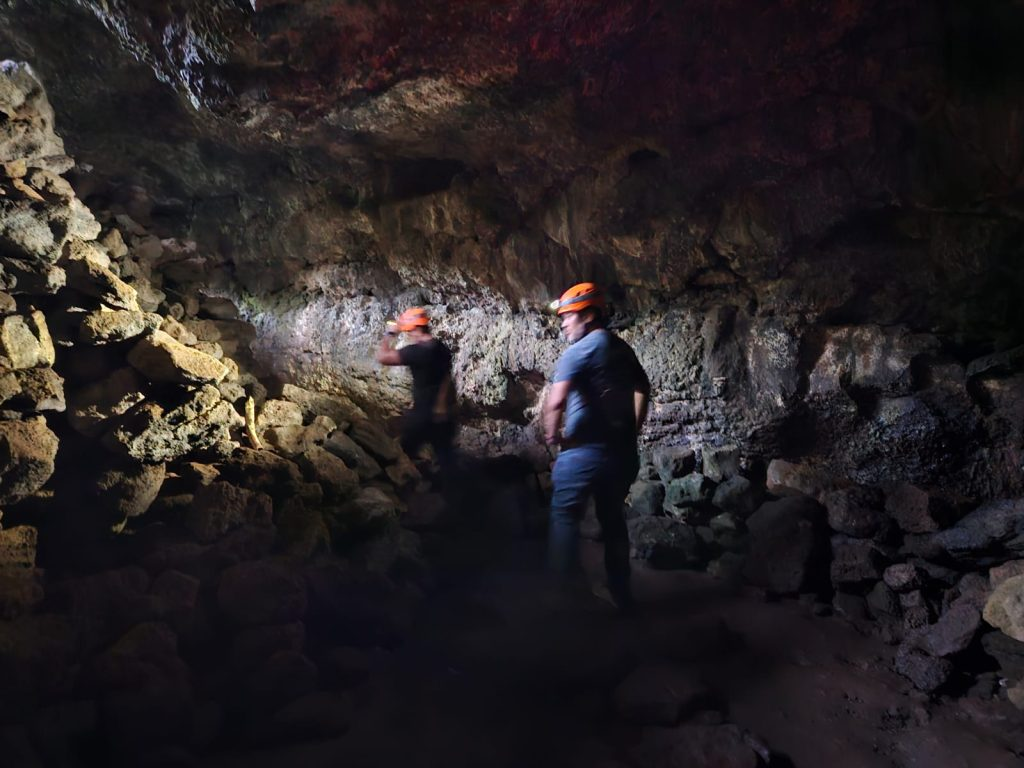
If you experience severe claustrophobia, please keep in mind that the first metre (about three feet) of the entrance is the narrowest part of the cave and requires visitors to crouch down significantly to enter. Once through this section, the lava tube opens into a much larger space, allowing you to continue the visit comfortably.
Finally, please remember that a valid Rapa Nui National Park ticket is required to visit Ana Kakenga. Tickets must be purchased in advance in Hanga Roa or through the park’s official website at www.rapanuinationalpark.com, as they are not available at the site.
Visit Ana Kakenga on Our Cave Trip
Ana Kakenga is one of the highlights of our Cave Expedition, a 3.5-hour private tour that explores the most important lava tubes and underground formations on the western and central areas of Rapa Nui.
The complete itinerary includes four stops:
- Ana Te Pahu — One of the island’s longest and most spacious lava tubes, where vegetation grows inside through openings in the cave ceiling.
- Te Peu — An ancient village featuring hare paenga foundations, manavai agricultural structures, and one of the best-preserved ceremonial ahu on the island.
- Ana Te Pora — A former refuge cave with an unusually organized interior, including stone sleeping platforms along the walls and a central working area.
- Ana Kakenga — The famous Cave of the Two Windows, the final stop of the tour.
The access road to this part of the island is too rough for conventional vehicles, which helps keep the area relatively uncrowded. The tour includes hotel pick-up, private transportation, a certified local guide, and bottled water.
Price: CLP 147,500 per person (CLP 295,000 for two people).
Private tour.
→ Book the Cave Expedition
Frequently Asked Questions
- Is a guide required? Yes. Access to the caves of Rapa Nui is only permitted with a certified and authorized guide, as they are located within Rapa Nui National Park. Visitors must also use safety equipment, including a helmet, flashlight, and water, all of which are provided by the guide. Independent access is not permitted.
- Is Ana Kakenga suitable for children? Yes, although some precautions should be considered. The entrance is narrow and requires visitors to crouch quite low. This can be challenging for younger children. If your group includes children under eight years old, we recommend contacting us before booking.
- How long do you spend inside the cave? The visit inside Ana Kakenga typically lasts between 20 and 30 minutes, including time to enjoy both natural windows. The complete Cave Expedition takes approximately 3.5 hours, including hiking and visits to all the sites along the route.
- Can I visit without joining a tour? Independent visits were once possible, but the regulations of Rapa Nui National Park have changed. Today, entry is only permitted with a certified guide for both safety and conservation reasons. The required safety equipment—including helmets, flashlights, and drinking water—is also provided by the guide.
- Is there any risk of collapse? Ana Kakenga is a volcanic lava tube that has existed for thousands of years. The risk of a spontaneous collapse is considered low, but as with any natural cave, visitors should avoid touching the walls unnecessarily and always follow the guide’s instructions.
- Do I need a National Park ticket? Yes. Access to the cave circuit requires a valid Rapa Nui National Park ticket. It can be purchased in Hanga Roa before your visit or online through www.rapanuinationalpark.com. Tickets are not sold at the cave itself.