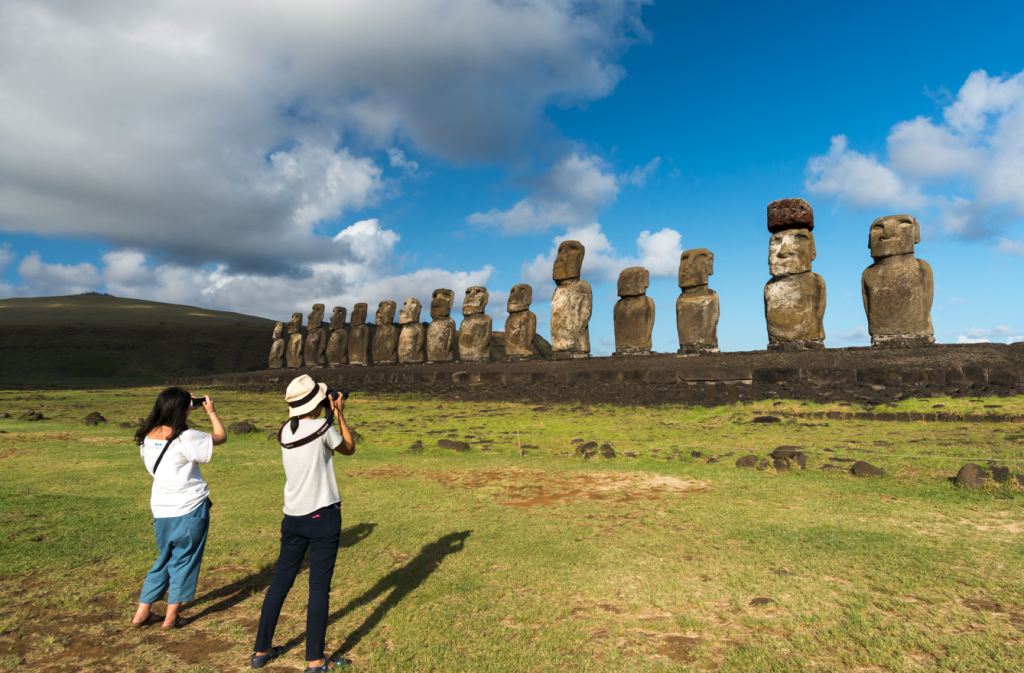

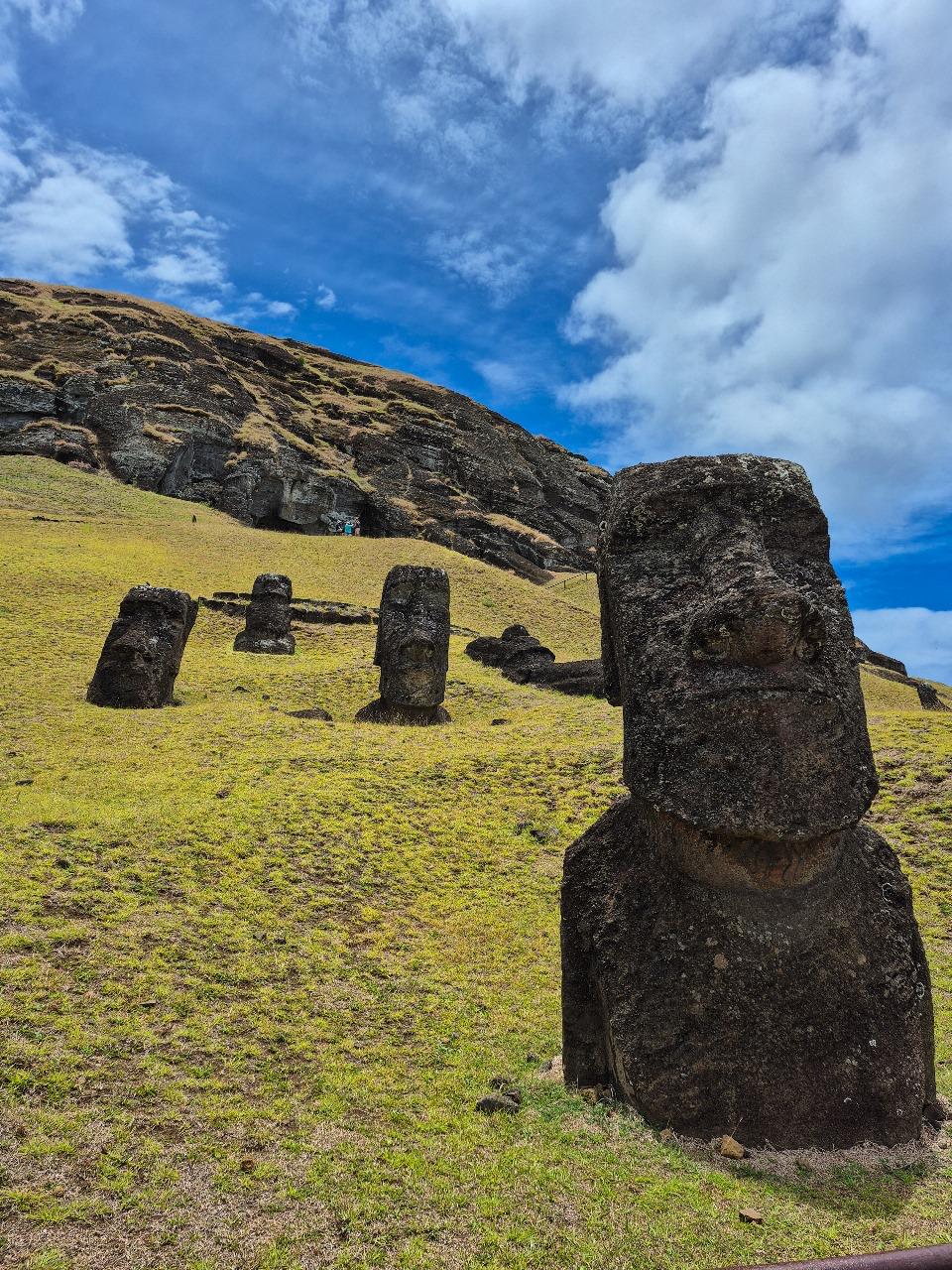
If there is one place in Rapa Nui that fully expresses the archaeological, cultural, and spiritual depth of a civilization where engineering played a central role, it is Rano Raraku. This volcano was the sacred quarry where the ancient Rapanui carved and extracted most of the island’s monumental statues, the moai, leaving its slopes filled with unfinished figures, partially buried sculptures, or others still attached to the bedrock, as if the creative process had been frozen in time.
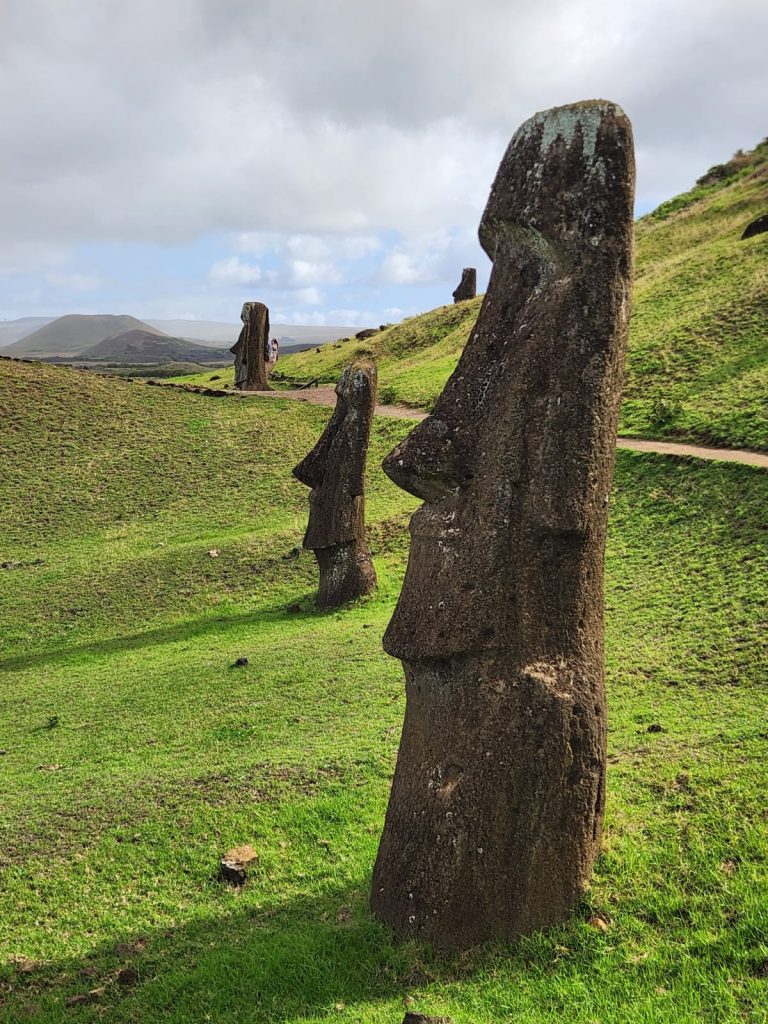
Rano Raraku was not only a monumental production site. During the height of moai construction in Rapa Nui, it also formed part of a ceremonial system deeply connected to mana, ancestral memory, and the relationship between communities, land, and lineage.
What is Rano Raraku?
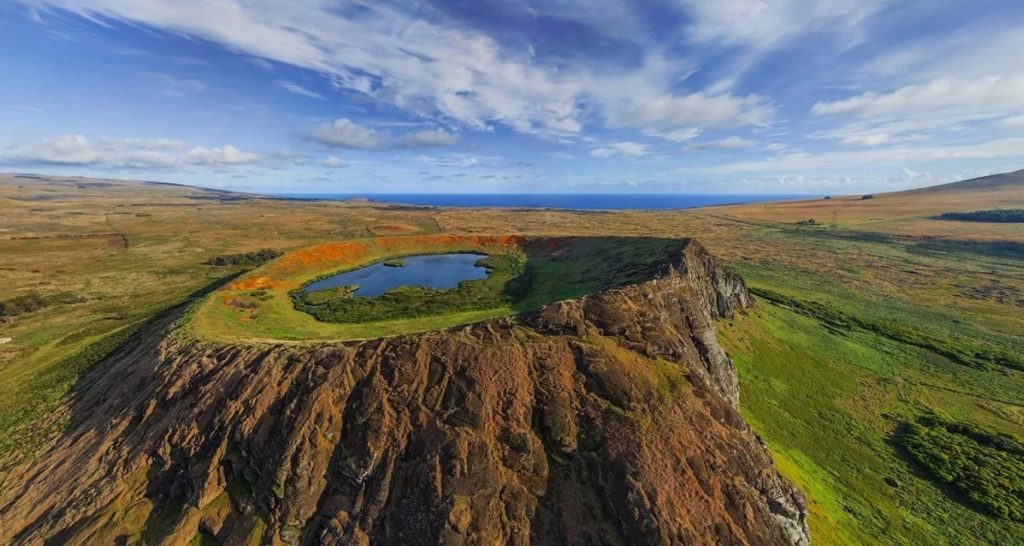
Rano Raraku is an extinct volcano located in the eastern sector of Rapa Nui, approximately 20 km northeast of Hanga Roa, near the Poike Peninsula and about 1 km northwest of Hanga Nui Bay.
From a geological perspective, it is a volcanic cone composed mainly of volcanic tuff, a compacted ash rock that proved ideal for carving moai due to its softer and more workable composition compared to other materials found on the island.
Its current name combines the Rapanui word rano, used for volcanoes with a crater lake, and raraku, associated with the idea of “grooved” or “scratched,” likely referring to the visible erosion patterns on the southern slope. Before this name, the site was known as Maunga Eo, which can be translated as “fragrant mountain.”
Beyond its landscape value, the Rano Raraku quarry is considered the main moai quarry of Rapa Nui and one of the most important archaeological sites on the island. Its slopes and extraction faces contain the highest concentration of sculptures linked to the carving process.
Rano Raraku: Location, Geology, and Archaeological Importance
Rano Raraku is located in eastern Rapa Nui, about 20 kilometers from Hanga Roa, near the Poike Peninsula and close to Ahu Tongariki, one of the most significant ceremonial sites on the island.
It is an extinct volcanic cone formed more than 300,000 years ago. Its crater has an elliptical shape and preserves a freshwater lake inside, fed by rainfall. The volcano’s morphology is distinctive: while the northern slope is more gradual, the southern side is much steeper and more abrupt.
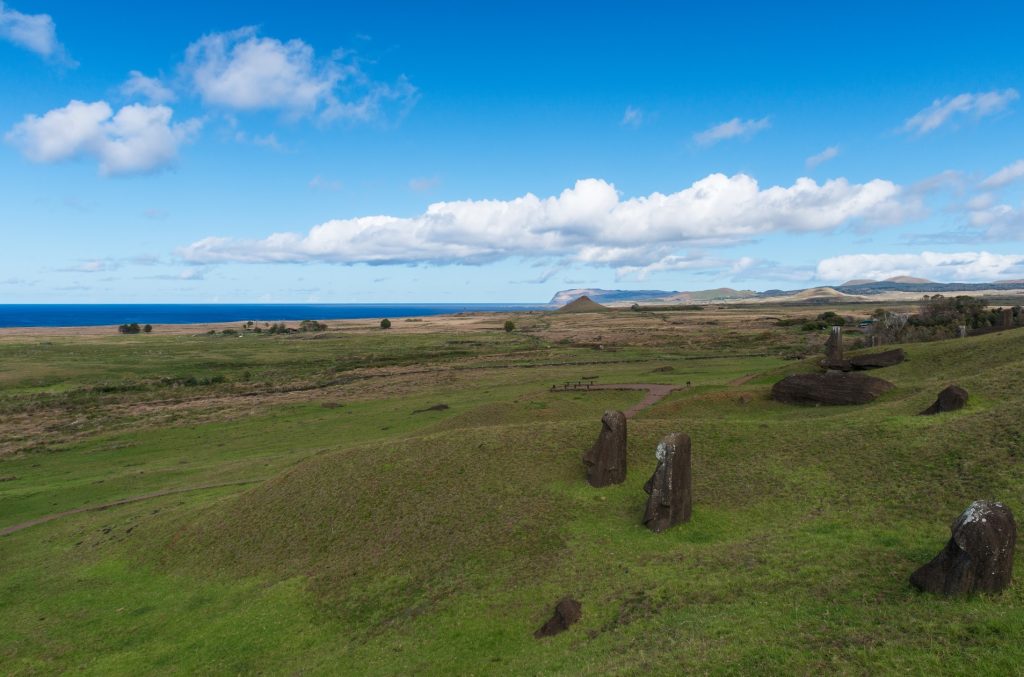
From a geological point of view, this volcano in Rapa Nui is composed of lapilli tuff, a relatively rare volcanic rock on the island. This characteristic explains why this site was chosen as the main extraction center for the moai of Easter Island.
Its importance within Rapa Nui lies precisely in this combination of geology and archaeology. Rano Raraku is not only the main moai quarry but also the place with the highest concentration of sculptures linked to the carving process. The slopes preserve moai in different stages of work, from figures still attached to the bedrock to others that were abandoned, partially buried, or left unfinished before being transported. This concentration of evidence makes the site one of the most valuable areas within Rapa Nui National Park for understanding how the island’s greatest sculptural tradition developed and how it was connected to its volcanic landscape.
What to See in Rano Raraku
During a visit to the moai quarry of Rano Raraku, several areas can be explored to understand the full process of moai creation:
- Moai in different stages of carving, still attached to the bedrock
- Unfinished figures abandoned on the volcanic slope
- Partially buried sculptures within the volcanic terrain
- Large moai that reveal the scale of work carried out in this sacred quarry of Rapa Nui
- Extraction zones where blocks of volcanic tuff were removed
Each of these points helps illustrate how this sculptural production center operated within Rapa Nui National Park.
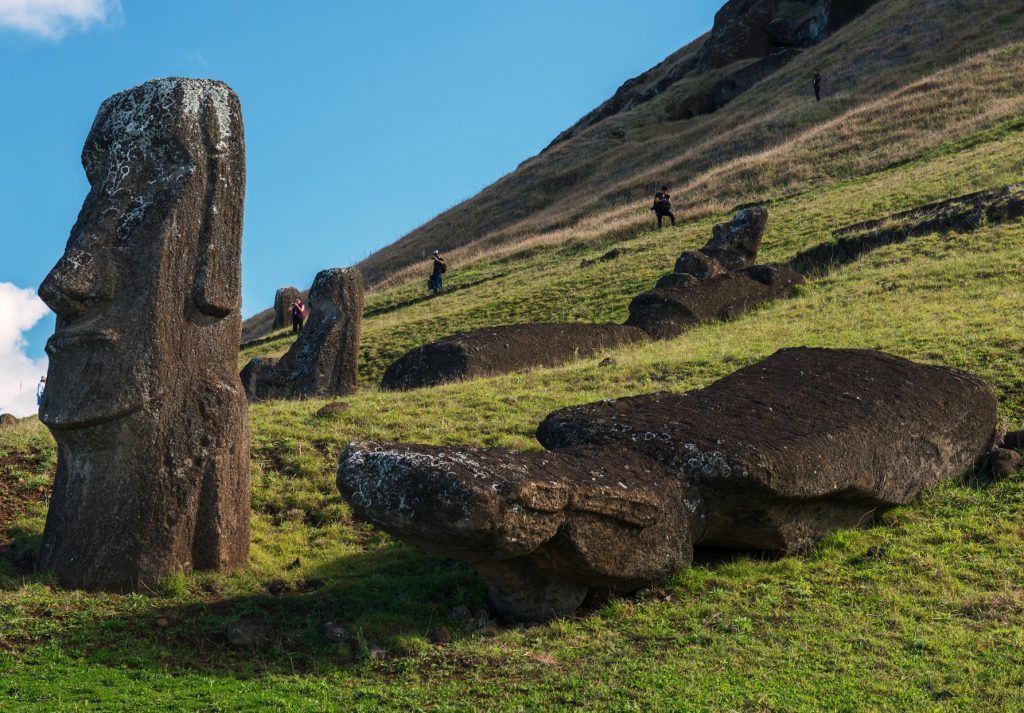
How Were the Moai Carved in Rano Raraku?
As mentioned above, the slopes of Rano Raraku preserve moai in different stages of completion, which has allowed researchers to reconstruct the carving process with considerable clarity.
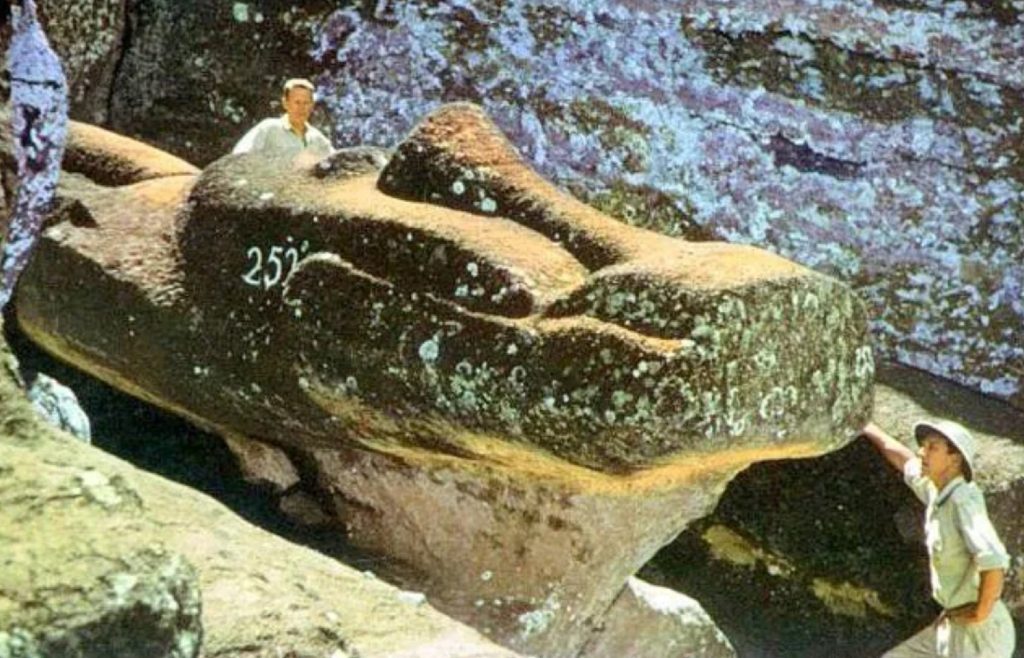
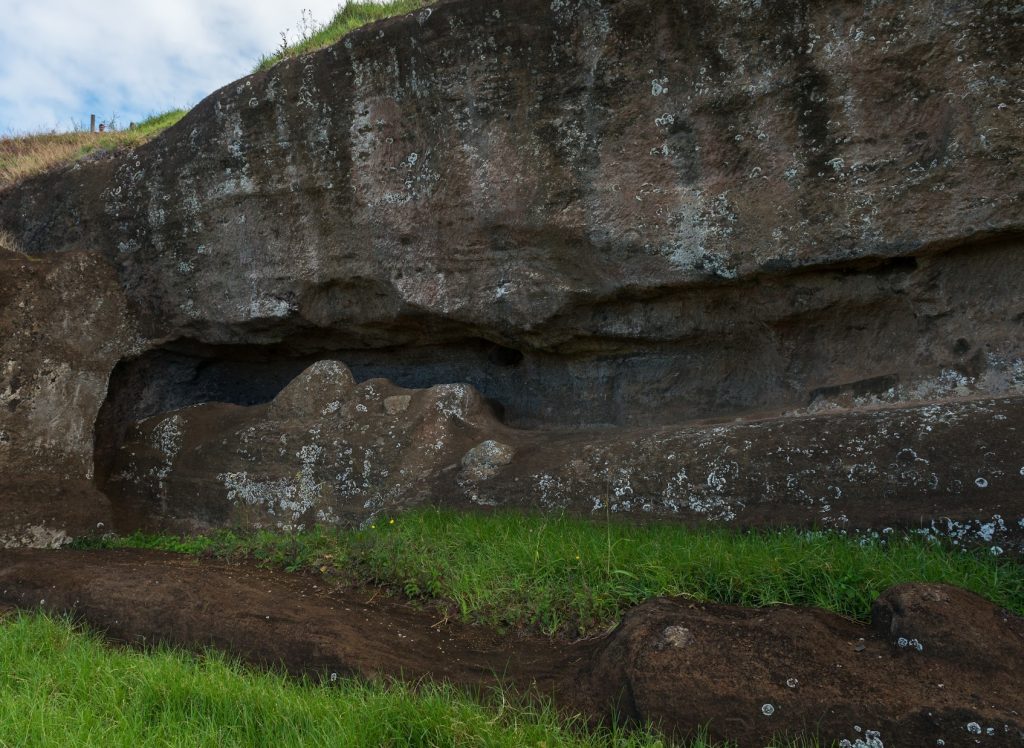
The work began with the selection of a suitable section of volcanic tuff and the outlining of a large block on the surface of the slope. From there, carvers opened a narrow passage around the block to work the stone and begin shaping the moai using basalt tools known as toki. The figures were carved directly from the bedrock, usually in a reclining position, and the carving progressed from the face toward the rest of the body.
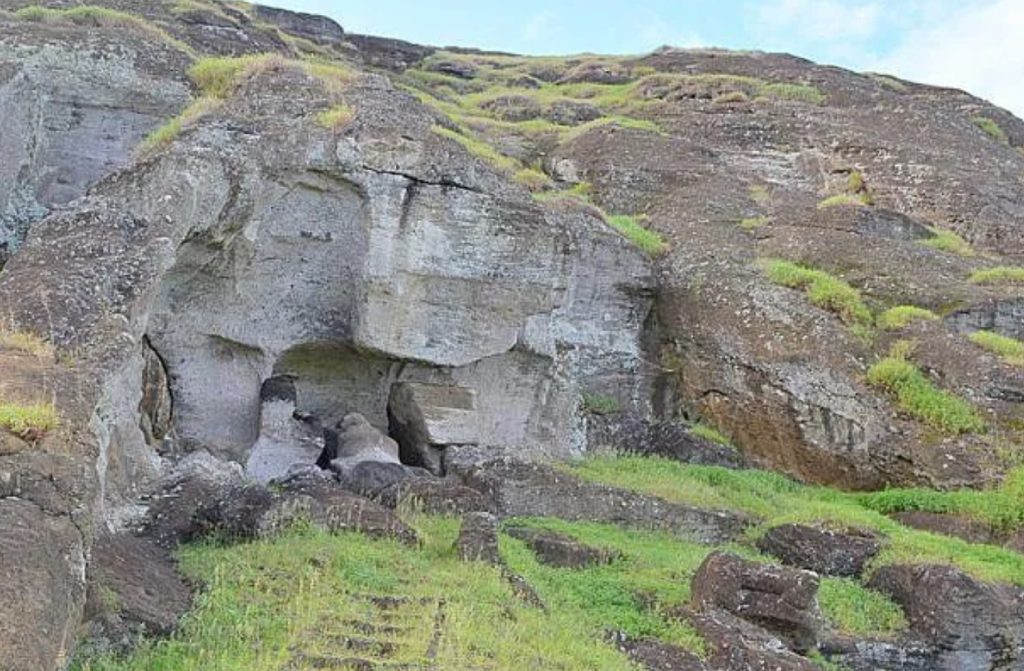
The process continued with the definition of the neck, torso, arms, and hands, while material was removed from the sides and lower part of the figure. As the moai took shape, it remained attached to the rock by a longitudinal ridge at the back, a kind of “keel” that supported the statue until it was detached from the quarry wall. Once completed, the moai was released and had to descend the slope, likely with the help of ropes, wooden logs, and carved channels in the terrain. Not all statues survived this stage, and broken fragments can still be seen today on the slopes of Rano Raraku.
When the moai reached the base of the volcano, it was placed upright in a prepared pit, where final details were completed. In this vertical position, the back was refined and finishing touches were made that could not be completed while the statue remained attached to the rock. After this came the transport to its final ceremonial platform (ahu), a stage still debated, as there is no consensus on the exact method used to move these massive stone figures across the island.
The large number of moai remaining in Rano Raraku shows that not all statues left the quarry. Some were abandoned due to fractures in the rock or material defects, while others were likely halted due to resource limitations, changes in clan priorities, or the social transformations that eventually ended the moai era. For this reason, Rano Raraku preserves not only the site where these figures were carved but also the traces of a complex technical process that lasted for centuries and was deeply connected to the ceremonial and political organization of ancient Rapanui society.
Moai You Can See Up Close in Rano Raraku
During a visit to Rano Raraku, it is possible to observe several especially recognizable moai within the quarry, either due to their size, state of preservation, or unique characteristics compared to other sculptures on the island. While they are not the only notable figures in the area, they are among the most memorable for visitors.
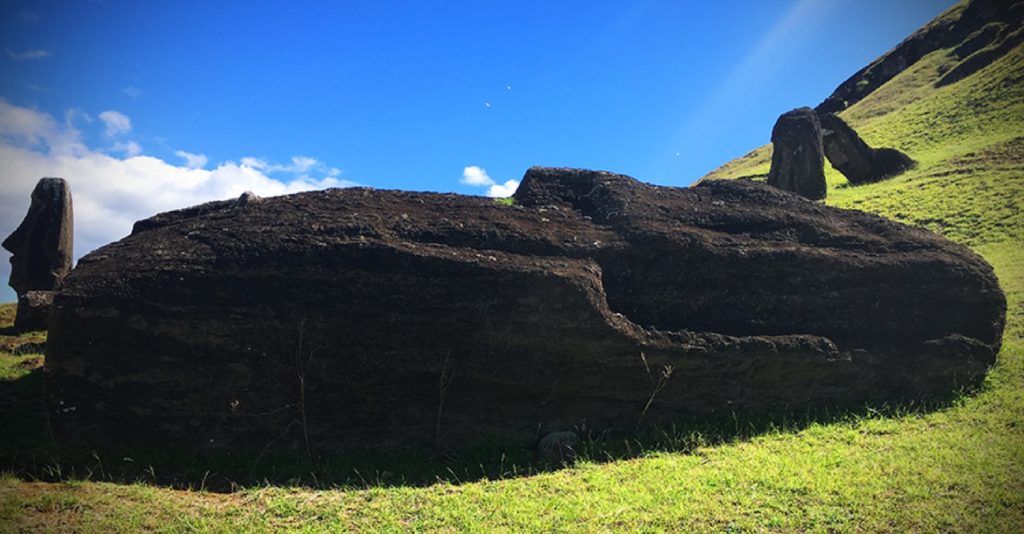
- Tai Hare Atua
Located on the outer slope of Rano Raraku, this figure is associated with early carving stages and presents a simpler form compared to other moai in the quarry.
- Piro Piro
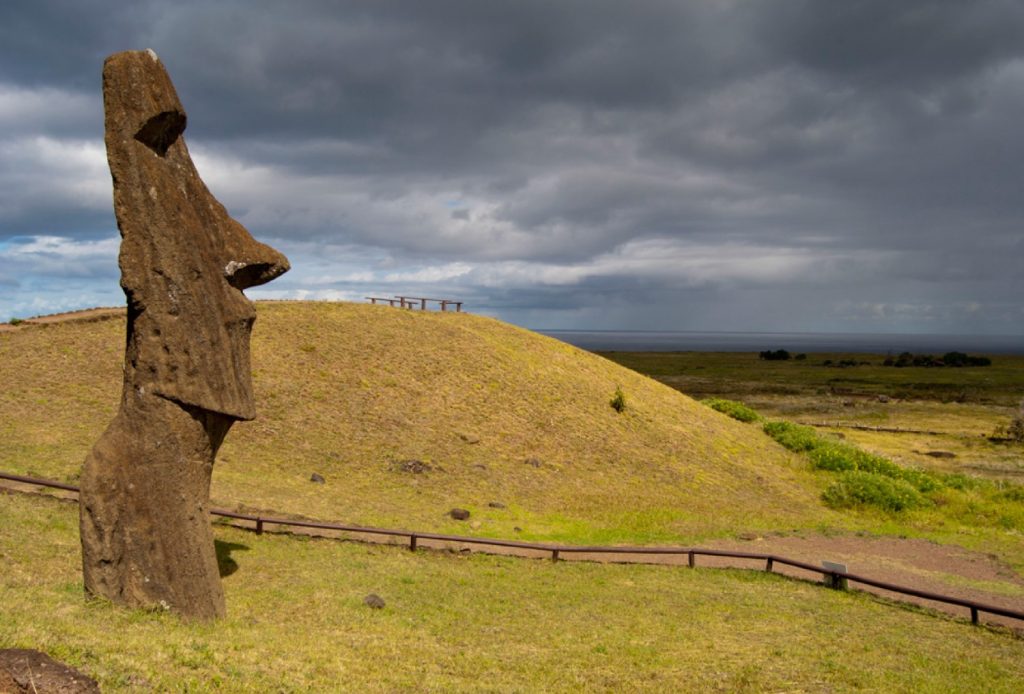
One of the most well-known moai in Rano Raraku, also among the most photographed. It stands out due to its large head and its striking presence emerging from the ground.
- Hinariru
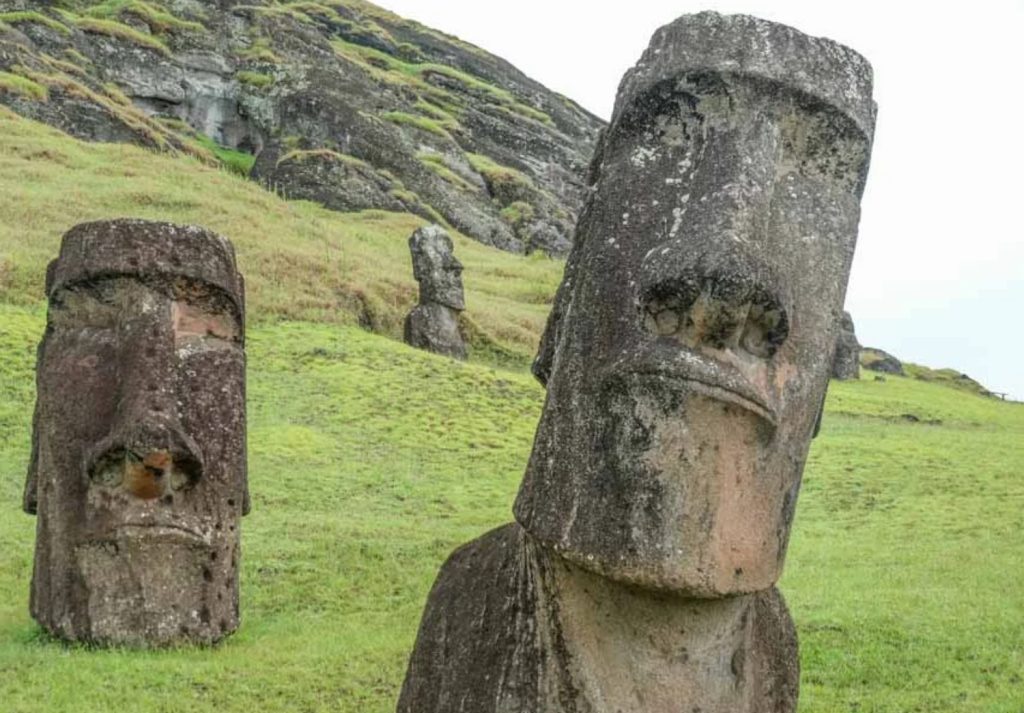
Located a short distance from the main trail, this moai is recognized for its slightly tilted head, an uncommon feature that gives it a distinctive appearance within the quarry.
- Te Tokanga
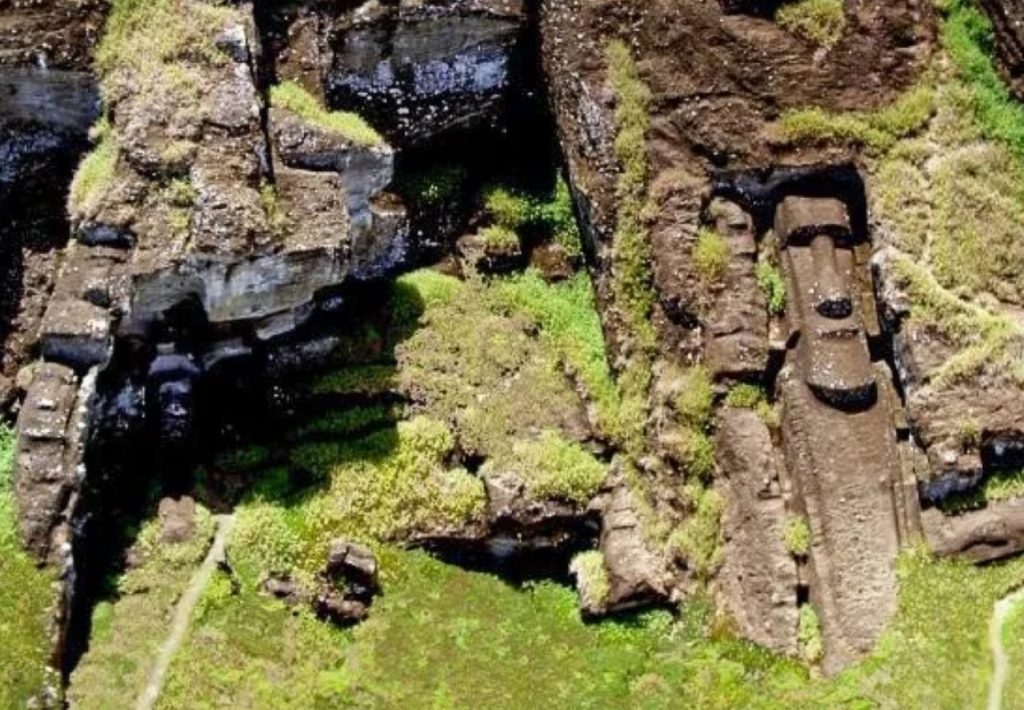
Among the most impressive sculptures along the route, known as “the giant.” It is a monumental figure still attached to the rock, showcasing the extreme scale reached in Rano Raraku.
- Ko Kona He Roa
Known for the carvings and markings on its surface, which differentiate it from many other moai and add a unique layer of detail to the site.
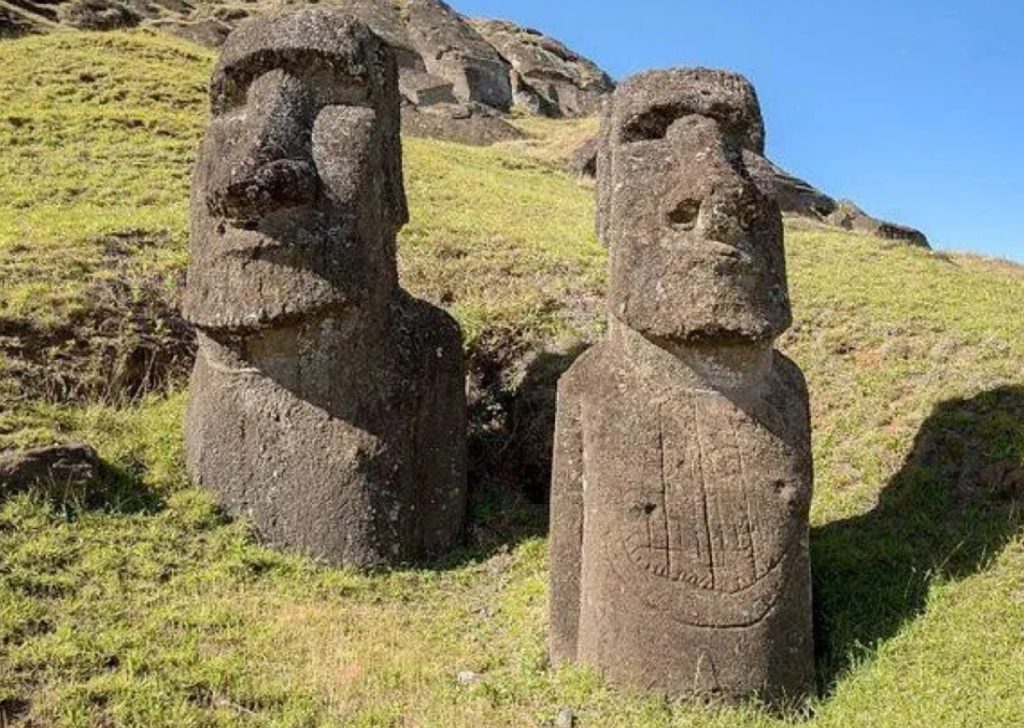
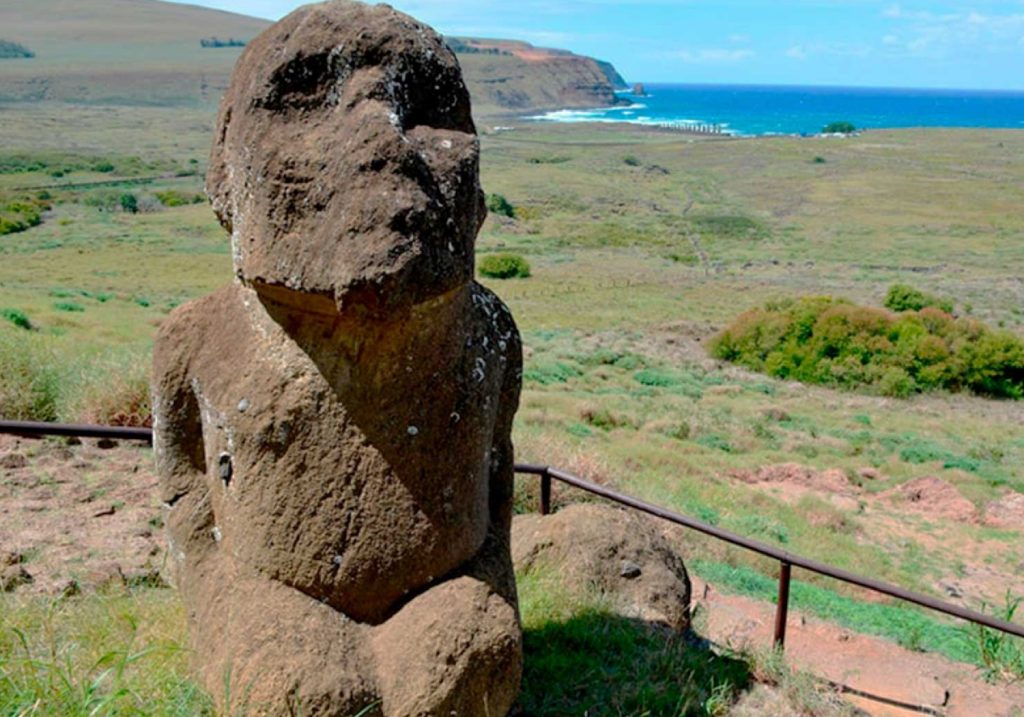
- Tukuturi
One of the most unusual figures in Rano Raraku. Its kneeling posture, more naturalistic modeling, and distinct appearance make it stand out immediately within the quarry.
How Many Moai Are in Rano Raraku?
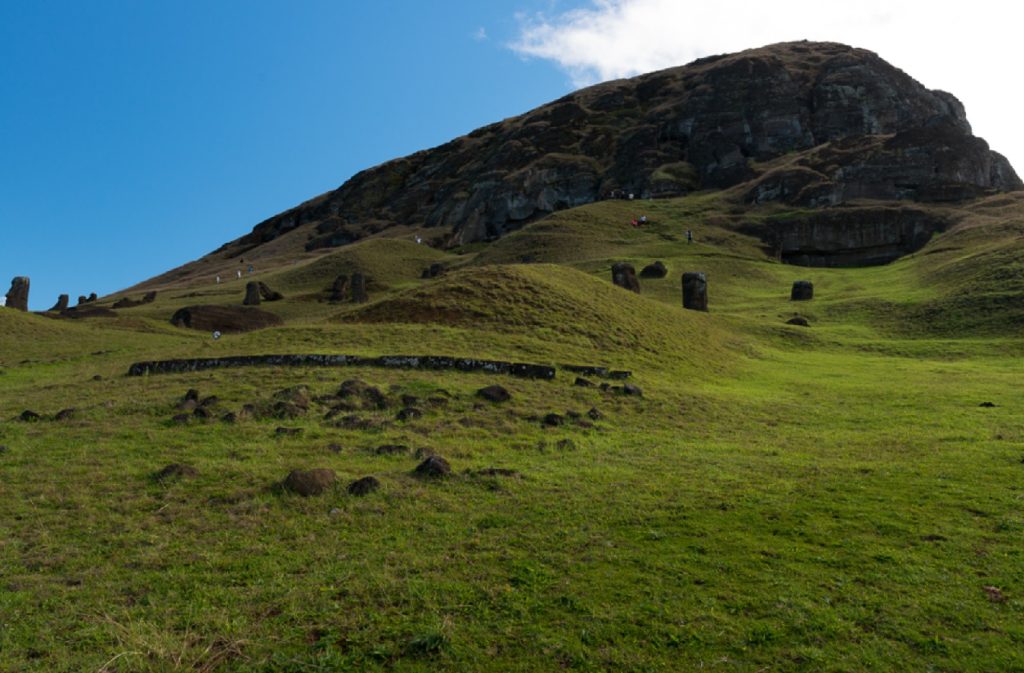
Rano Raraku contains the largest concentration of moai in all of Rapa Nui. It is estimated that around 400 moai are located within the site, including visible statues, partially buried figures, and those still attached to the bedrock.
Unlike other areas of the island where moai stand aligned on ceremonial platforms (ahu), here the landscape is dominated by stone figures emerging directly from the ground, creating one of the most striking archaeological landscapes in the Pacific.
Tau’a Rapa Nui: The Ancestral Triathlon in Sacred Territory
For many years, one of the most unique cultural events in Rapa Nui was the Tau’a Rapa Nui, a traditional-inspired competition held in the Rano Raraku area, particularly within the crater lagoon, transforming the volcano into a natural stage of strong symbolic and athletic significance.
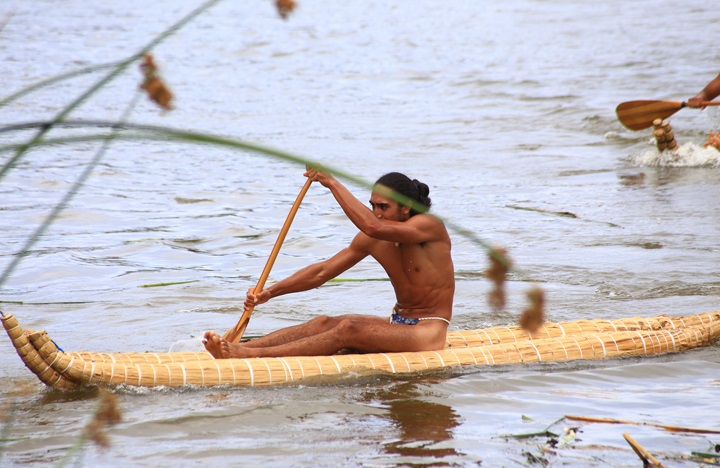
This ancestral triathlon was part of the Tapati Rapa Nui Festival and consisted of three disciplines: the first, Vaka Ama, involved crossing the crater lagoon by paddling small reed boats made of totora; the second, Aka Venga, was a land race where competitors ran around the lagoon carrying two heavy bunches of bananas; and the final stage involved crossing the lagoon again using a flotation device made of totora fibers called Pora.
However, this practice is no longer held today. Its suspension is due to environmental conservation concerns within Rapa Nui National Park, as well as the impact of a wildfire in 2022 that severely affected the crater lagoon, causing drought conditions and soil alteration that is still in a slow recovery process.
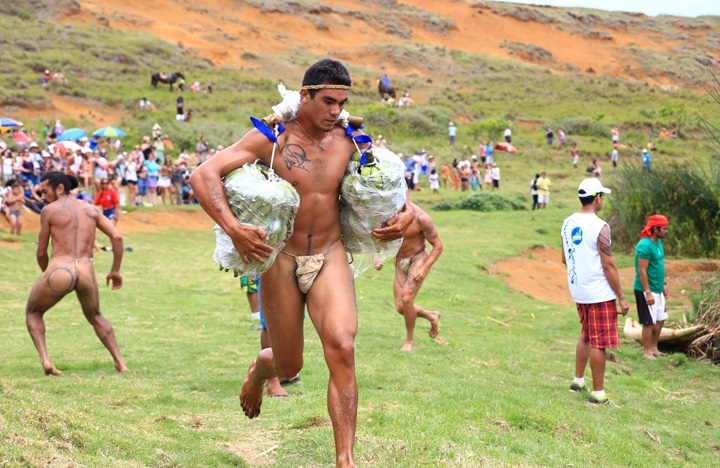
Today, the Tau’a Rapa Nui remains in collective memory as an expression of resistance, identity, and connection to the land, as well as a reminder of the importance of protecting Rapa Nui’s sacred spaces.
How to Visit Rano Raraku Today
To enter Rano Raraku, it is necessary to purchase a Rapa Nui National Park ticket in advance, as it is the only official access to the island’s main archaeological sites. The ticket is valid for 10 days and allows access to different points of interest, although the visit to Rano Raraku (like Orongo) can only be made once within that period. Tickets can be purchased at www.rapanuinationalpark.com.
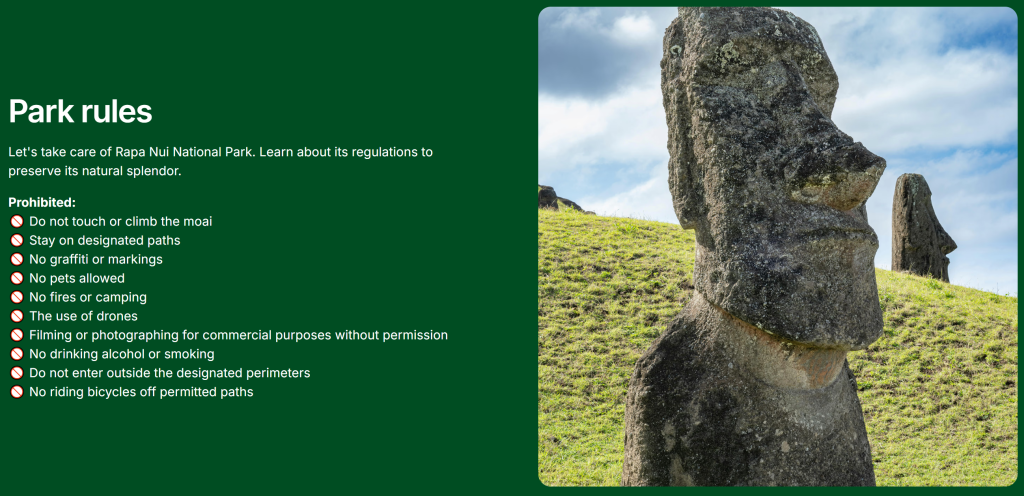
Entry is validated at the park’s ticket office, which operates from 9:00 to 18:00. The entrance area also includes informational panels, public restrooms, craft shops, and a small café for visitors. The site is visited via marked trails that allow for an organized and safe experience. It is strictly forbidden to leave designated paths, touch the statues, or access restricted areas, particularly those leading into the crater or summit, due to safety risks and the fragility of the environment.
How to Prepare and What the Trail is Like
The Rano Raraku trail consists of natural dirt paths integrated into the volcanic landscape. It is uneven and includes several inclines and sections that can be moderately demanding. After rain, some areas may become slippery, especially on slopes within the quarry.
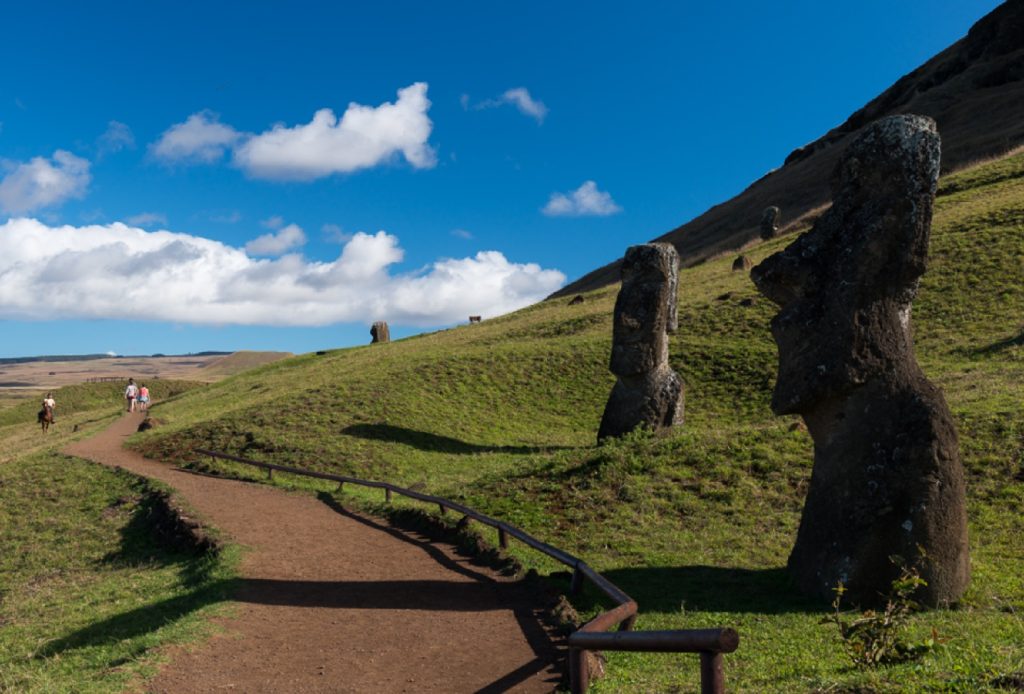
Visitors are advised to wear comfortable, breathable clothing suitable for changing weather conditions. Due to Rapa Nui’s subtropical climate, a light jacket or windbreaker is recommended, both for sudden weather changes and sun protection. Footwear should provide stability and good traction, ideally trekking or outdoor shoes, as the terrain is irregular and includes loose volcanic soil.
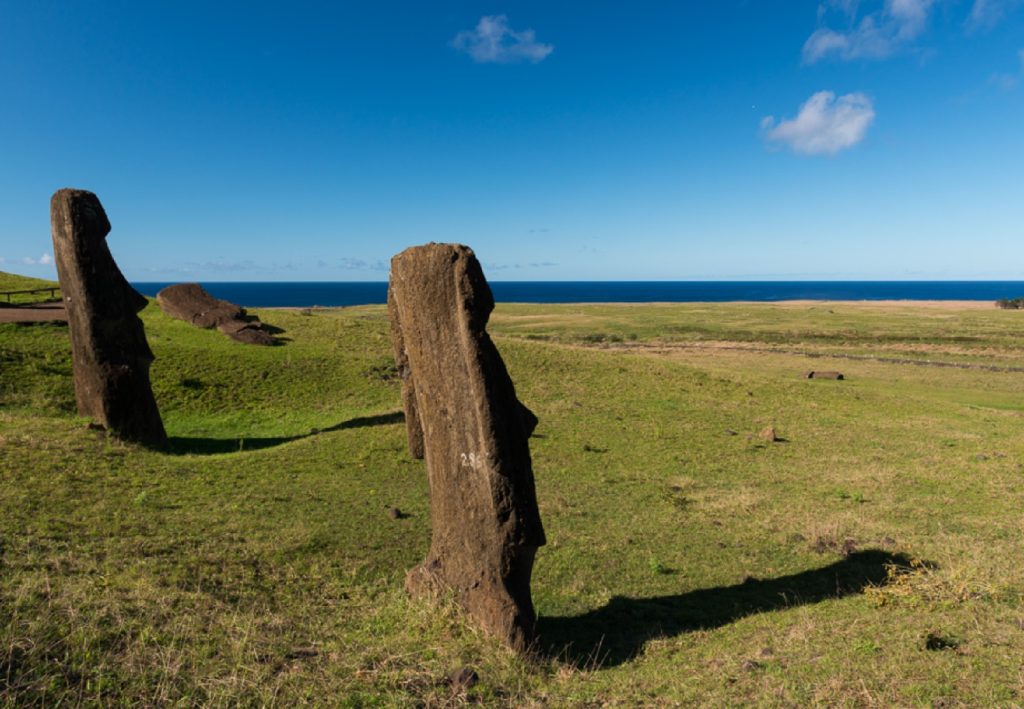
Despite these natural conditions, the route is designed to be explored gradually, with stops at different moai viewing points along the way. Our tours are also scheduled according to the best daylight conditions, ensuring the most favorable lighting for both professional and personal photography. The natural light of Rapa Nui changes constantly and enhances the textures and volumes of the moai in a unique way.
Why Visit Rano Raraku with a Local Guide
Visiting Rano Raraku with a local guide greatly enhances the experience. This is not only a site of ancient sculptures, but a landscape rich in cultural, spiritual, and historical meaning that is not always immediately visible.
As a private tour operator, our approach focuses on delivering a personalized experience, allowing each visit to be enjoyed at a comfortable pace without rushed itineraries. This ensures a deeper connection with the site and its context.
A Rapanui guide provides insight into the carving process, transportation routes, differences between moai, and the role of the quarry within the island’s clan structure. In our tours, we also focus on answering all questions along the way and adapting explanations based on each visitor’s interests, ensuring a deeper understanding of the site.
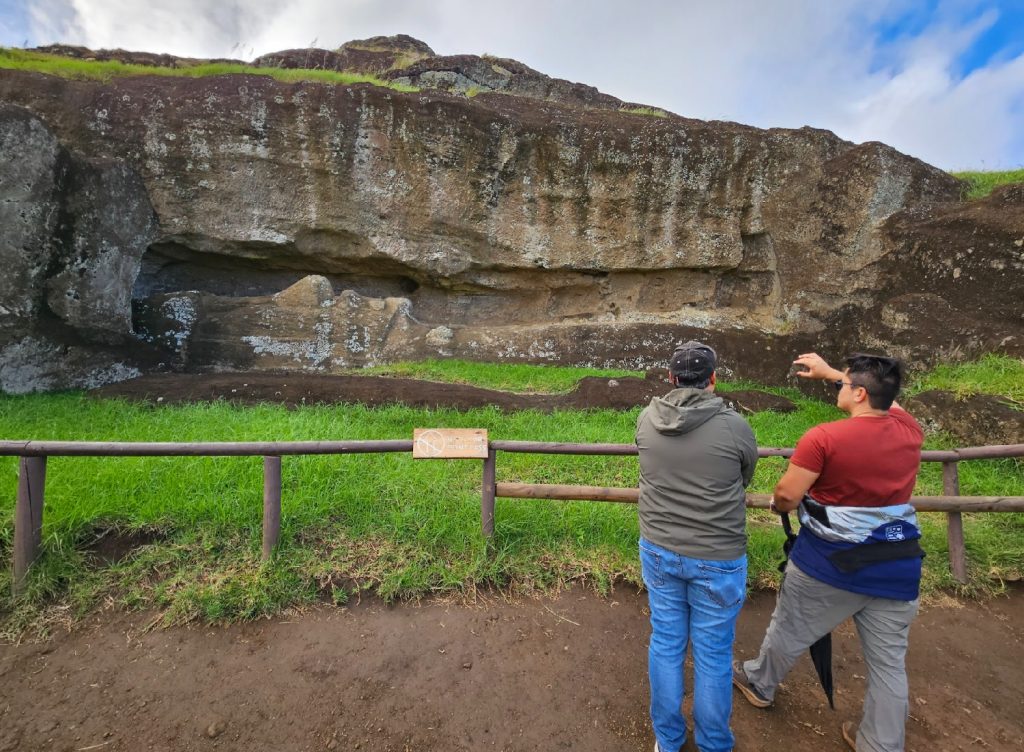
There are also important practical considerations. Some areas may have restricted access, and certain zones require special care. A guide ensures safe navigation while helping visitors understand the landscape as a whole and avoid missing key details.
In a place where each moai forms part of a larger narrative, visiting with a guide transforms Rano Raraku from a striking archaeological site into a meaningful experience of learning, connection, and understanding of the territory.
Book Your Visit to Rano Raraku
Rano Raraku is included in our private tours across the eastern coast of Rapa Nui and is, without exaggeration, one of the most recommended visits for travelers who want to understand the island beyond its most famous postcards. We offer this experience in different formats:
→ Full-day
→ Half-day
→ or Express Tours, always adapted to your available time and travel style.
If you are planning your trip and want to include Rano Raraku in a private itinerary, we can help you choose the best option based on your schedule, season, and other sites you wish to visit. If you have questions before booking, feel free to contact us. We can guide you on how to combine Rano Raraku with Ahu Tongariki and other archaeological sites, and how to prepare your visit to Rapa Nui National Park for the best possible experience.
→ Book your Rapa Nui tour here
Rano Raraku is one of the most important sites in Rapa Nui and a key place for understanding the island’s cultural and sculptural development. From our experience guiding visitors in the field, this site represents an essential part of any itinerary, not only for its archaeological significance, but also for the direct connection it offers with the origins of the moai and the history of the land itself.
Below, you will find additional articles that may help you further explore the history, culture, and different sites of Rapa Nui, allowing you to enrich your experience on the island.