
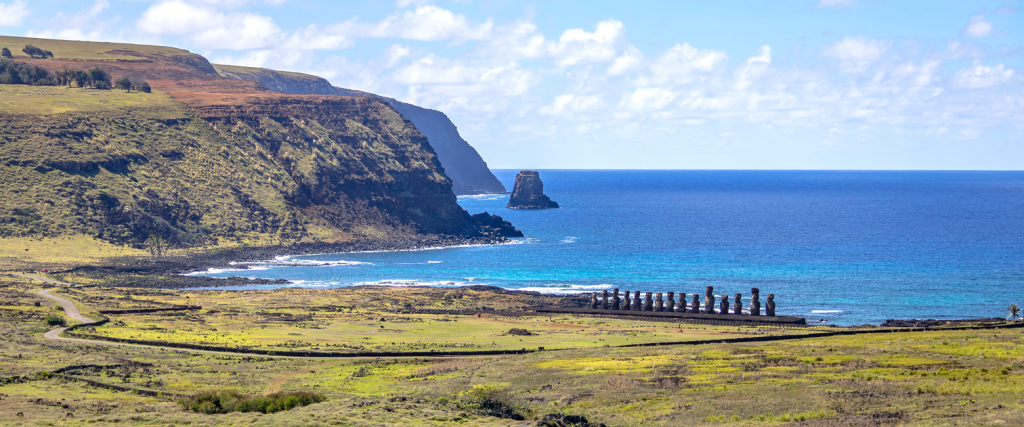
Rapa Nui (Easter Island) is one of the most remote, fascinating and enigmatic destinations on the planet. Located in the middle of the Pacific Ocean, more than 3,700 kilometers from mainland Chile, the island is home to an extraordinary archaeological heritage across just 163 km².
Its landscape is marked by the moai, the monumental volcanic stone statues that are part of Rapa Nui’s identity, as well as the ahu, the ceremonial platforms where they were erected. These are joined by volcanoes, petroglyphs, caves, quarries and ancient settlements that help reveal the history of one of the world’s most remarkable Polynesian cultures.
If you want to discover this history beyond photographs, an archaeological route in Rapa Nui allows you to connect the island’s main sites and understand how each one forms part of the same cultural legacy. In this guide, we’ll explain which places to include, what you need to visit them and how to explore them respectfully with a local guide.
Plan Your Archaeological Route in Rapa Nui
Before beginning any tour of Rapa Nui’s archaeological sites, it is important to understand the regulations that protect this unique heritage. Almost the entire island forms part of Rapa Nui National Park, a territory of enormous cultural and natural value that was declared a UNESCO World Heritage Site in 1995.
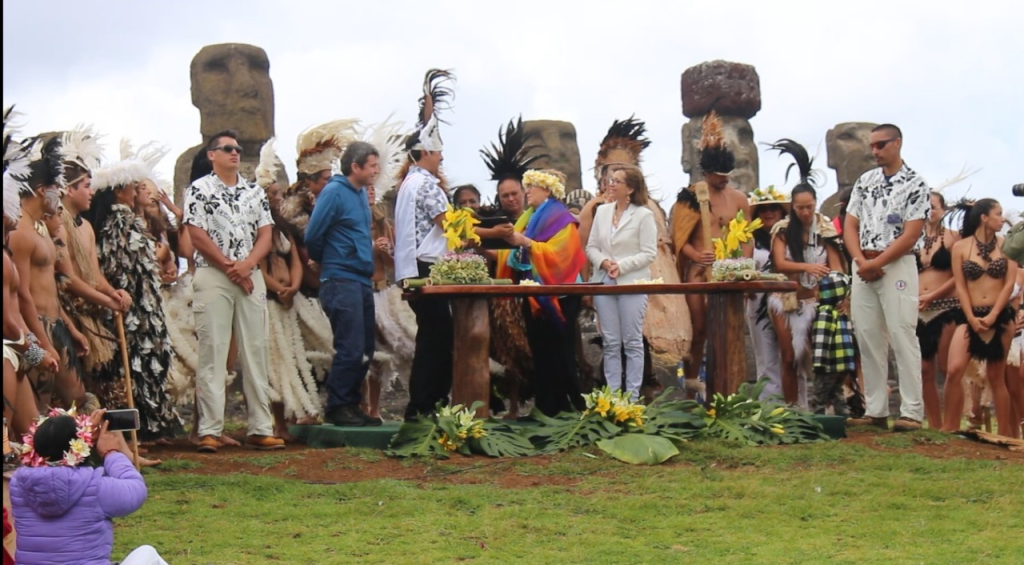
Today, Rapa Nui National Park is administered by Ma’u Henua, an Indigenous Rapa Nui Community established on July 2, 2016, and made up of members of the Rapa Nui people over the age of 18. Its role in managing the park represents a model of stewardship directly connected to the local community and the protection of the island’s heritage.
Planning your route in advance will help you make better use of your time, organize your visits according to each site’s restrictions and, above all, explore Rapa Nui while respecting conservation regulations.
What Do You Need to Visit the Archaeological Sites?
To begin your journey, you will need three main things: a Rapa Nui National Park ticket, an authorized local guide and an understanding of the specific regulations that apply to each site.
- Rapa Nui National Park ticket: You can purchase your ticket online through rapanuinationalpark.com before your trip or directly at the authorized ticket office in Hanga Roa. The ticket is personal and non-transferable and is valid for 10 consecutive days from its first use.
- Certified local guide: A certified local guide is required at the main archaeological sites. More than just a requirement, having a guide allows you to understand the history, traditions and cultural significance of each place. At Easter Island Travel, we have certified local guides who can accompany you throughout your journey.
- Visit regulations: It is also important to consider the specific access regulations. Because certain sites are particularly fragile, the ticket allows only one visit to Rano Raraku and Orongo during its validity period. The other sites included with the ticket can be visited again while the ticket remains valid, provided you follow the access conditions and are accompanied by a guide where required.
Rano Raraku: The Quarry of the Giants
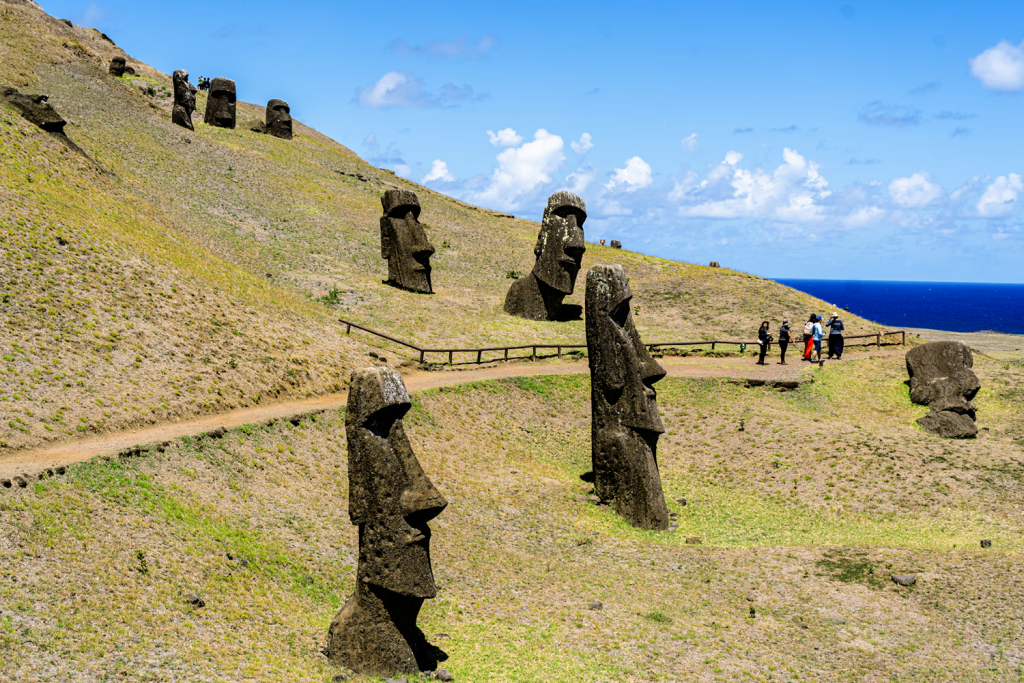
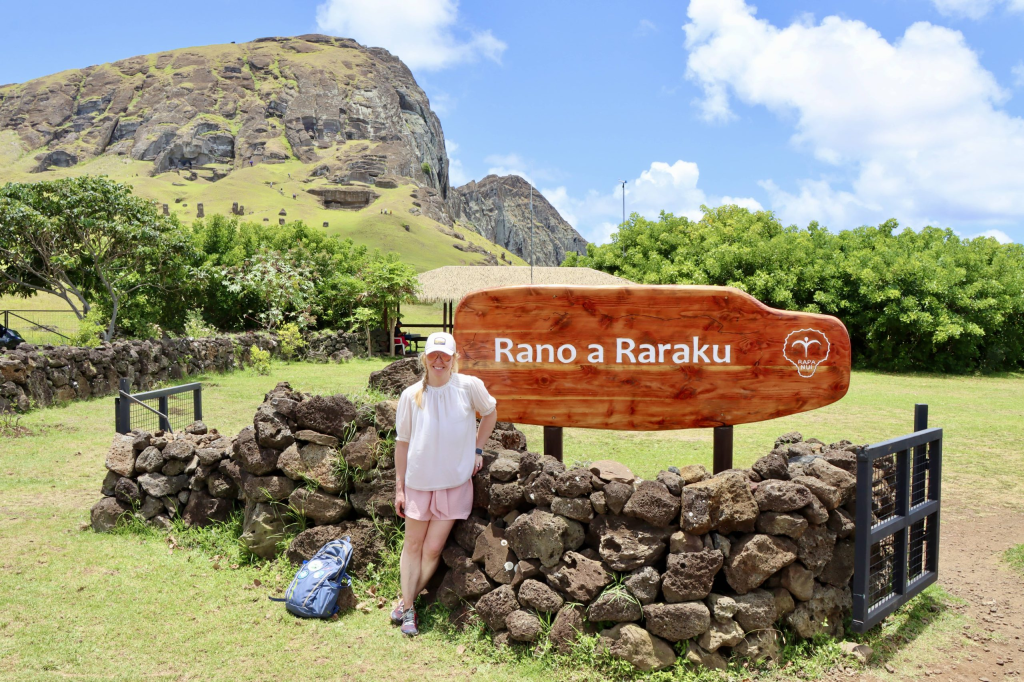
An archaeological route in Rapa Nui would hardly be complete without visiting Rano Raraku, where the vast majority of the island’s moai were carved. The quarry preserves evidence of the enormous effort involved in extracting and carving these monumental figures directly from volcanic rock.
The current route follows designated trails and allows visitors to see numerous moai at different stages of production. Among them are the famous partially buried moai, which are actually complete statues whose bodies became covered by sediment accumulated over centuries.
The moai of Rano Raraku form one of the most iconic archaeological landscapes in Rapa Nui.
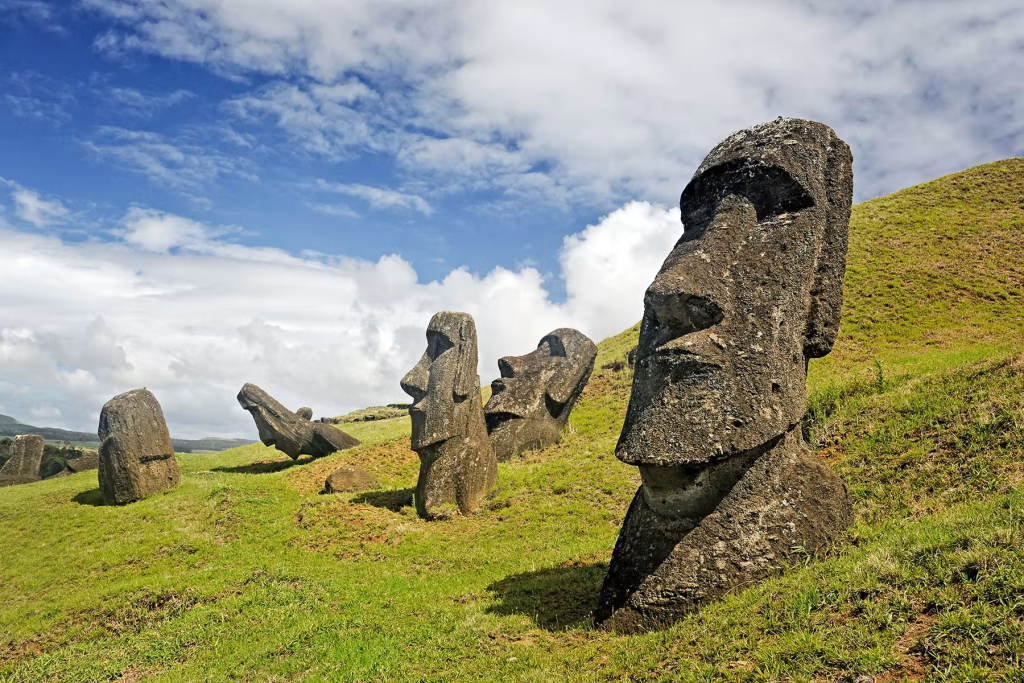
One of the site’s most remarkable figures is Te Tokanga, the largest unfinished moai ever conceived in Rapa Nui. It remains attached to the bedrock and gives visitors a sense of the extraordinary scale achieved by the island’s ancient sculptors. You can also see Tukuturi, an exceptional moai depicted in a kneeling position.
It is important to note that access to the crater of Rano Raraku is currently not permitted. Visits are limited to the designated and marked areas in order to protect the site and ensure its conservation.
Ahu Tongariki: The Splendor of the Fifteen Moai
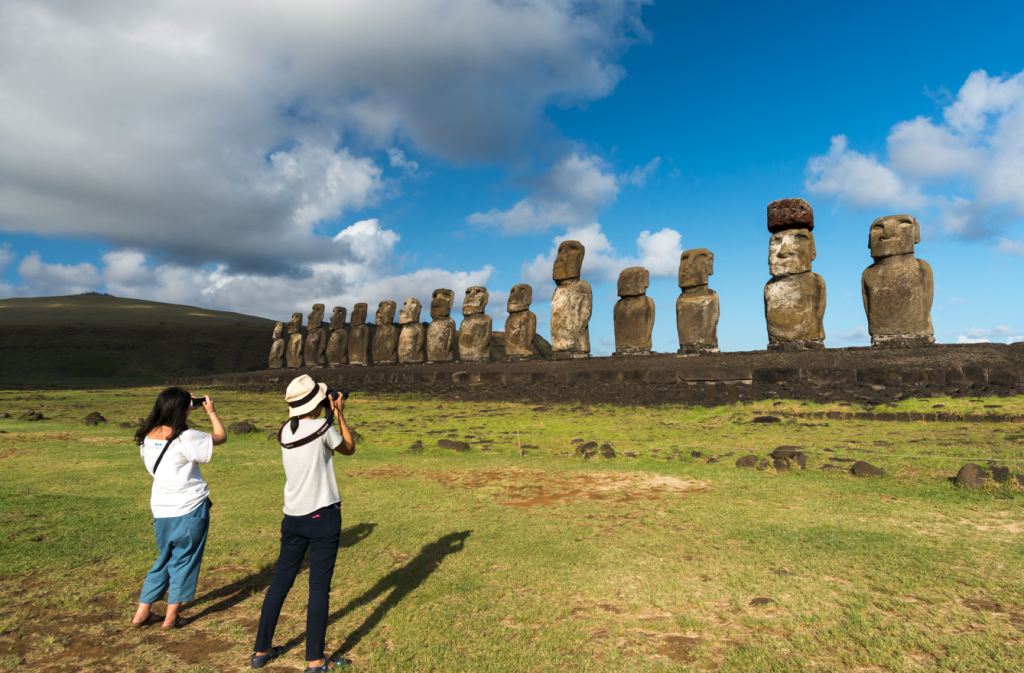
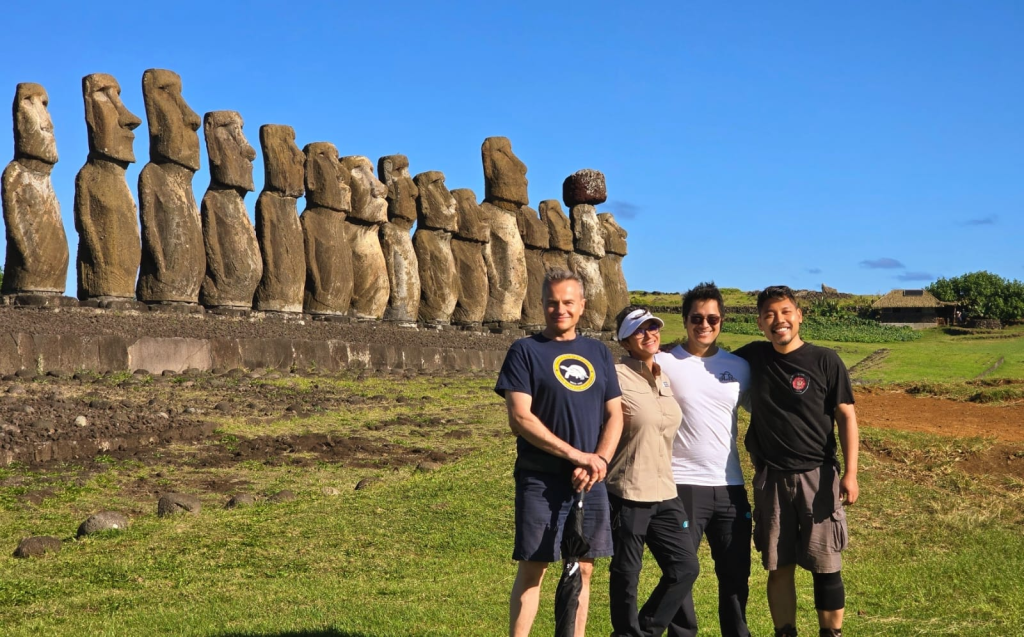
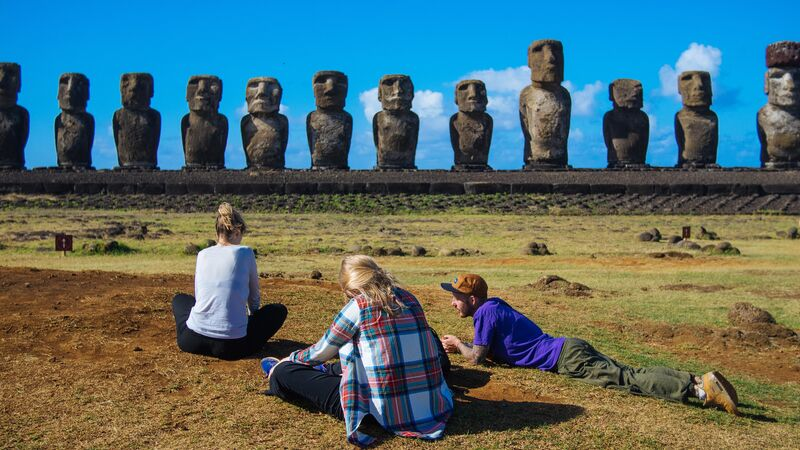
Just minutes from Rano Raraku lies Ahu Tongariki, the largest ceremonial platform in Rapa Nui and one of the island’s most recognizable landmarks. Its fifteen moai stand aligned facing the Pacific Ocean, creating one of the most iconic images of Rapa Nui heritage.
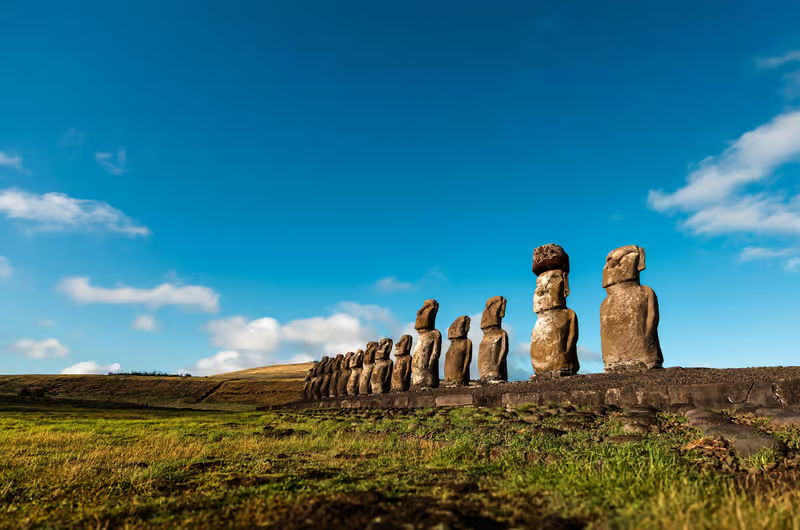
The view from the base of Ahu Tongariki allows visitors to fully appreciate the monumental scale of its fifteen moai.
The complex also has a history marked by destruction and restoration. After the moai were toppled during internal conflicts on the island, the tsunami caused by the 1960 Valdivia earthquake carried the statues and stone blocks inland. During the 1990s, the site was restored with the participation of Chilean and international specialists, along with Japanese technical and financial support.
Sunrise at Ahu Tongariki
If you want to experience Ahu Tongariki in a completely different way, you can add the Ahu Tongariki sunrise experience to any of our private tours. Seeing the fifteen moai during the first hours of the day allows you to experience the monument in completely different light and atmosphere.
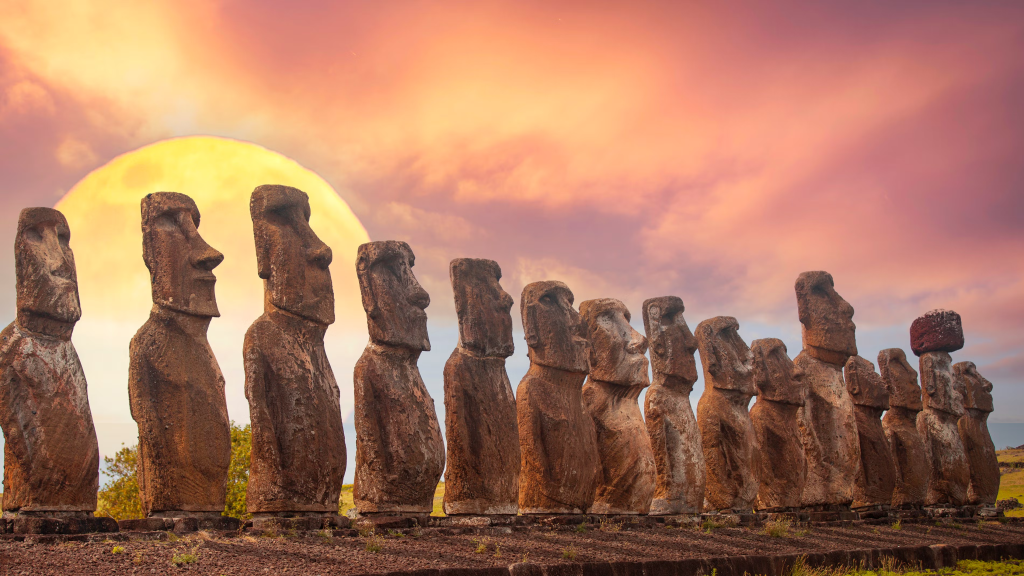
At sunrise, during certain times of the year, the sun appears behind the platform and can transform the sky into shades of violet, pink and orange while the silhouettes of the moai stand against the ocean. Visiting Tongariki during the day allows you to appreciate other details of the complex and combine it with different archaeological sites, while visiting at sunrise creates a more intimate and contemplative experience.
Rano Kau and Orongo: Volcanoes, Petroglyphs and the Birdman
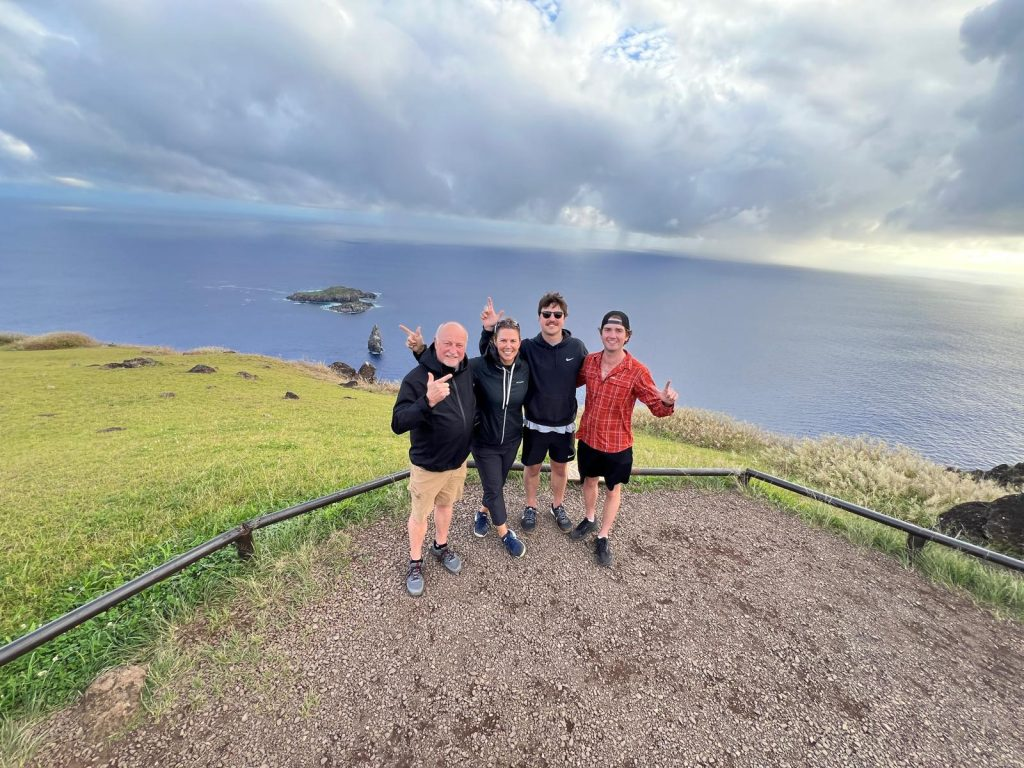
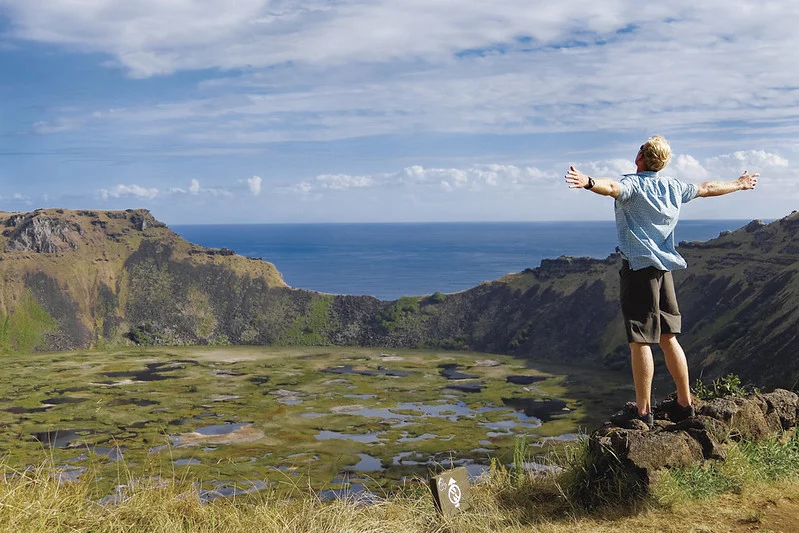
The archaeological route continues toward the southwestern part of the island, where Rano Kau and the ancient ceremonial village of Orongo are located. From the viewpoints in this area, you can admire the enormous crater of Rano Kau, whose inner lagoon and volcanic landscape create one of the most impressive natural settings in Rapa Nui.
Orongo reveals a different chapter in the island’s history, connected to the worship of the god Make-Make and the Tangata Manu, known as the Birdman competition. Representatives of different clans descended the cliffs, swam to the islet of Motu Nui and competed to obtain the first egg of the manutara (sooty tern – Onychoprion fuscatus).
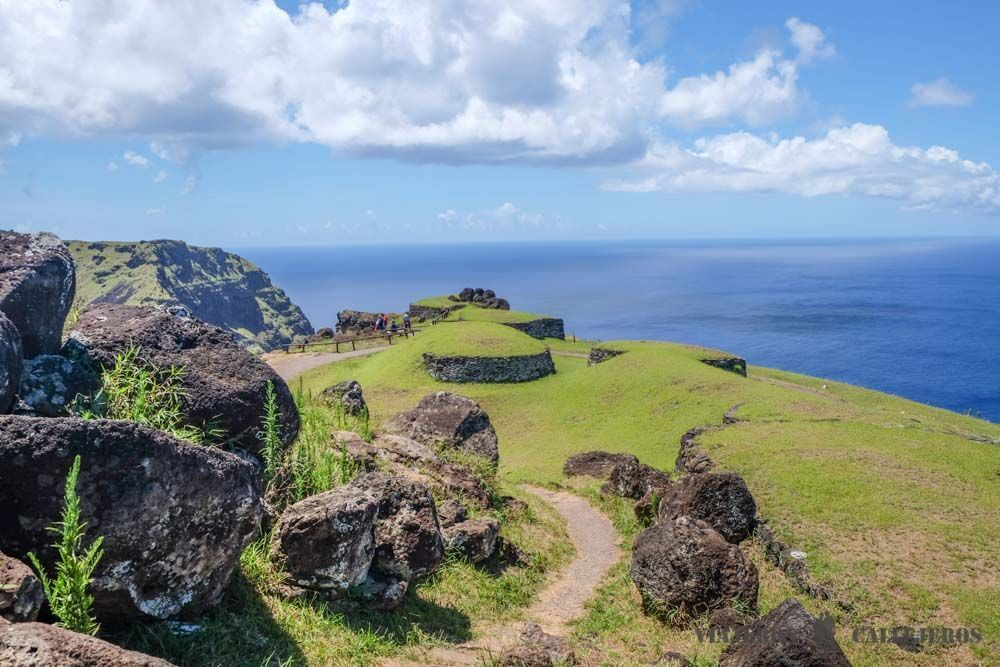
During your visit, you can see the ancient stone houses, petroglyphs associated with the Birdman and Make-Make, and the spectacular landscapes surrounding the site. Here, you can better understand the relationship between landscape, spirituality and the social organization of ancient Rapa Nui society.
Other Archaeological Sites to Include
An archaeological route in Rapa Nui does not have to be limited to the main sites. Depending on your available time, interests and the type of experience you are looking for, you can add other places that offer a different perspective on the island’s history and landscape.
Ahu Akivi
Ahu Akivi is one of the most distinctive ceremonial complexes in Rapa Nui. Its seven moai face toward the ocean and form one of the most recognizable archaeological landscapes in the interior of the island.
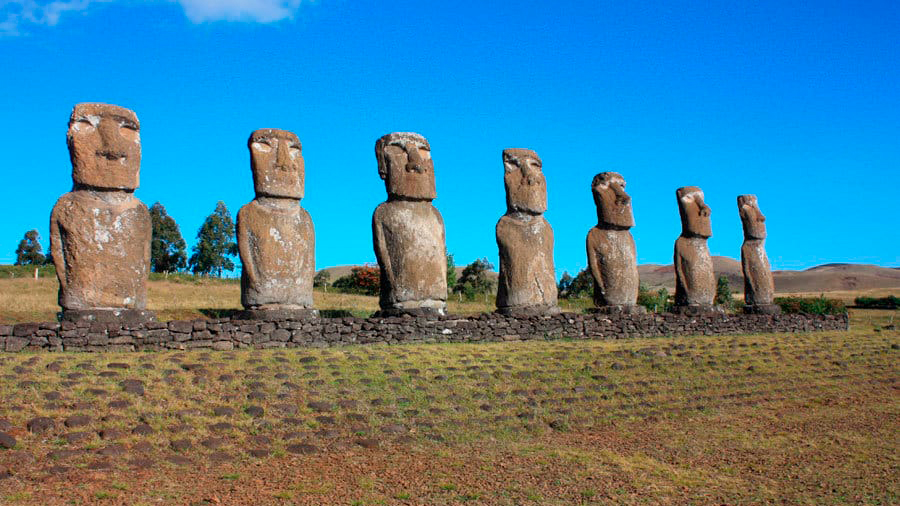
Their orientation has also been associated with the astronomical knowledge of ancient Rapa Nui society, making this site particularly interesting for those who want to understand the relationship between archaeology, landscape and observation of the sky.
Anakena and Ahu Nau Nau: The Birthplace of Rapa Nui
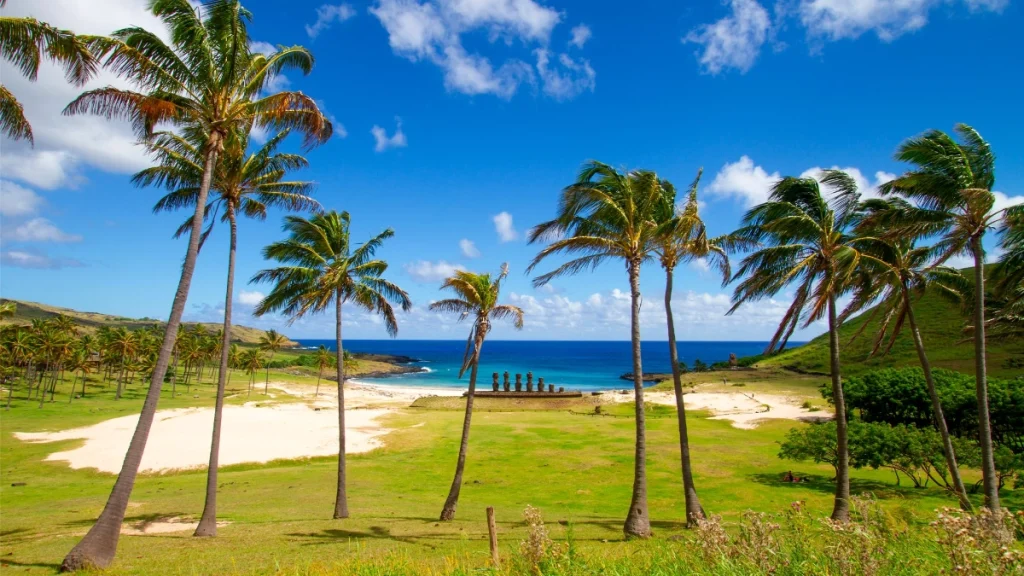
Anakena combines archaeology, history and tropical landscapes in one of the island’s best-known locations. According to Rapa Nui tradition, this area is associated with the arrival of the founding king Hotu Matu’a and is considered one of the key places for understanding the origins of Rapa Nui society.
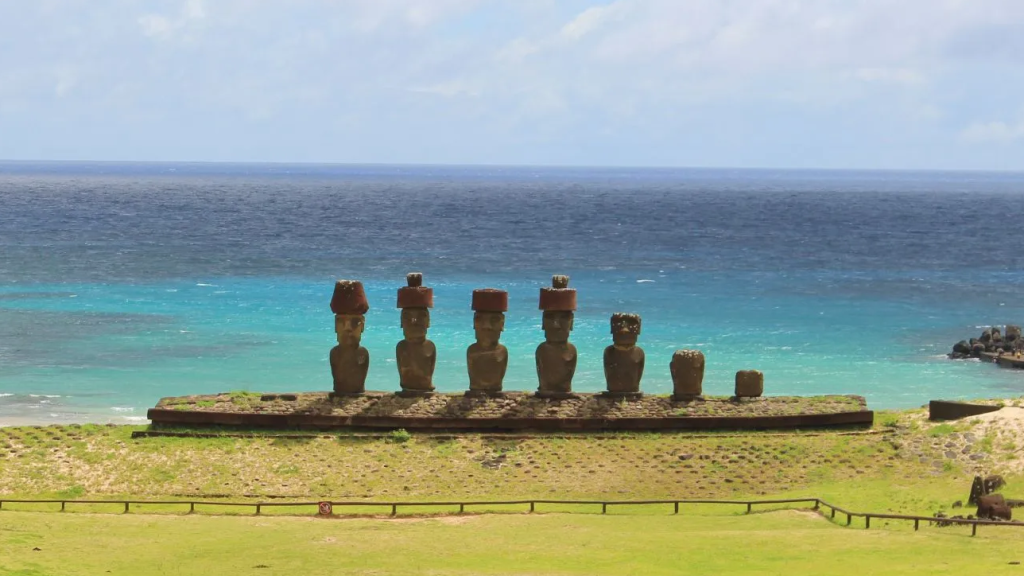
At the beach, you will find Ahu Nau Nau, whose moai retain their distinctive red stone pukao and numerous carved details. The sand helped protect parts of these surfaces from erosion caused by wind and the marine environment.
Puna Pau: The Quarry of the Pukao
Puna Pau is the quarry where the red scoria used to create the pukao, the large headdresses seen on some moai, was obtained.
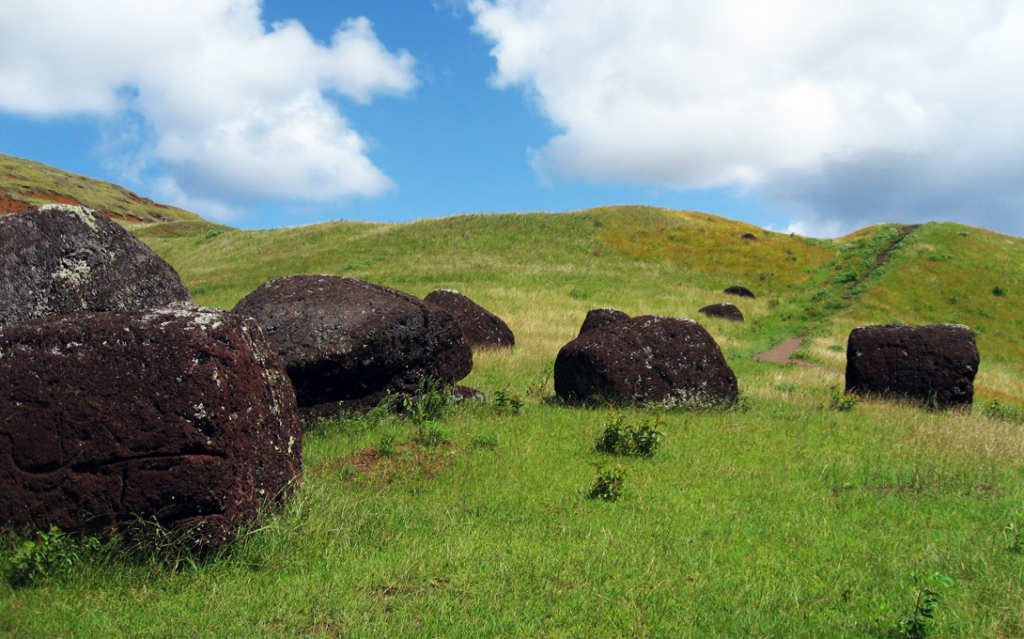
Exploring this archaeological site helps reveal that the construction of these monumental statues did not depend on a single location. Different areas of Rapa Nui served specific functions within a complex process of production and transportation.
Ana Te Pahu and the Caves of Rapa Nui
Caves and lava tubes are another important part of Rapa Nui’s heritage. Ana Te Pahu is one of the underground formations you can explore during a visit to the island and offers a completely different perspective from the great ahu and moai.
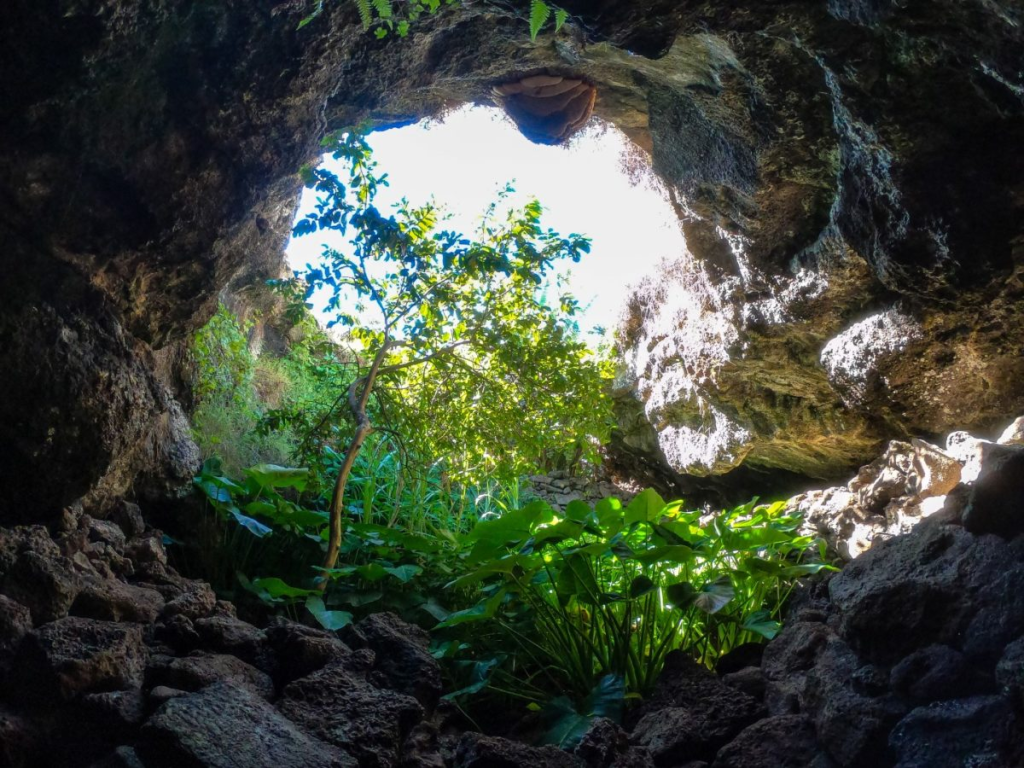
For those looking for a more adventurous experience, there are also tours that explore other caves and areas of the northern coast, where the volcanic landscape reveals a lesser-known side of Rapa Nui.
Poike and the Northern Coast
If you have more time, you can also explore Poike or visit sections of the northern coast of Rapa Nui. These alternatives allow you to move beyond the best-known routes and discover landscapes where archaeology is closely connected to the geography and history of the territory.
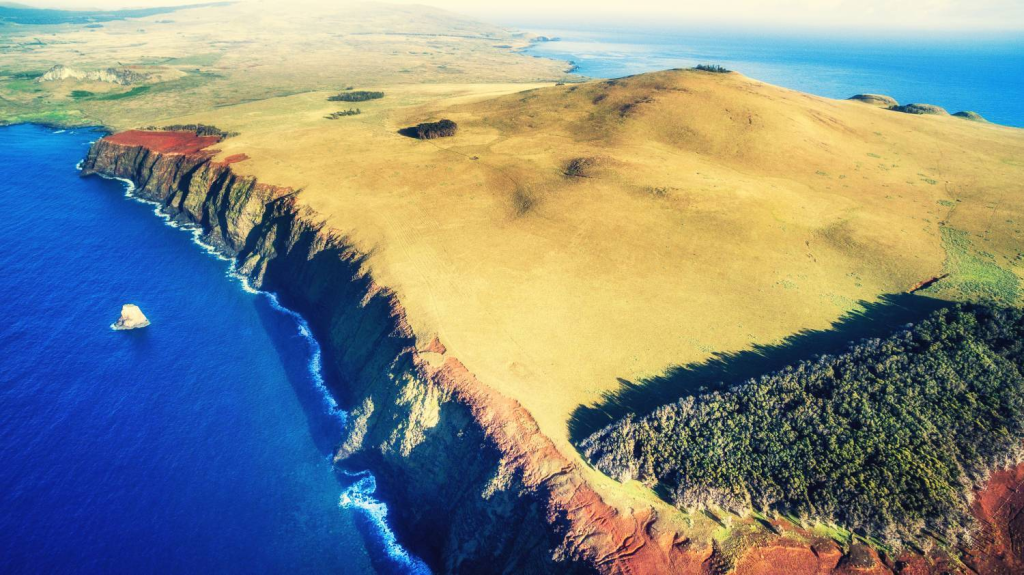
The northern coast offers open, quiet landscapes that showcase the natural and remote character of Rapa Nui.
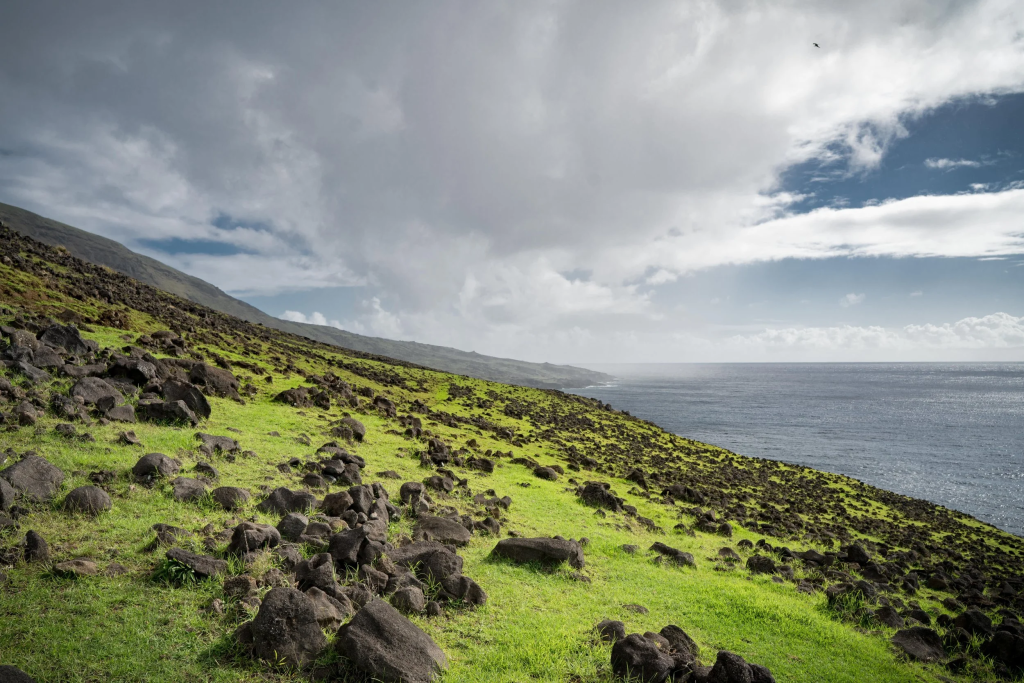
The route you choose will depend on the number of days you have, your interests and the conditions of the trail. For this reason, planning your route in advance can help you make much better use of your stay.
You can explore our Poike trekking tour and our Northern Coast trekking tour.
How to Explore an Archaeological Route in Rapa Nui with a Local Guide
Exploring the archaeological sites of Rapa Nui is not simply about traveling from one monument to another. Every moai, ahu, petroglyph, quarry, cave and landscape forms part of a much broader story that can be difficult to understand without the right context.
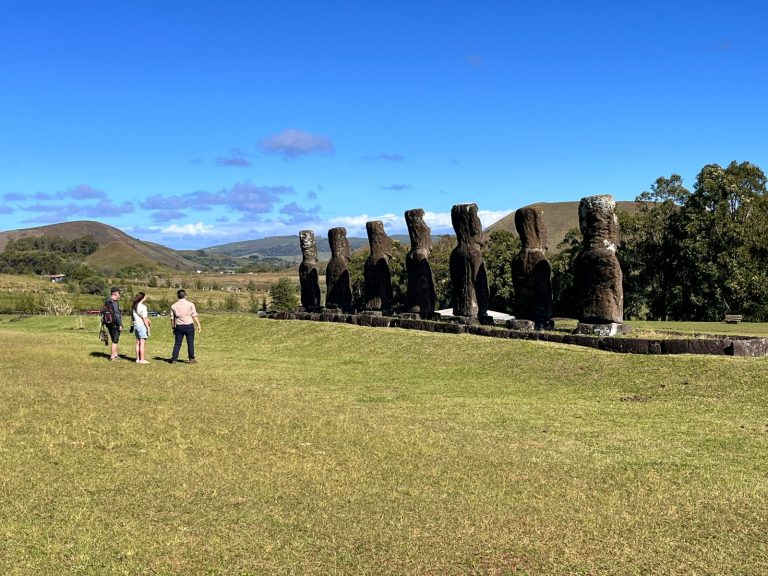
In addition, current regulations require visitors to be accompanied by a certified local guide or Rapa Nui host at the main archaeological sites. This helps protect the heritage while allowing visitors to experience these places responsibly.
Discover Rapa Nui on a Private Tour
At Easter Island Travel, we design private tours for travelers who want to discover the main archaeological sites of Rapa Nui with greater flexibility and cultural depth.
Our certified local guides share the history, traditions and knowledge associated with each location while adapting the itinerary to your available time, interests and travel pace. You can also complement your itinerary with special experiences, such as sunrise at Ahu Tongariki.
If you want to discover Rapa Nui beyond its photographs and truly understand the history behind its monuments, our private tours are an excellent way to explore the island alongside people who know and live in this territory.
Tips for Visiting the Archaeological Sites of Rapa Nui
Rapa Nui is a territory of extraordinary archaeological value and, at the same time, a vulnerable one. Wind, rain, sunlight, natural erosion and visitor traffic can affect structures that have stood for centuries.
For this reason, responsible travel is an essential part of the experience. Every traveler can help protect this heritage by following National Park regulations and respecting the instructions of guides and park rangers.
Respect Boundaries and Protected Areas
Never cross the stones marking ceremonial platforms or climb on, walk over or touch the ahu and moai. Always remain on designated trails and respect restricted or restoration areas.
Removing stones, plants or other natural or archaeological elements is also prohibited. Following these rules demonstrates respect for Rapa Nui culture and for a territory that belongs to a living community.
Reduce Your Waste
Rapa Nui is an isolated oceanic island, and waste management is an important challenge. Avoid generating unnecessary waste, reduce your use of single-use plastics and carry your waste with you throughout your visit.
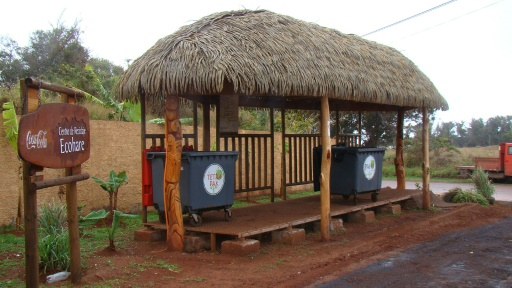
If you cannot immediately find an appropriate place to dispose of it, keep it with you until you reach an authorized waste collection point. Carrying a reusable water bottle is also an excellent way to reduce waste during your tours.
Protect Yourself from the Sun and Wind
Pacific sunlight can be intense, while constant wind can make the sun’s radiation feel less noticeable than it actually is. Proper preparation is therefore especially important during archaeological excursions.
We recommend bringing sunscreen, a hat or cap, enough water and comfortable clothing that protects you from the sun and wind. You should also wear appropriate footwear for walking on trails and volcanic terrain, especially if your itinerary includes walks through uneven areas.
An Archaeological Route That Connects You with Rapa Nui’s History
An archaeological route in Rapa Nui is much more than a succession of stone monuments. It is an opportunity to connect with the ancient engineering, spirituality, social organization and adaptability of a culture that developed an extraordinary society in one of the most isolated territories on Earth.
From the quarry of Rano Raraku and its moai at different stages of production to the impressive platform of Ahu Tongariki, the landscapes of Rano Kau and Orongo, and the seven moai of Ahu Akivi, each site provides another piece of the story of Rapa Nui.
Planning your route in advance, purchasing your ticket, respecting conservation regulations and traveling with a certified local guide will allow you to discover these places with greater depth and respect. If you want to experience Rapa Nui in a personalized way, we invite you to explore our private tours in Rapa Nui and discover the island alongside local guides.