


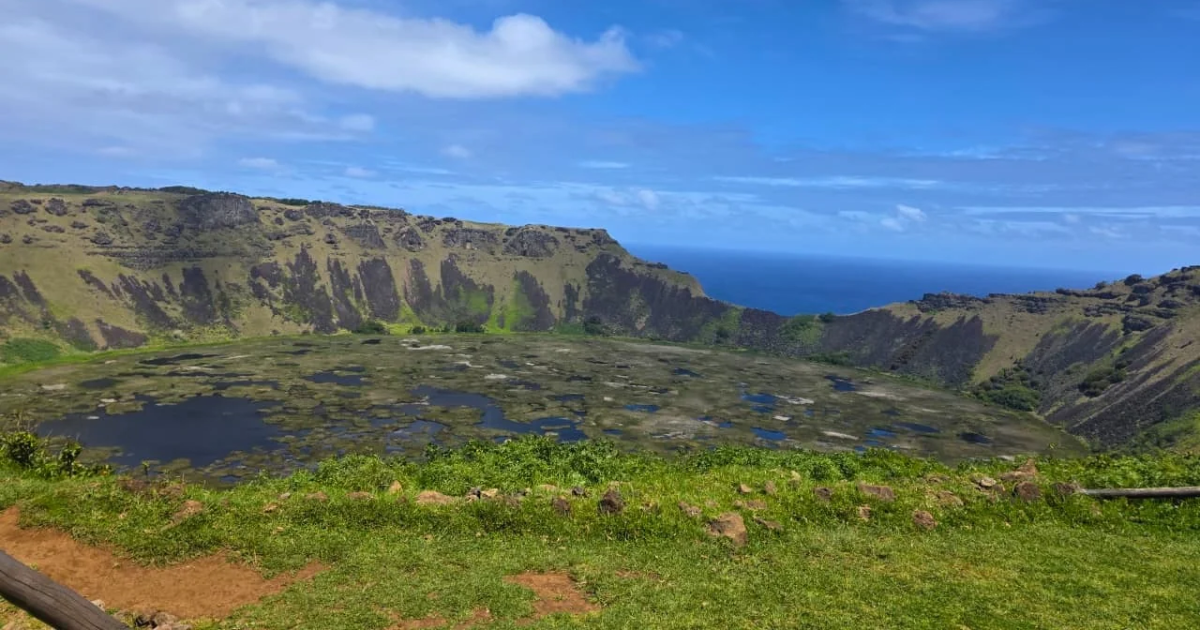
Rano Kau volcano is located at the southwestern tip of Rapa Nui, very close to Hanga Roa. Its crater measures over one kilometer (0.6 miles) in diameter and shelters a freshwater lagoon covered in totora reeds. Perched on its rim lies Orongo, the ceremonial village of the Tangata Manu (Birdman). To visit, you need a Rapa Nui National Park ticket and a certified local guide. Entry to Orongo is permitted only once per ticket, so planning ahead is key.
Rano Kau volcano is one of the stops that generates the most questions among our guests. In this guide, we break down what you will see, how park entry works, what to pack for the wind, and how to organize your itinerary to make the most of your single access to Orongo.
What is Rano Kau Volcano?
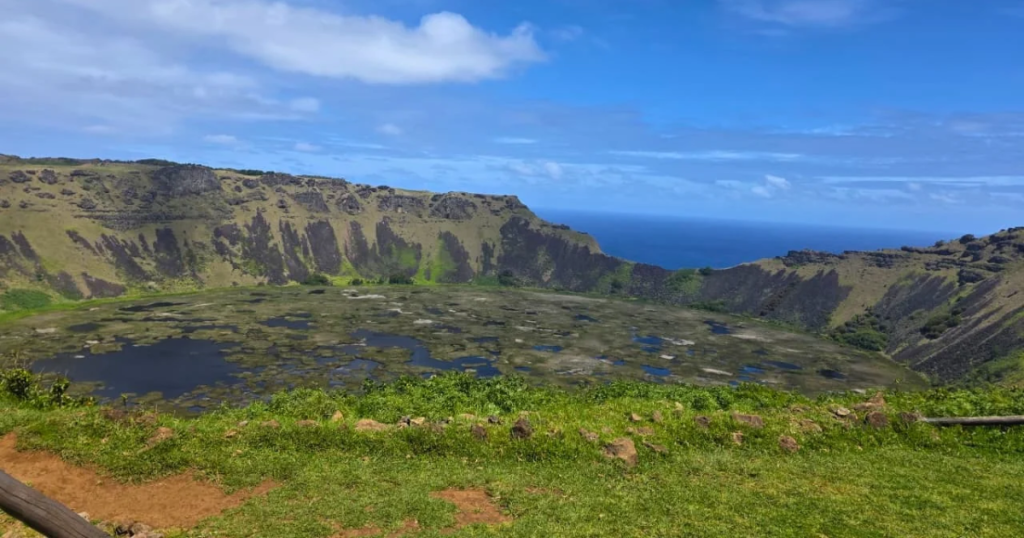
Rano Kau volcano is an extinct volcano on the southwestern tip of Rapa Nui. Its crater spans over one kilometer across, housing a freshwater wetland lagoon filled with floating totora reeds at the bottom (Chile Travel, 2026). Sitting on its southern rim is Orongo, the ceremonial site of the Birdman cult. The entire area is protected within Rapa Nui National Park.
From the crater viewpoint, you experience two dramatic perspectives at once: the lush lagoon inside the caldera and, just beyond the outer wall, the vast Pacific Ocean. This panorama is easily one of the most photographed views on the island.
The crater lake sits roughly 100 meters (330 feet) above sea level. Historically, islanders scrambled down the 150-meter crater walls to gather freshwater and cultivate crops (Easter Island Travel, 2026). When standing at the rim with our tour groups, visitors almost always ask how people managed to climb down—our guides have plenty of oral histories to share.
Quick Facts About Rano Kau Volcano
| Fact | Detail | Source |
|---|---|---|
| Location | Southwestern tip of Rapa Nui, near Hanga Roa | Chile Travel, 2026 |
| Crater Diameter | Over 1 kilometer (0.6 miles) | Chile Travel, 2026 |
| Laguna | Freshwater, covered in totora reeds (~100 m a.s.l.) | Chile Travel, 2026; Easter Island Travel, 2026 |
| Ceremonial Site | Orongo, featuring 54 semi-subterranean stone houses | UNESCO, s. f. |
| Park Entry | National Park ticket required; single entry to Orongo | Ma’u Henua, 2026 |
| Guide Requirement | Mandatory certified local guide | Chile Travel, 2026 |
| Volcano Elevation | ~324 meters (1,063 feet) above sea level | Official sources |
How to Reach the Rano Kau Volcano Crater Viewpoint
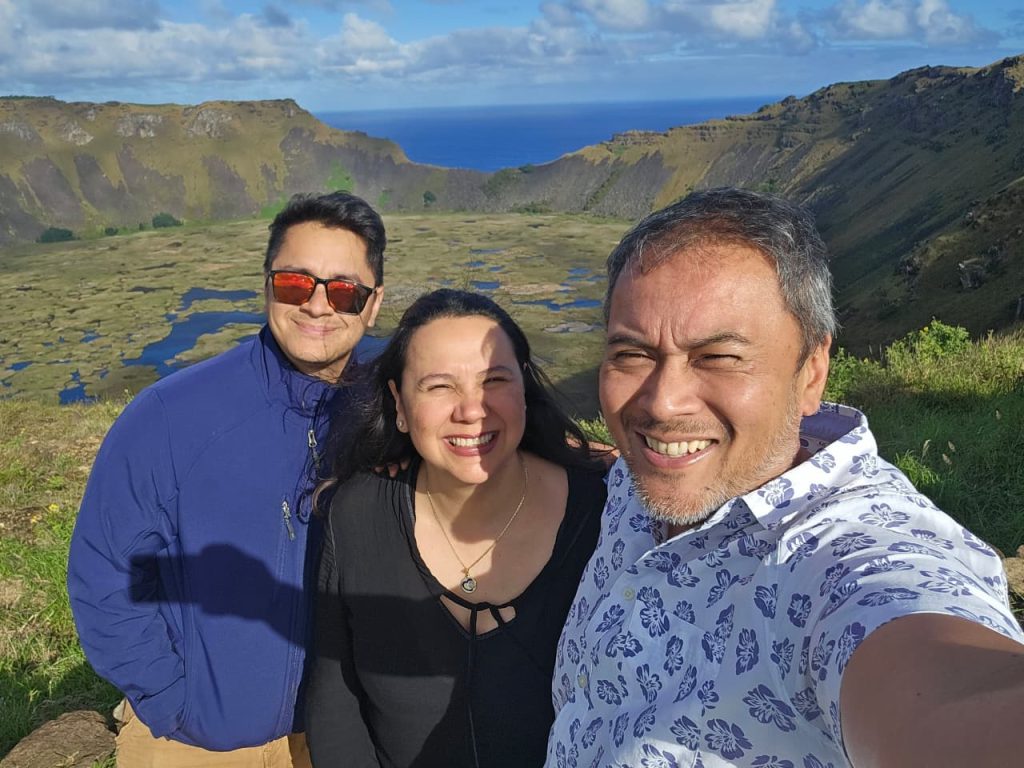
Rano Kau volcano is accessed via a paved road heading up from Hanga Roa. It is a short drive from town. Before reaching the entry checkpoint at Orongo, designated lookouts offer panoramic views over the crater rim (Easter Island Travel, 2026). Visiting this sector requires an authorized local guide.
Drive time from central Hanga Roa is brief—approximately 15 minutes by vehicle.
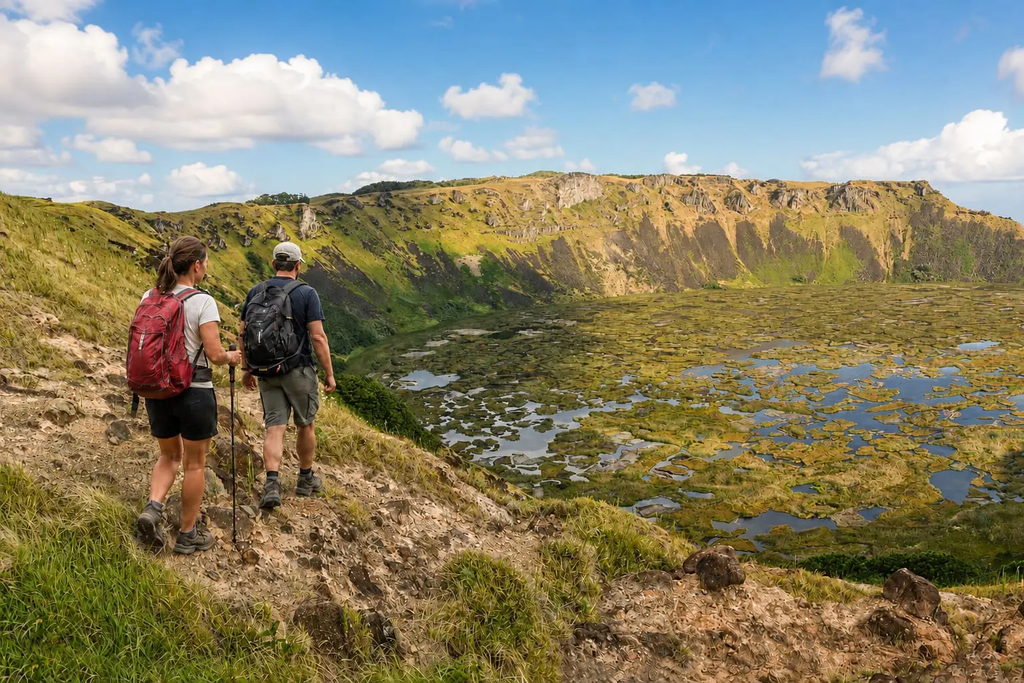
For those who prefer hiking, the traditional trail known as Te Ara o Te Ao ascends from the base near Hanga Roa directly up to the Rano Kau rim.
Our essential recommendations:
- Keep your National Park ticket with you (either printed or saved on your phone).
- Bring your own drinking water; there are no shops or vendors at the top.
- Check the wind forecast before heading up.
What is Orongo and What Was the Tangata Manu Competition?
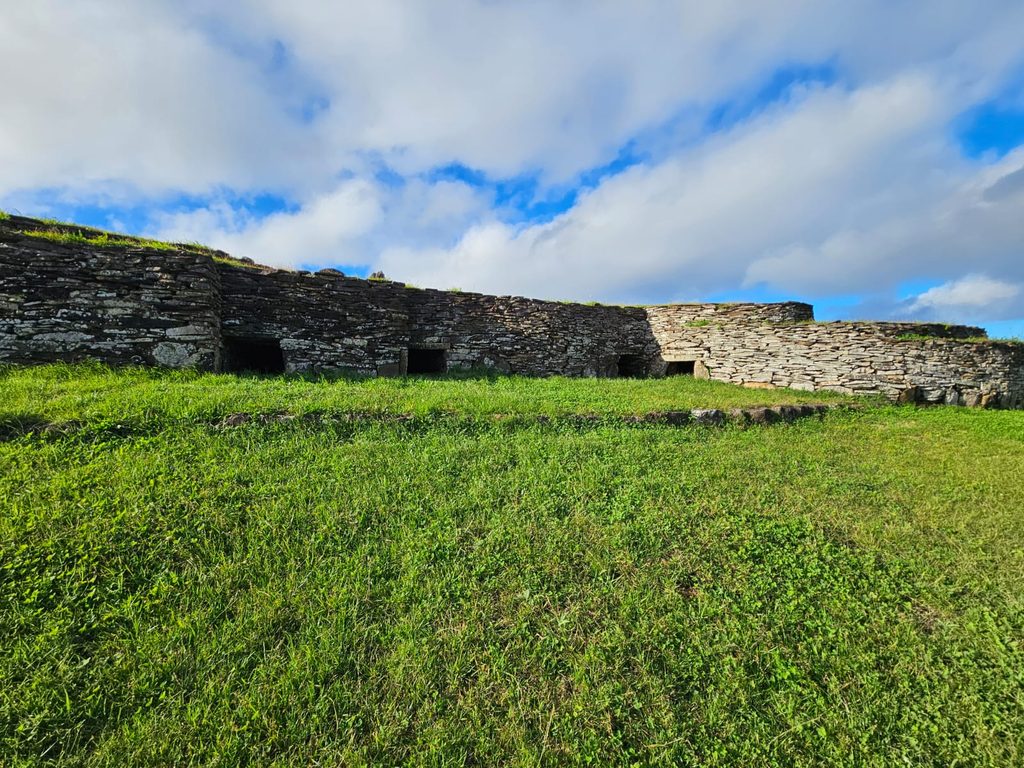
Orongo is the ceremonial village perched dramatically on the narrow ridge between the Rano Kau crater and a sheer ocean cliff. It features 54 elliptical, semi-subterranean stone houses decorated with petroglyphs of the Birdman (Tangata Manu) and fertility symbols (UNESCO, n.d.). Orongo hosted the annual Tangata Manu competition, which continued until the mid-19th century.
Each spring, the rituals began with the arrival of the manutara (sooty tern). Clan representatives, known as hopu manu, climbed down the vertical cliffside, swam on reed floats out to the islet of Motu Nui, and waited for the season’s first egg. The competitor who successfully returned to Orongo with an intact egg earned the title of Tangata Manu for his clan leader, who held sacred authority for the following year (Easter Island Travel, 2025).
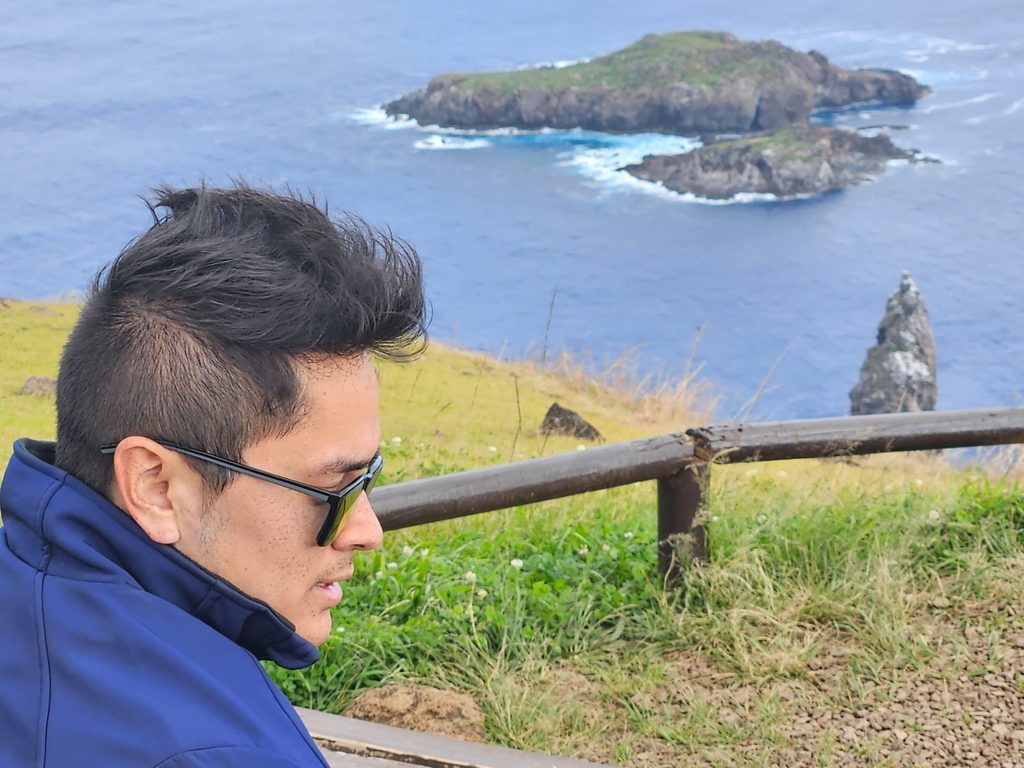
From the cliffs of Orongo, three offshore islets are visible: Motu Nui, Motu Iti, and Motu Kao Kao. Looking out at the ocean while local guides share the history puts the immense distance of that swim into clear perspective.
Single Entry to Orongo
This is the most critical logistical rule: your National Park ticket grants one single entry to Orongo and one single entry to Rano Raraku (Ma’u Henua, 2026). If you visit during heavy rain or rush through the site, you cannot return on another day using the same ticket. For this reason, we design our tour itineraries with ample time to comfortably explore the stone structures, petroglyphs, and sea viewpoints.
National Park Entry Fees and Rules
Park passes are issued by Ma’u Henua, the indigenous community board managing Rapa Nui National Park. Tickets remain valid for 10 consecutive days starting from your first site entry and include single admission to both Orongo and Rano Raraku (Ma’u Henua, 2026).
| Visitor Category | Indicative Fee | Source |
| Non-Chilean Adult (13+ years) | 95,000 CLP | Ma’u Henua, 2026 |
| Chilean Resident Adult | 40,000 CLP | Ma’u Henua, 2026 |
| Chilean Resident Children (7–12 years) | 40,000 CLP | Ma’u Henua, 2026 |
| Children under 7 years | Free | Ma’u Henua, 2026 |
Recommended Clothing, Wind, and Best Timing
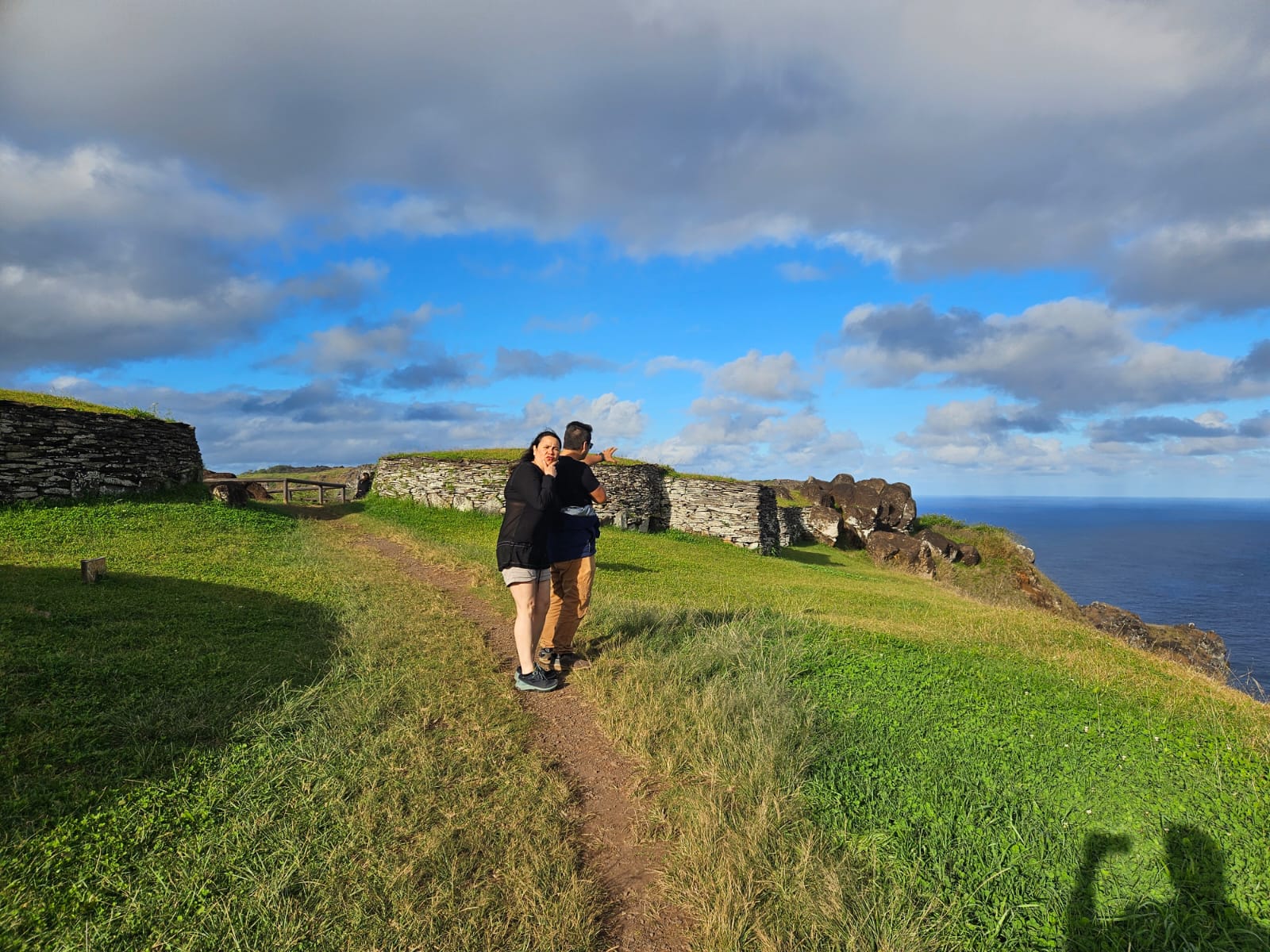
At the rim of Rano Kau volcano, strong gusts are constant—even on bright, sunny days. It is usually the first detail travelers notice upon stepping out of the vehicle.
| Weather Condition | Recommended Gear |
| Sunny Day | Sunscreen, secure hat/cap (that won’t blow away), sunglasses, water |
| Windy / Overcast Day | Windbreaker jacket, insulating middle layer |
| Rainy Day | Waterproof rain jacket; stone paths at Orongo become slippery |
| Always Essential | Sturdy walking shoes, National Park ticket, fully charged camera |
Why Visit Rano Kau Volcano with a Local Guide?
First, because it is mandatory: exploring Rano Kau and Orongo requires an accredited local guide (Chile Travel, 2026). Second, visiting alongside a resident guide ensures you maximize your single entry into Orongo by accurately interpreting petroglyphs and understanding the cultural significance of the Tangata Manu rituals right where they took place.
On our private tours, the pace is completely customized to your group. If you wish to spend extra time taking photos at the crater lookout or asking detailed historical questions at Orongo, we adjust accordingly.
Tips from Our Guides
- Check your ticket validity before driving up: Given the strict single-entry rule for Orongo, double-check your dates first.
- Always pack a windbreaker: Weather at the crater edge is significantly windier than at sea level in Hanga Roa.
- Save phone battery for the islets view: The clifftop overlook facing Motu Nui, Motu Iti, and Motu Kao Kao offers unmatched photographic angles.
- Respect archaeological boundaries: Never touch petroglyphs or lean on historic stone masonry walls.
- Traveling with family or seniors? Inform your guide in advance so we can tailor the walking speed and rest stops across the site.
Frequently Asked Questions
Do you need a guide to visit Rano Kau volcano?
Yes. To enter the Rano Kau sector of Rapa Nui National Park, visitors must be accompanied by an authorized local guide (Chile Travel, 2026). A local guide ensures you navigate the single-entry system effectively while gaining deeper historical insight. On our private tours, your guide adapts the timing and depth of explanations to your preferences.
How many times can you enter Orongo with a National Park ticket?
Exactly once. The National Park pass allows a single entry to Orongo and a single entry to Rano Raraku (Ma’u Henua, 2026). All other park sectors can be re-visited multiple times within the ticket’s 10-day validity period.
How much is the entry fee for Rapa Nui National Park?
As of 2026, the reference rate for non-Chilean adult visitors (ages 13 and up) is 95,000 CLP, while Chilean residents pay 40,000 CLP (Ma’u Henua, 2026). Passes remain valid for 10 days from initial activation.
How long does a tour to Rano Kau and Orongo take?
A standard half-day tour lasts approximately 3 to 3.5 hours. This duration covers the drive from Hanga Roa, relaxed time at the Rano Kau crater viewpoint, and a guided walking tour through Orongo at a comfortable pace.
What clothes should you wear to Rano Kau volcano?
Wear a windbreaker jacket, as wind exposure along the crater rim is strong. Bring sunscreen, sunglasses, a snug-fitting hat, water, and sturdy closed-toe shoes. If rain is forecast, bring a waterproof jacket to navigate wet stone pathways safely.