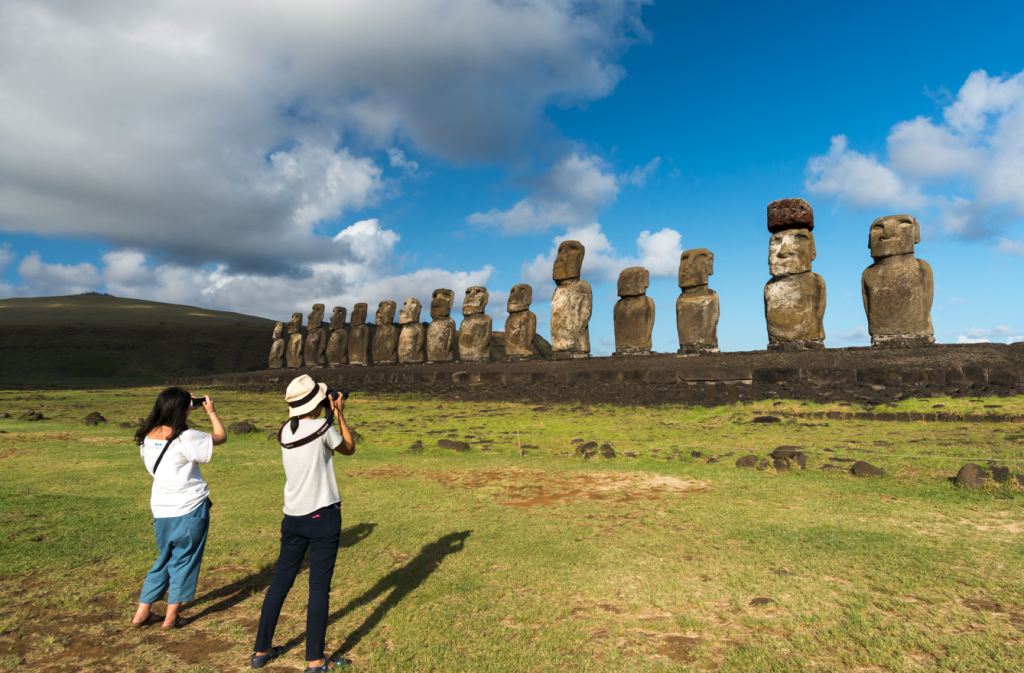

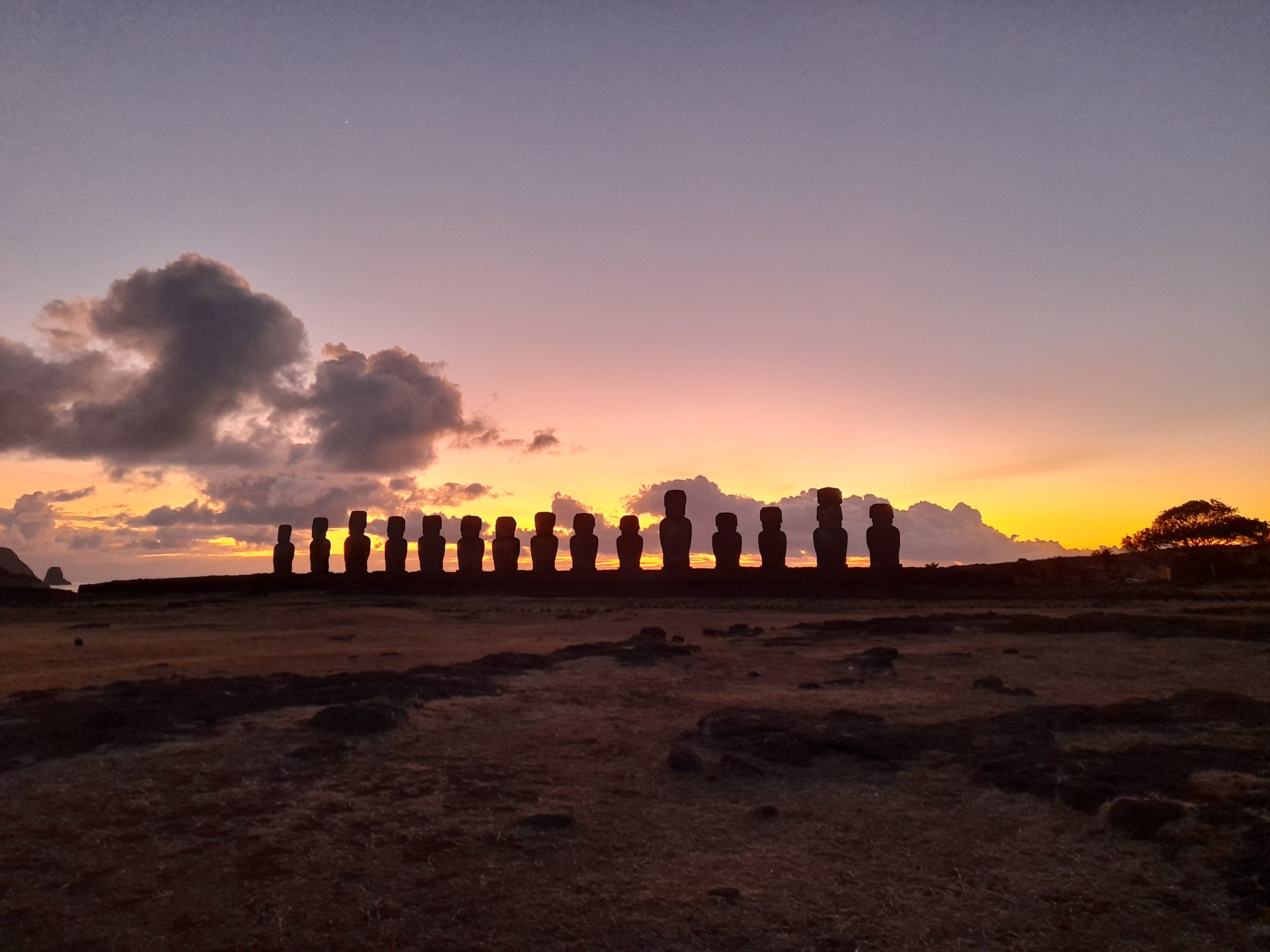
The Tongariki Sunrise Experience Tour is one of the most memorable activities you can enjoy in Rapa Nui. Standing before the 15 moai of Ahu Tongariki, the largest ceremonial platform on the island, you’ll witness the landscape transform as the first light of day brings together history, nature and culture in a truly unforgettable setting.
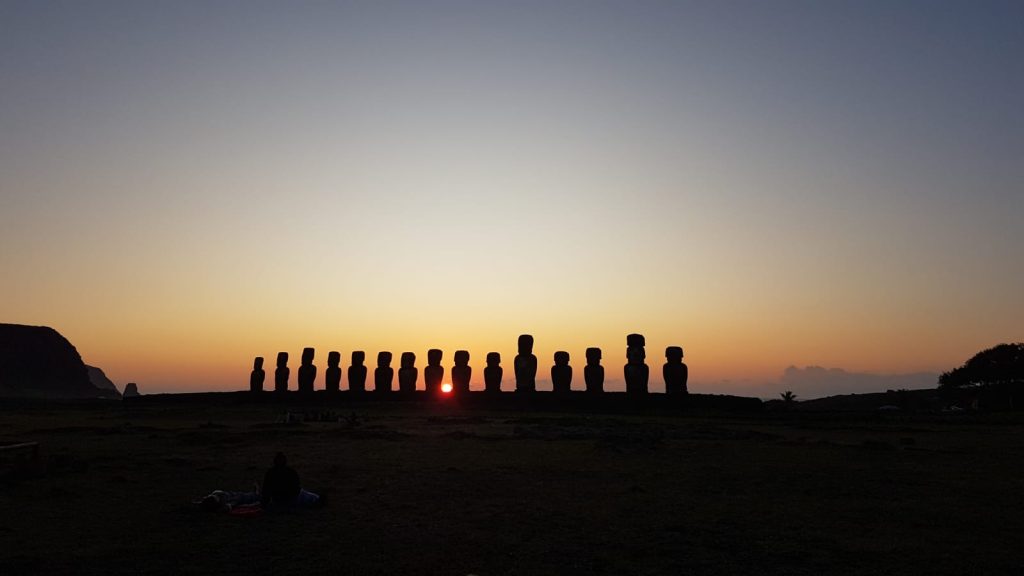
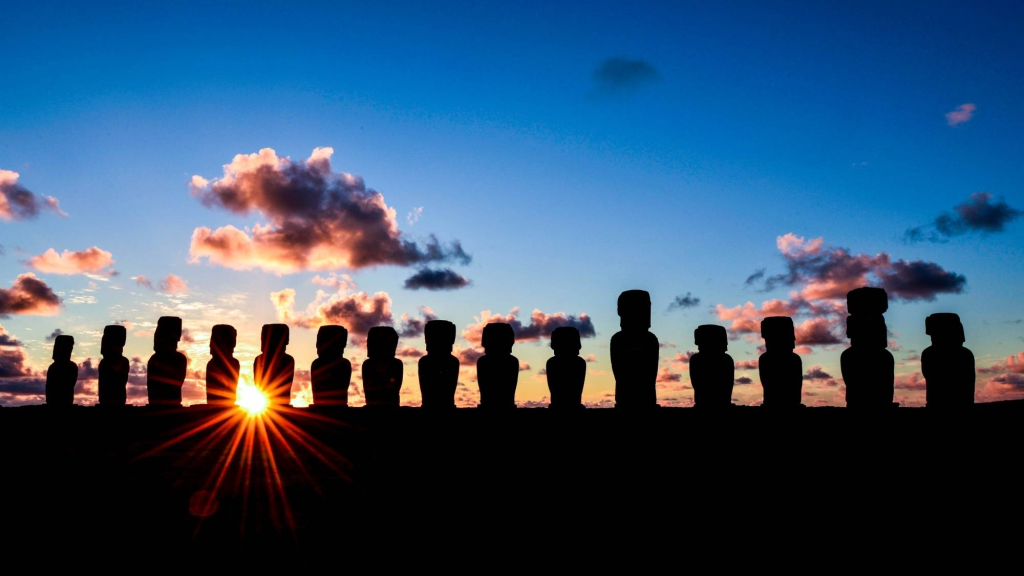
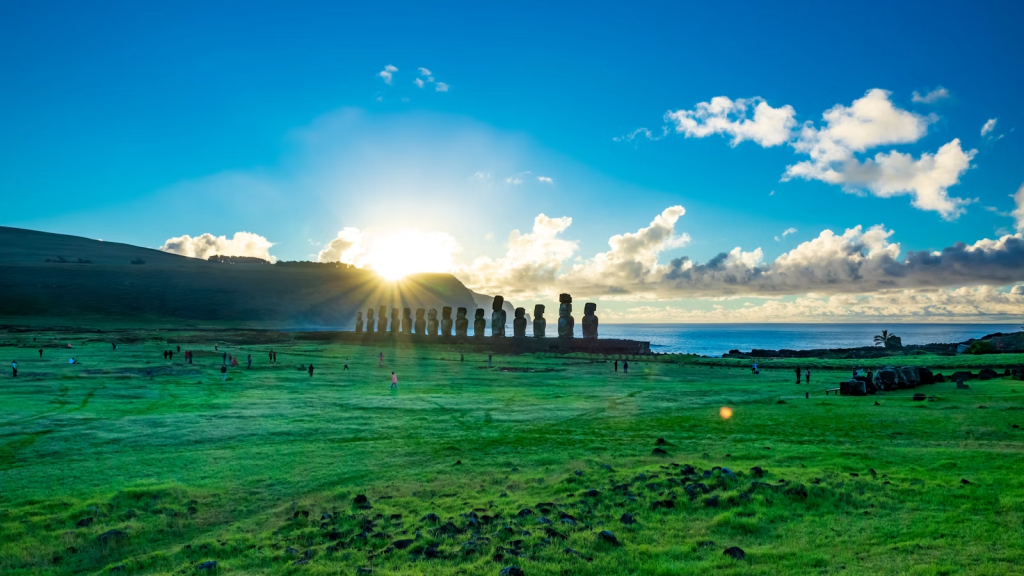
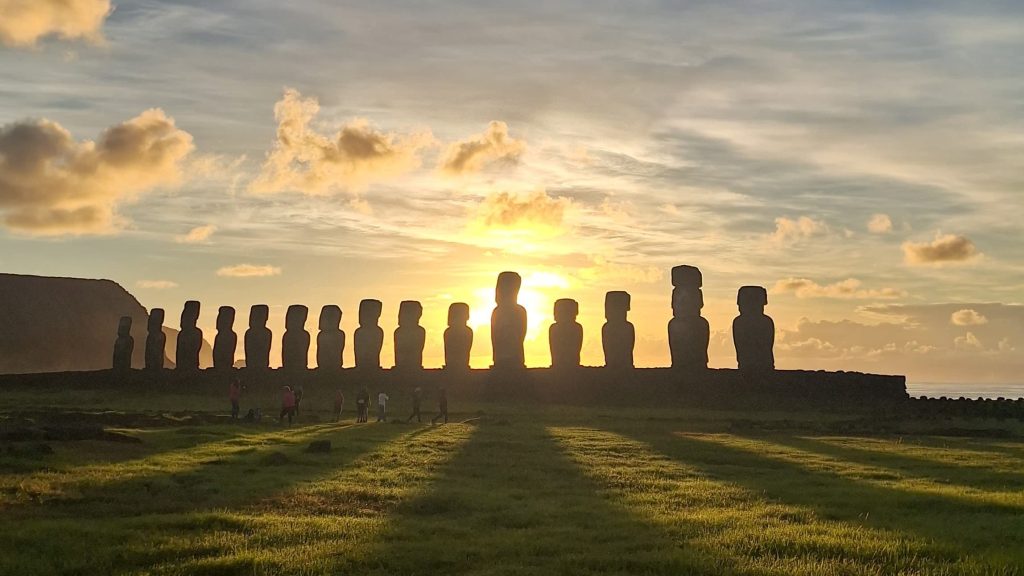
During the summer months (December to March), the sun often rises directly behind the moai, creating one of the most iconic images of Rapa Nui. In winter (April to August), the position of the sunrise gradually shifts, offering dramatic skies, illuminated clouds and stunning colors that make every morning unique.
Available year-round, the Tongariki Sunrise Experience is a perfect way to begin your day on the island. You can enjoy it as a standalone excursion or as the ideal complement to one of our full-day tours, making the most of the early morning hours while experiencing a moment that many travelers consider the highlight of their visit to Rapa Nui.
What Is the Tongariki Sunrise Experience at Ahu Tongariki?
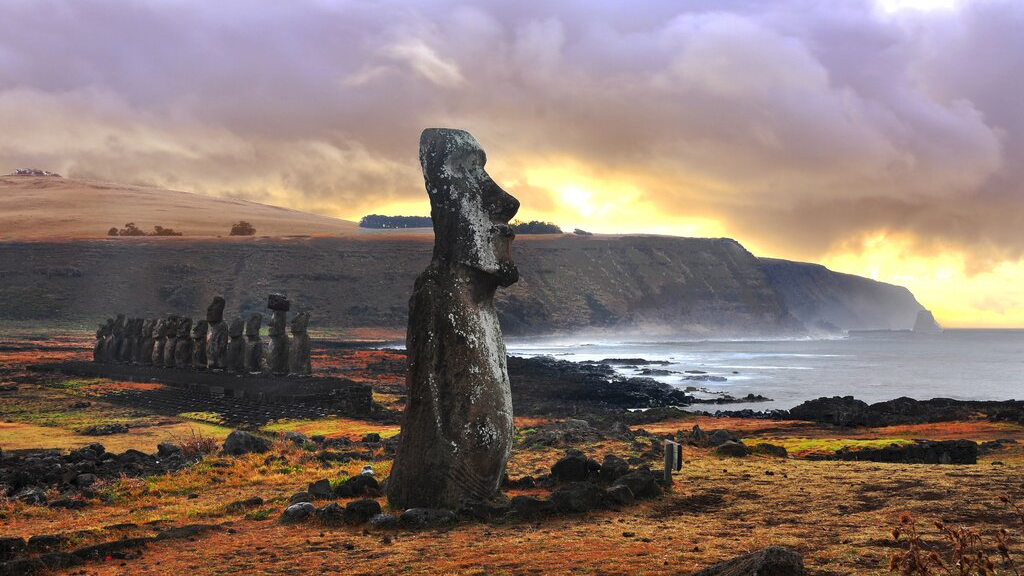
The Tongariki Sunrise Experience is designed to let you enjoy one of the most memorable sunrises in Rapa Nui from Ahu Tongariki, the island’s largest ceremonial platform. Standing before you are the fifteen imposing moai, while the Pacific Ocean stretches out behind them. Depending on the time of year, you may witness the sun rising directly behind the statues or slightly offset on the horizon, gradually illuminating the landscape and transforming the sky with colors that shift minute by minute.
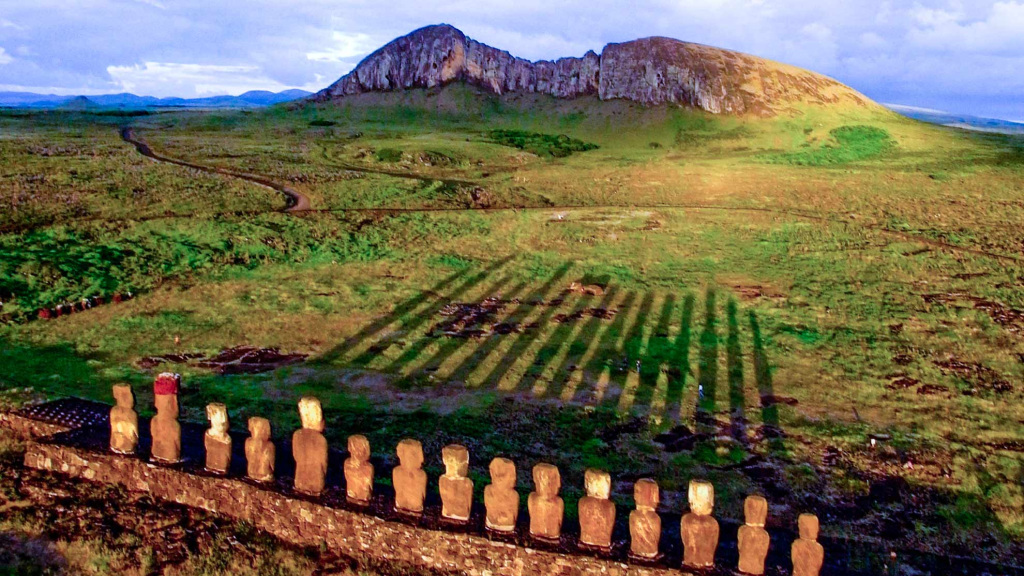
However, the experience goes far beyond the view itself. Before sunrise, the constant sound of the waves, the cool morning breeze, the star-filled sky overhead, and the silhouette of Rano Raraku in the distance create an atmosphere that is difficult to describe. Crickets can often be heard, along with the wind sweeping across the coast and even horses or cattle roaming freely nearby. It is a moment of calm and connection with the natural surroundings that many travelers remember just as vividly as the moai themselves.
Rapanui Astronomy: The Sun, the Stars, and June
One of the most common questions we receive during the austral winter is whether the sunrise at Tongariki has a special connection to the June solstice. The answer is fascinating because it brings together two fundamental aspects of Rapanui culture: ceremonial monuments and the observation of the sky.
- The Orientation of Ahu Tongariki: Archaeological and archaeoastronomical studies conducted in Rapa Nui suggest that the orientation of Ahu Tongariki is linked to the annual path of the sun. The famous image of the sun rising almost perfectly aligned behind the moai is most visible between December and March, during the austral summer. Throughout the year, the sunrise point shifts along the horizon. In June, the sun rises farther north, while in summer it rises farther south. As a result, each season offers a different perspective of the sunrise, although the visual spectacle remains extraordinary year-round.
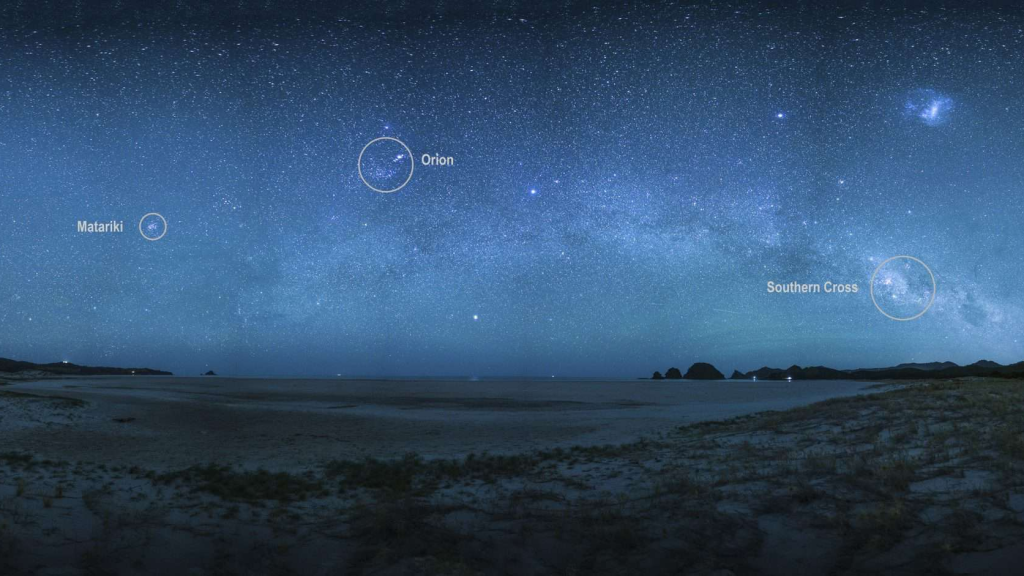
- June, Matariki, and the Beginning of the Rapanui Year: June holds special significance throughout Polynesia due to the reappearance of the Pleiades, known in Rapa Nui as Matariki. After disappearing below the horizon for several weeks, this star cluster becomes visible again before dawn and traditionally marked the beginning of a new annual cycle. The observation of Matariki was closely linked to essential community activities such as agriculture, fishing, and ceremonial celebrations. Researchers have identified references to this astronomical knowledge in oral traditions, petroglyphs, and elements of the Rapanui calendar, reflecting the deep connection between daily life and the observation of the heavens.
Is June Worth Visiting?
Absolutely. While the most famous solar alignment occurs during the austral summer, June offers its own unique appeal. Sunrises often feature dramatic skies, clouds illuminated by the first rays of sunlight, and a quieter atmosphere due to fewer visitors on the island.
Learning about Matariki and the ancient astronomical traditions of Rapa Nui adds another dimension to the experience, helping visitors better understand how the Rapanui people interpreted the sky and its natural cycles.
How Pick-Up Works
We want your only concern to be enjoying the sunrise. That is why our Tongariki Sunrise Experience includes pick-up from your accommodation and transportation to Ahu Tongariki before sunrise.
Pick-up times vary throughout the year. During summer, the sun rises earlier, while winter sunrises occur later in the morning. Our team carefully calculates each schedule so that you arrive with plenty of time to settle in comfortably and enjoy the atmosphere before the show begins.
All you need to do is be ready at the time confirmed with your reservation. We take care of the rest.

Sunrise Tour Schedule at Ahu Tongariki
Pick-up times vary throughout the year according to the season and the time of sunrise. In general, we collect guests between 40 minutes and just over an hour before sunrise, depending on the period and the logistics required to reach Ahu Tongariki comfortably.
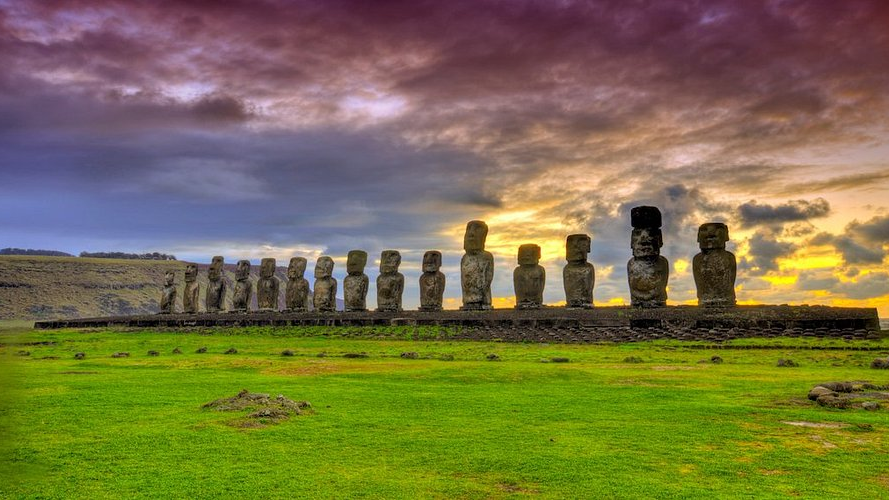
The goal is not to arrive at the exact moment the sun appears, but rather to give you time to enjoy the site beforehand. Once there, you can explore the surroundings, observe the night sky, listen to stories about the area, and experience the gradual transition from darkness to daylight. Little by little, the horizon begins to brighten and the moai emerge from the shadows until they are fully illuminated by the morning sun.
When your booking is confirmed, we will provide the exact pick-up time corresponding to your tour date.
What to Bring and How to Prepare
Preparing for the Tongariki Sunrise Experience is simple, but a few details can make the difference between a comfortable experience and a chilly early morning.
We recommend bringing a warm layer regardless of the season. Before sunrise, temperatures are lower, and the east coast of Rapa Nui receives the full force of the Pacific breeze, making it feel noticeably cooler. A light jacket or windbreaker is usually sufficient for most visitors.
Comfortable closed-toe shoes are also important. The area surrounding Ahu Tongariki includes dirt paths, grasslands, and sections of volcanic rock, so sturdy footwear will allow you to move around safely while exploring before sunrise.
If you plan to take photographs, make sure your phone or camera is fully charged. Light conditions change quickly during sunrise and often provide some of the best photographic opportunities of any trip to Rapa Nui.
Finally, remember that Ahu Tongariki is part of Rapa Nui National Park, a UNESCO World Heritage Site. You must carry you park entrance ticket, which can be purchased directly through the park’s official website.
We also encourage all visitors to respect signage and restricted areas in order to help preserve one of Polynesia’s most important archaeological sites. The fifteen moai standing today have survived centuries of history, including the tsunami of 1960 that toppled much of the platform. Their restoration took years of dedicated work, and their preservation depends on the respect of everyone who visits.

Why Join This Tour with a Local Guide in Rapa Nui?
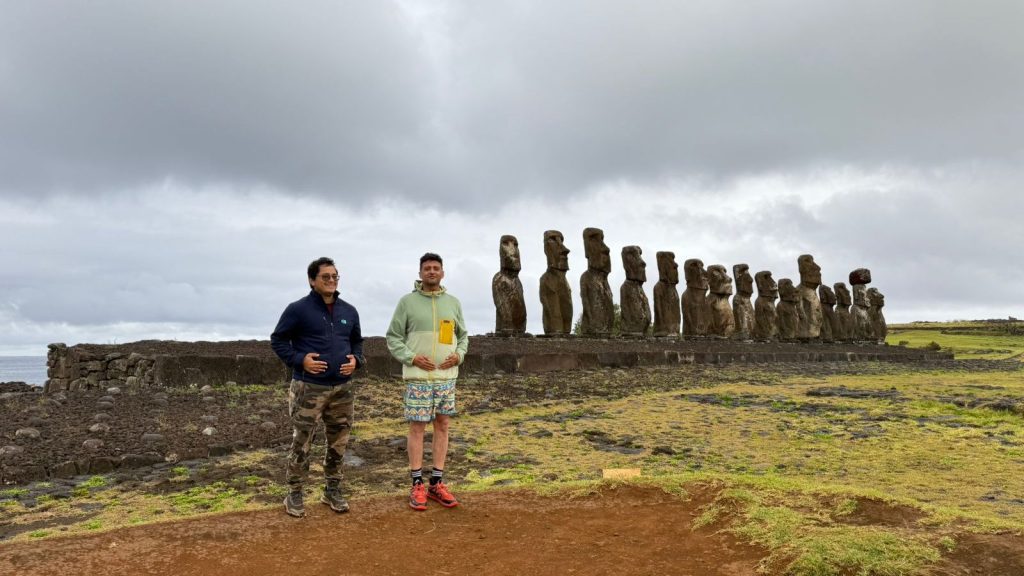
Access to Ahu Tongariki is regulated by Rapa Nui National Park, and most visitors are required to enter archaeological sites with an authorized guide. By booking the Tongariki Sunrise Experience with us, you not only receive transportation and logistical coordination, but also the guidance of a local expert who can help you understand the history, archaeology, and cultural significance of one of the island’s most iconic sites.
With more than 12 years of experience guiding visitors across Rapa Nui, our team uses the time before sunrise to share stories about the moai, the construction and restoration of Ahu Tongariki, Rapanui astronomy, and other aspects of local culture that enrich the experience. Our excellent TripAdvisor reviews reflect our commitment to every guest, offering private tours and small-group experiences that combine personalized service, local knowledge, and respect for the island’s heritage.
Book Your Tongariki Sunrise Experience
To provide a more peaceful and personalized experience, we operate in small groups. For this reason, we recommend booking at least 48 hours in advance, especially during the busiest travel periods of the year.
If you would like to secure your place or have any questions before booking, we would be happy to help. Our team is based in Rapa Nui and can assist with schedules, availability, and any aspect of your visit.
→ Book Your Tongariki Sunrise Experience
Frequently Asked Questions
- Does the tour include transportation? Yes. The Tongariki Sunrise Experience includes pick-up and drop-off at your accommodation in Hanga Roa. The exact pick-up time is confirmed when you book and depends on your tour date and the expected sunrise time.
- Do I need a guide to visit Ahu Tongariki at sunrise? Yes. According to current regulations of Rapa Nui National Park, most visitors must enter authorized archaeological sites with a certified guide during their first visit. Our Tongariki Sunrise Experience includes an authorized local guide.
- Is the tour available year-round? Yes. This experience operates throughout all twelve months of the year. Pick-up times vary depending on the season, as sunrise times change throughout the year.
- How long does the tour last? The experience lasts approximately two hours, including transportation and time spent at Ahu Tongariki. It can also be easily combined with other tours or activities later in the morning.
- Do I need a Rapa Nui National Park ticket? Yes. Ahu Tongariki is part of Rapa Nui National Park, and a valid entrance ticket is required to access the site. If you have questions about purchasing or validating your ticket, we will be happy to assist you during the booking process.
- Is the experience suitable for children? Yes, although we recommend considering the early departure time and the uneven terrain. The area around Ahu Tongariki includes grassy sections and volcanic rock surfaces. If you are traveling with young children, contact us and we will help determine the best option for your family.
- What happens if the sunrise is cloudy? Weather conditions in Rapa Nui can change rapidly, and no operator can guarantee a completely clear sunrise. However, cloudy mornings often produce some of the most spectacular landscapes, with intense colors, dramatic contrasts, and unique light effects over the ocean and the moai. Regardless of the weather, visiting Ahu Tongariki at sunrise remains an extraordinary experience.
If you are looking for an authentic way to begin your day on the island, the Tongariki Sunrise Experience combines spectacular scenery, archaeological heritage, and the company of experienced local guides. Whether it is your first visit to Rapa Nui or a return trip to discover a different side of the island, watching the sunrise in front of the 15 moai of Ahu Tongariki is a memory that will stay with you long after you leave.