Planning your travel to Rapa Nui (Easter Island) is the first step toward a transformative journey. This place is not just a point on the map; it is an enigma wrapped in the infinite blue of the Pacific. Visiting this island is a privilege that carries the responsibility of understanding its past and respecting its present. Travelers often arrive drawn by the mystery of the Moai, but they leave moved by the resilience of its people and the profound peace emanating from its volcanic landscapes.
Organizing a trip to the “Navel of the World” requires special preparation. It’s not just about packing a suitcase; it’s about tuning into a different rhythm of life and understanding the regulations that allow this treasure to remain intact.
Essential Tips for Travel to Easter Island
Traveling to Easter Island is much more than visiting a remote destination; it is entering a living culture of astonishing resilience and an ecosystem of fragile beauty. This guide delves into the essential questions so you can understand the essence of the island before landing—a fundamental step for a conscious, respectful, and transformative travel experience.
Below, we solve all your doubts so that your only concern when stepping off the plane is letting yourself be captivated by the magic of our land.
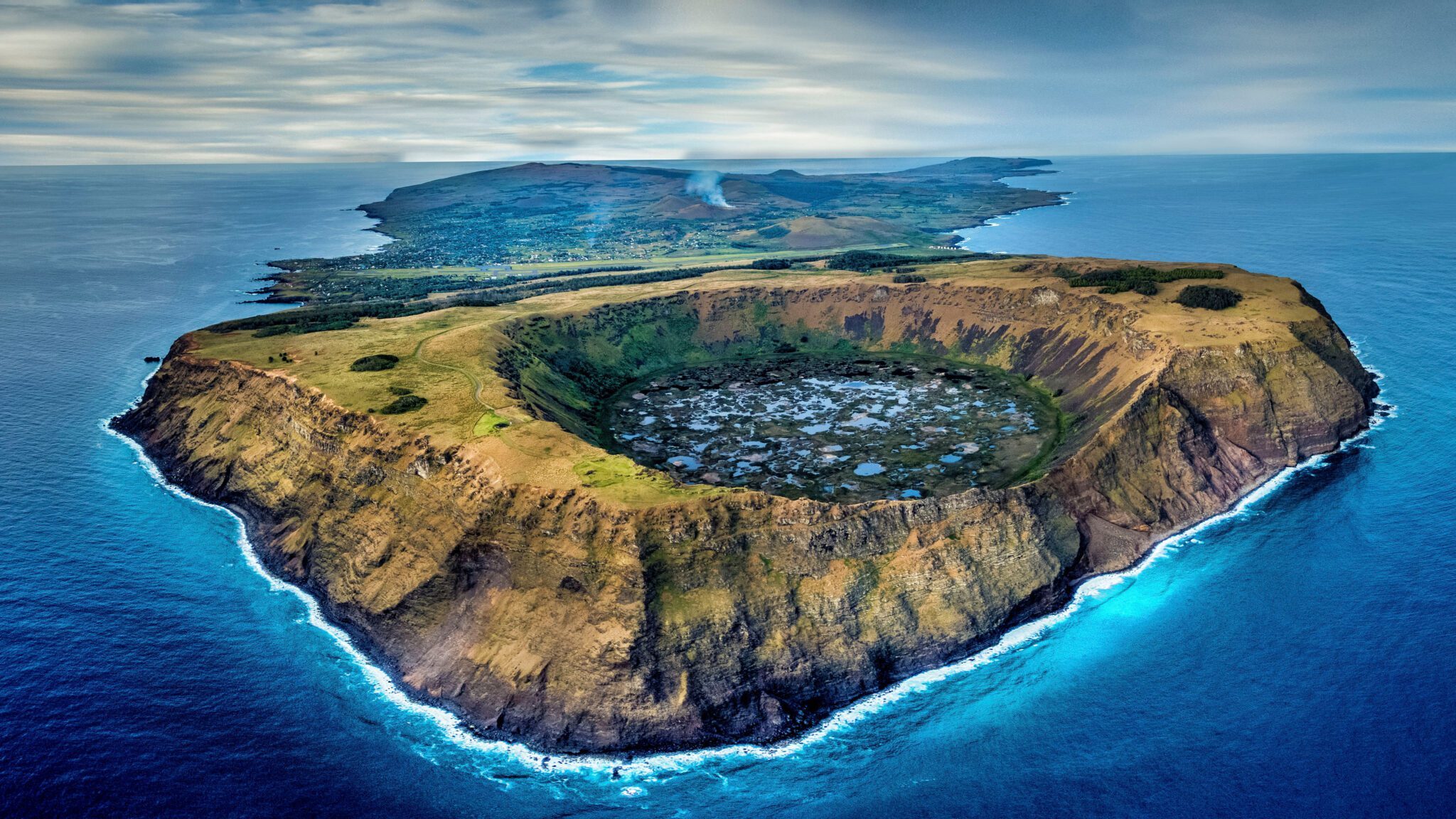
Identity and Geography: The Origin of Our Land
Why is it called “Easter Island” and what is its ancestral name?
The Western name originated in 1722 when Dutch explorer Jacob Roggeveen arrived on its shores on Easter Sunday, naming it Paasch-Eyland. However, this name is only a brief parenthesis in a millenary history.
Long before European contact, the island was already the center of the universe for the Polynesian world. Its deepest ancestral name is Te Pito o Te Henua («The Navel of the World»), a term reflecting a worldview of geographical isolation and spiritual centrality. Another fundamental name is Rapa Nui («Great Rock»), a term that today defines not only the territory but the indomitable identity of its people. Currently, the use of «Rapa Nui» has gained official and affective recognition, gradually displacing the colonial name.
The population of Easter Island has seen significant changes recently. According to the 2017 census, the island had approximately 7,750 inhabitants, and official projections estimated nearly 8,872 people for 2024.
However, recent records toward 2025 indicate a significant decrease, placing the population around 4,800 inhabitants. This drop is intentional and directly related to public policies implemented to protect the island.
A key factor is Law No. 21,070 and its main instrument: the Rapa Nui Demographic Carrying Capacity Management Plan. This plan regulates entry, stay, and residence on the island to control overpopulation, reduce environmental impact, and improve the quality of life for its inhabitants. For years, uncontrolled growth put pressure on limited resources like water and waste management, making stricter regulations necessary.
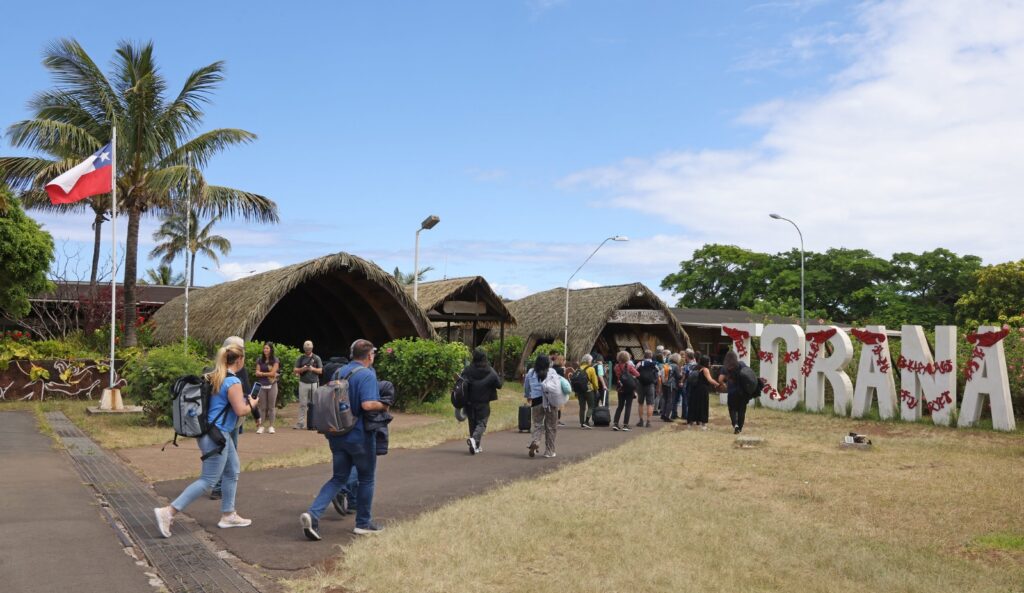
To which territory does it belong and where is it located exactly?
Administratively, Easter Island – Rapa Nui is a Special Territory of Chile, linked to the Valparaíso Region. Its relationship with the mainland was formalized in 1888 through the Agreement of Wills between Captain Policarpo Toro and the Ariki (King) Atamu Tekena.
It is important to understand that this agreement has two interpretations: while for the Chilean State it represented a cession of sovereignty, for the Rapa Nui people it was a treaty of protection and friendship, where the land never stopped belonging to its original lineages. This historical duality is what makes every corner of the island vibrate with a narrative of autonomy and mutual respect.
Languages on the Island: What tongues will you hear during your visit?
On Easter Island, the soundscape is as diverse as its history. When you travel to Rapa Nui – Easter Island, you will coexist with:
- Spanish: The official language of Chile.
- Rapa Nui: The ancestral Polynesian language, the soul of the culture.
- English: Widely used in tourism.
- French: Used due to the tourist flow and close ties with French Polynesia (Tahiti).
Culture and Legacy: The Stone Guardians
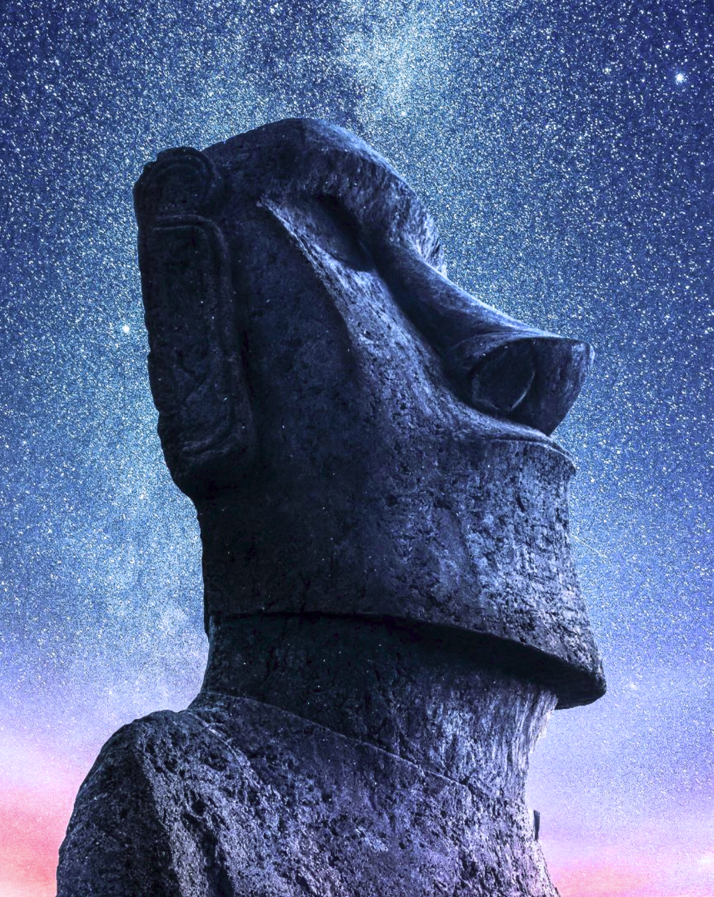
What is a Moai? The Living Face of the Ancestors
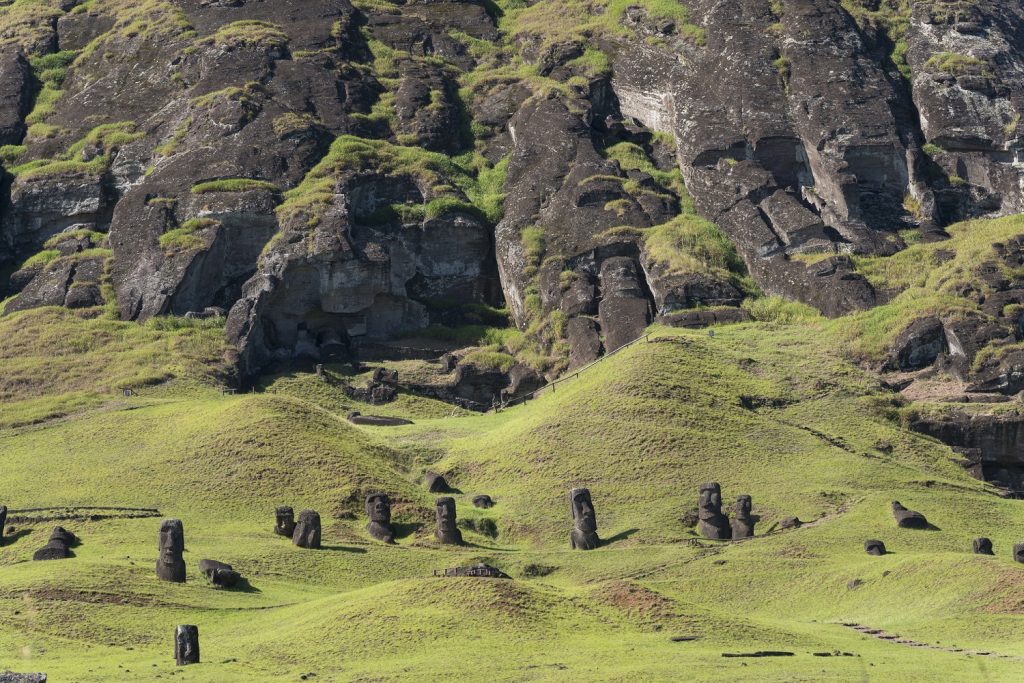
The moai are monolithic sculptures carved mostly from volcanic tuff, a rock from the Rano Raraku volcano, where the main quarry is located.
They were created between the 13th and 16th centuries by the Rapa Nui people, representing important ancestors, leaders, or high-status figures. More than just monoliths, moai are physical manifestations of mana, a spiritual energy that protected the communities.
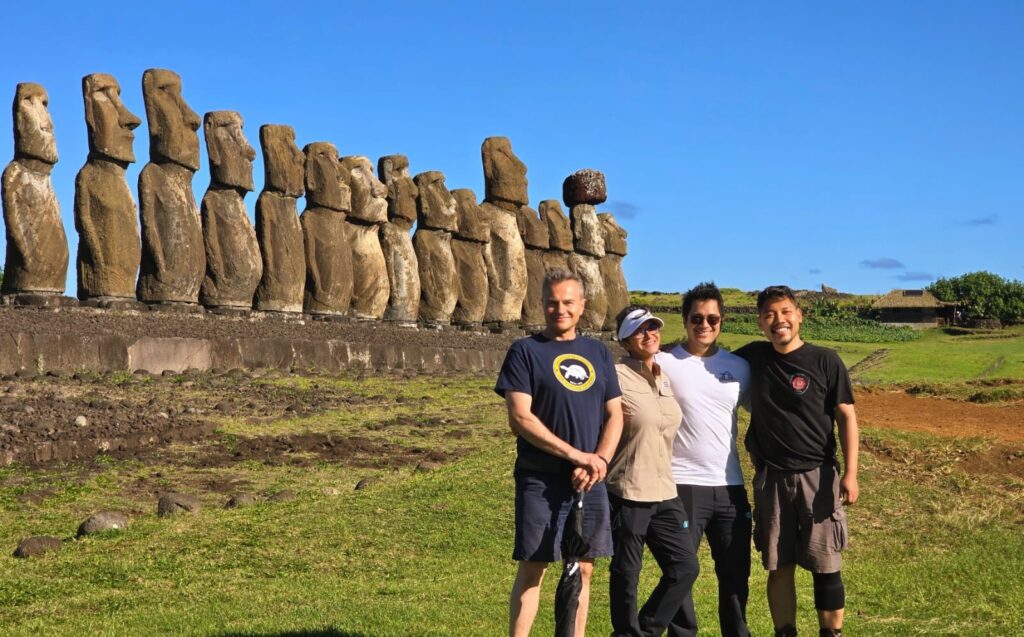
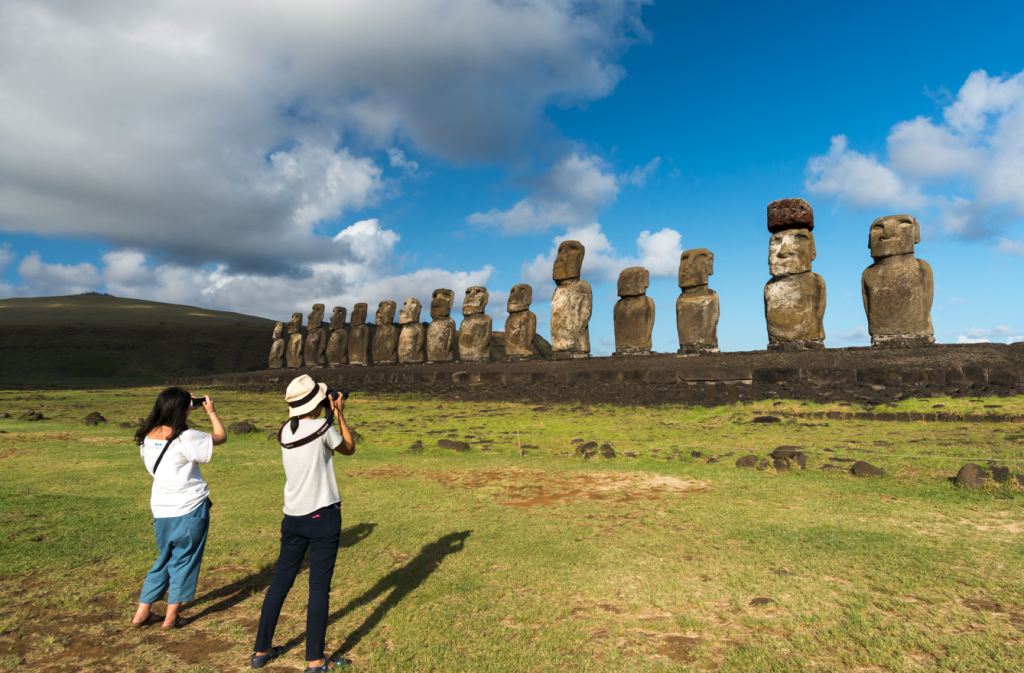
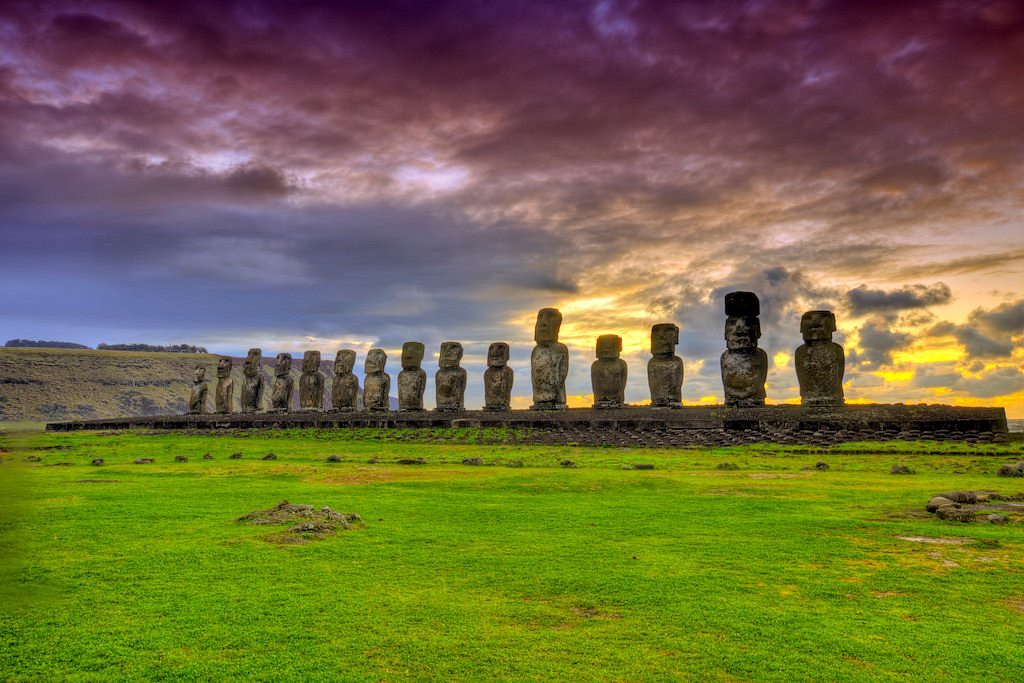
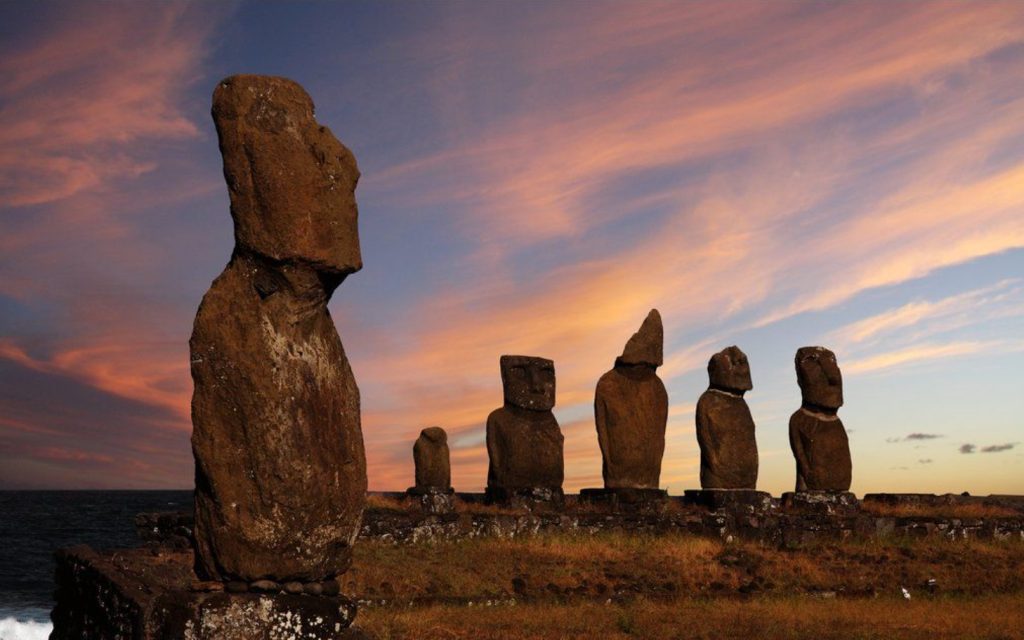
Originally, many moai were placed on ceremonial platforms called ahu, facing inland, symbolizing protection toward their people. Some included pukao (red scoria hats) and white coral eyes with obsidian pupils, giving them a “living” appearance during ceremonies.
In the Rapanui tradition, the expression «Aringa Ora o te Tupuna» translates to «the living face of the ancestors.» According to oral tradition, each moai represented an important forefather of the lineage. After the death of a leader, a moai could be erected in their honor, believing that their mana continued to protect the families, crops, and territories of each clan from the platforms.
Today, they are part of the Rapa Nui National Park, recognized as a UNESCO World Heritage Site in 1995
Preparing Your Luggage: Weather and Logistics
Weather in Easter Island: When to travel?
The climate is humid subtropical (18°C to 28°C).
- Summer (December – March): Radiant days and tropical heat, perfect for Anakena Beach.
- Winter (June – August): Cooler winds and brief, intense rains that refresh the landscape.
What to pack for comfortable exploration?
A key point when you travel to Rapa Nui – Easter Island is luggage. The island has a subtropical climate, but its volcanic geography and wind exposure make clothing choice crucial. General recommendations:
- Light and breathable clothing
- Sunscreen (essential year-round)
- Hat or cap
- Windbreaker or light jacket
- Raincoat (especially in autumn/winter)
- Trekking shoes This last item is especially important: many archaeological sites are on irregular volcanic terrain, earth, or mud, which can be difficult for those not accustomed.
Rapa Nui National Park: The Heart of the Island
What is the Rapa Nui National Park?
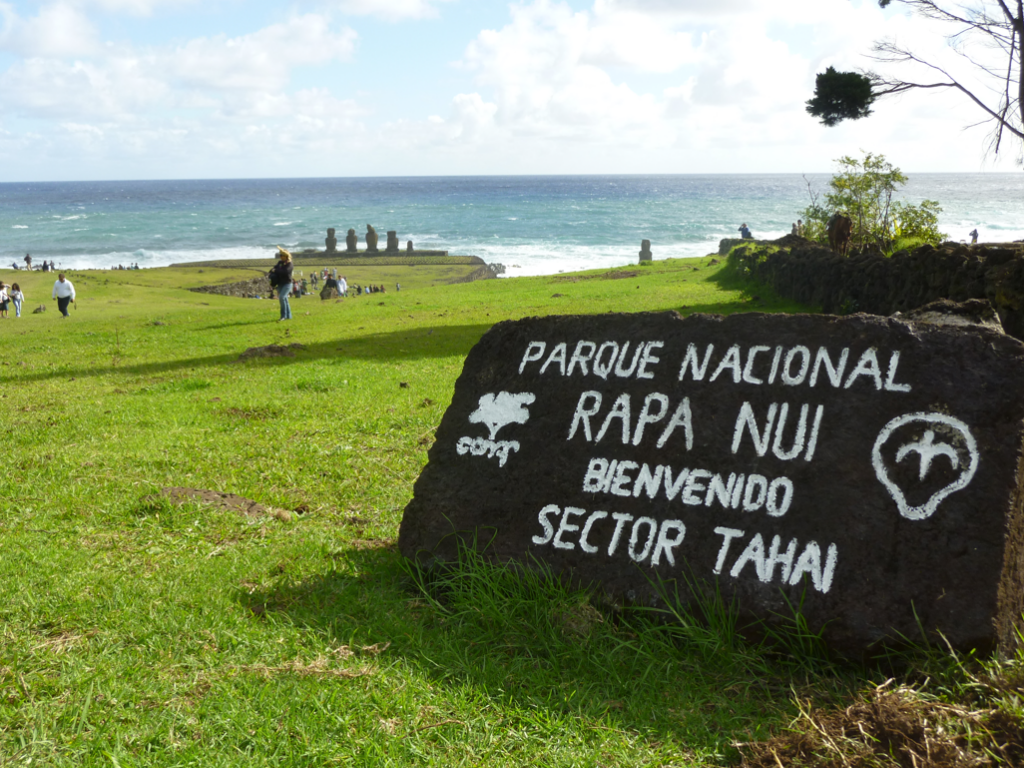
Much more than a conventional reserve, the Rapa Nui National Park is an archaeological sanctuary protecting ceremonial villages, petroglyphs, rock art caves, and, of course, the iconic moai.
The park covers approximately 44% of the island’s surface. In 2016, a historical milestone was reached: the creation of the Ma’u Henua Indigenous Community, which has led the total administration of the park since 2018. Under this community management model, every ticket directly contributes to a worldview that prioritizes environmental protection and the well-being of its people.
To dive deeper into this topic: If you want to better understand the reasons behind the price updates and learn more about the historical evolution of the park’s administration, we recommend reading our detailed article: Rapa Nui National Park Ticket Prices Increase: Reasons and Community Involvement. It is the perfect complement to understanding how your visit creates a positive impact on the island.
Where to buy your entry ticket?
To travel to Rapa Nui – Easter Island and enter the National Park, you have two main ways:
- Online Purchase (Recommended): The easiest and fastest way to purchase your ticket is online. You can buy it through the official Rapa Nui National Park website at www.rapanuinationalpark.com or via www.tur.com. Once your purchase is complete, you will receive a PDF ticket with a QR code, which must be presented at the park entrance.
- Physical Sales Point in Hanga Roa: At the Ma’u Henua central office, located by the Hanga Roa Craft Fair.
Validity and Use: Make the most of your time
Your ticket is valid for 10 consecutive days starting from your first entry to any controlled archaeological site.
What does your access include?
The ticket allows you to visit the 12 main archaeological sites. However, you must distinguish between free-access sites and those with special restrictions:
- Single-Entry Sites (Restricted): You only allow one single entry per ticket at Rano Raraku (the quarry) and Orongo (the Birdman village).
- Multi-Entry Sites: You can visit as many times as you want (within the 10 days): Ahu Tongariki, Anakena, Ahu Akivi, Tahai, Puna Pau, and others like Te Pito Kura or Vinapu.
Your Contribution: Where does your entry fee go?
The park is managed by the Ma’u Henua Indigenous Community. This means revenues are reinvested directly into the island:
- Preservation of Archaeological Treasures: Financing archaeologists and restorers.
- Custody of the Natural Environment: Reforestation and biodiversity protection.
- Sustainable Waste Management: Processing waste in the world’s most remote location.
- Local Development: Ensuring tourism is a source of dignified employment for Rapa Nui families.
Official Rates (2026 Update)
| Category | International Visitors | National Visitors (Chile) |
| Adults (13+ years) | $95.000 CLP | $40.000 CLP |
| Children (7 to 12 years) | $38.000 CLP | $20.000 CLP |
Essential Reminder: To enter any site within the Rapa Nui National Park, you must be accompanied by an accredited local guide. This measure not only ensures your safety and compliance with regulations but also enriches your journey with stories and insights you won’t find in any paper guidebook.
Entry Logistics: Before Takeoff
What are the requirements to visit Easter Island?
To travel to the island in 2026, you must comply with strict legal requirements:
- Single Entry Form (FUI): Complete the digital PDI form at
ingresorapanui.pdi.cl. - Identity Document: Valid ID or Passport.
- Round-trip Ticket: Return date not exceeding 30 days.
- Accommodation or Invitation: Reservation in a SERNATUR registered lodging or an official invitation letter.
Society and Services: Your Life on the Island
Is Easter Island safe?
Absolutely. The island is extremely peaceful with minimal crime. However, basic precaution is key: look after your belongings and always respect private property and sacred sites.
Currency, ATMs, and Budget
Currency: The Chilean Peso (CLP) is official. Some places accept USD or EUR if the bills are in perfect condition.
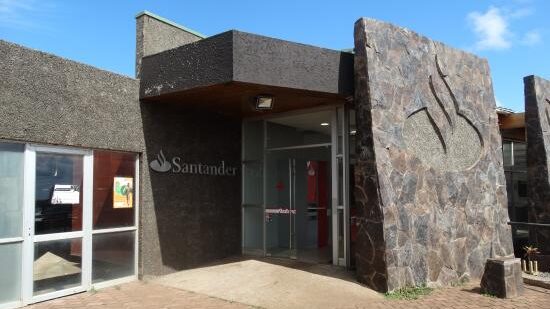
ATMs: Two available in Hanga Roa, but they often run out of cash on weekends.
Payments: Cards are widely accepted, but for small expenses or taxis, cash is king. Calculate a daily “pocket money” of USD $40 to $60.
Connectivity and Electricity
Energy: 220V with Type C and L plugs (Chilean standard).
Internet: Thanks to Starlink, connectivity has improved drastically in Hanga Roa, though it remains zero inside the National Park.
Can you drink tap water?
Not recommended. While used for hygiene, it is not considered potable. We suggest buying bottled water or bringing a reusable bottle to refill at authorized dispensers.
A Fragile Island: Your Responsibility as a Visitor
The rule of thumb is: «What you bring, you take back.»
- Zero Waste: No trash cans at archaeological sites. Carry a small bag for your waste.
- Conscious Tourism: Avoid single-use plastics.
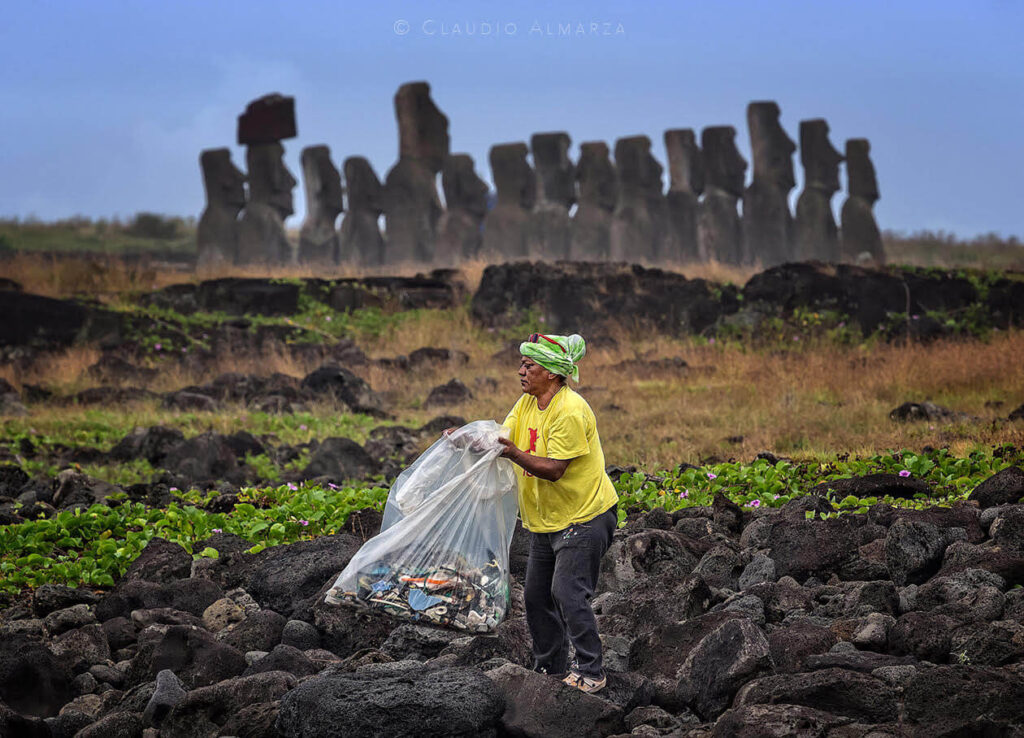
As you can see, to travel to Rapa Nui, Easter Island is the beginning of a transformation. Visiting this island requires planning, respect, and an open mind.
From your FUI form to choosing the right shoes, every detail is a step toward more responsible tourism. Rapa Nui reveals itself to those who stop to listen to its stories. If you seek a deeper experience, a private tour will be the key to the island’s best-kept secrets. Explore our tour options at www.easterisland.travel/tours
See you at the Navel of the World!