For decades, marine anthropology, archaeology, and population genomics faced one of the most intriguing and debated enigmas of the Pacific Ocean: where exactly did the first human inhabitants of the Hawaiian archipelago originate, and how did they navigate across the world’s vastest ocean without modern navigational instruments?
Although oral tradition and shared cultural traits strongly suggested a deep connection among Polynesian peoples, science lacked high-resolution genetic tools to trace a direct line of descent. However, a historic international study published on October 8, 2026, in the prestigious journal Science—where it was also featured on the official cover—has finally settled the debate, confirming a fascinating theory: Rapa Nui Navigators were the pioneers who crossed the Pacific northward in the 13th century to settle Hawaii.
7,000 Kilometers Across Open Ocean: The Greatest Voyage of Rapa Nui
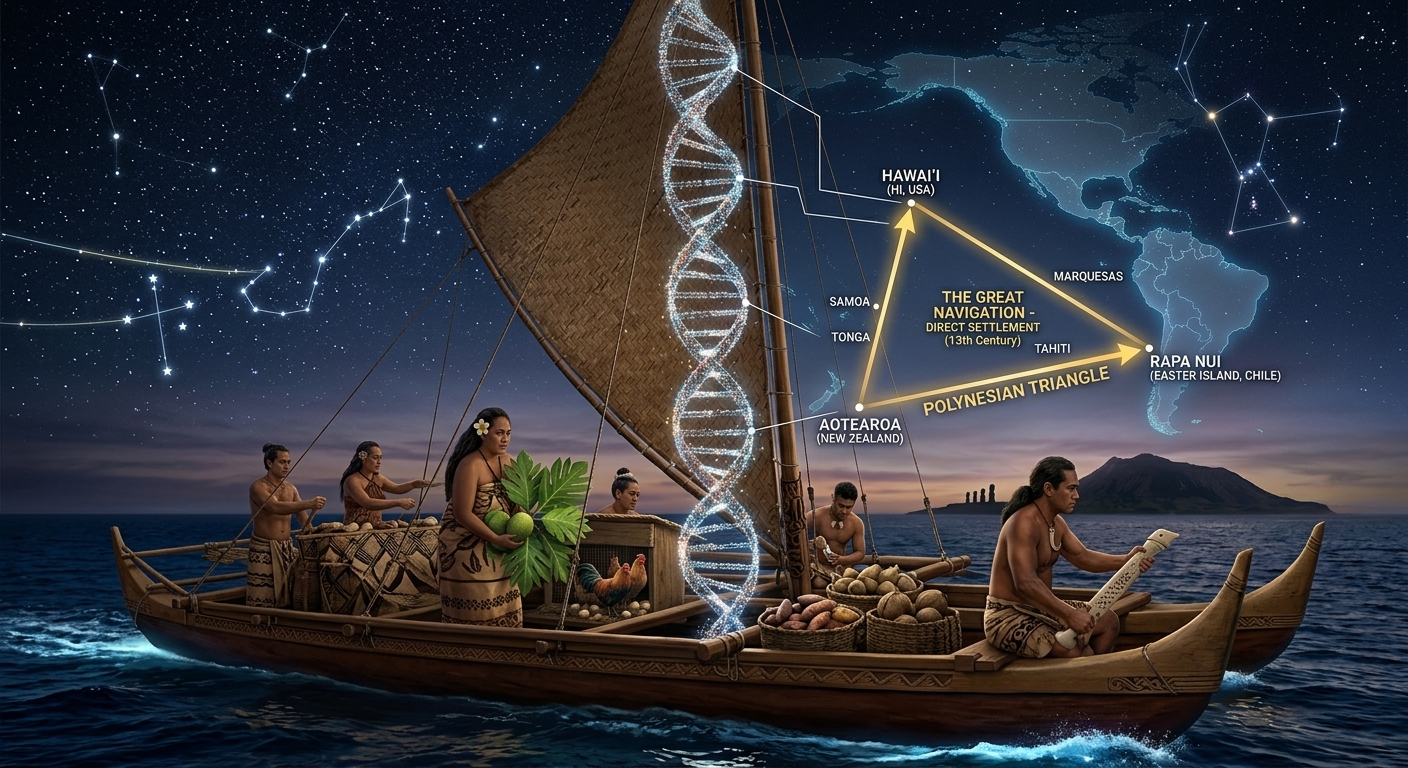
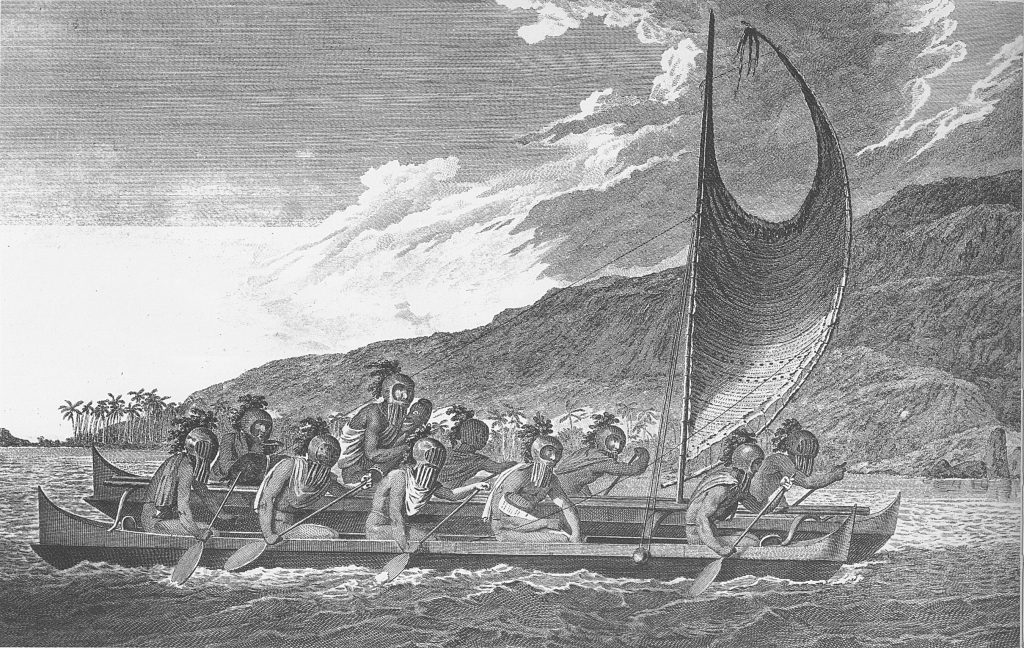
In the mid-13th century, an intrepid group of explorers ventured into the North Pacific aboard massive double-hulled canoes known in voyaging tradition as Vaka Ama. Their point of origin was the remote island of Rapa Nui (Easter Island), a land that had been settled just a few decades earlier by voyagers from Mangareva in French Polynesia.
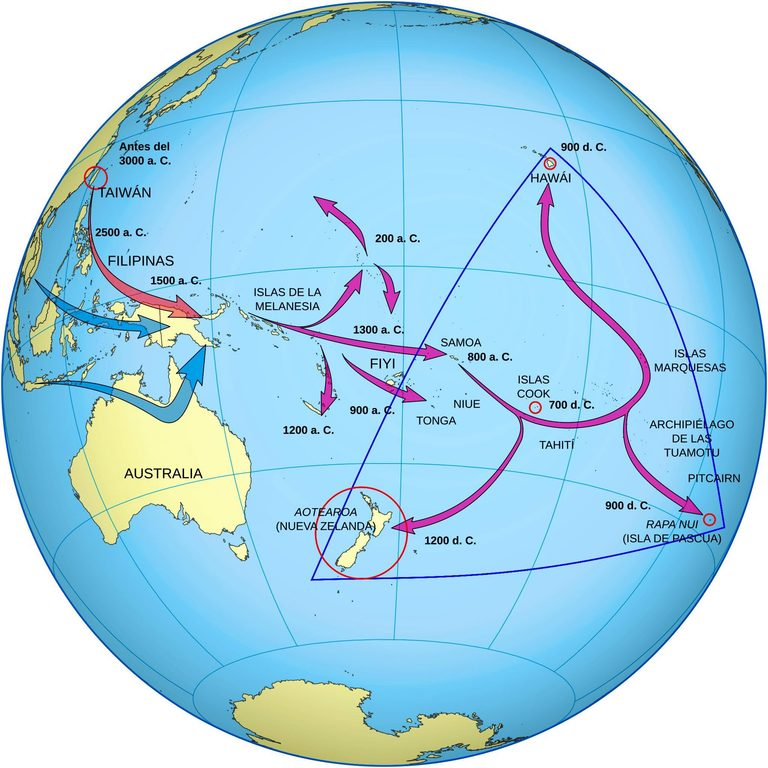
Navigating a journey of over 4,400 miles (approximately 7,000 kilometers) across open waters without losing course was neither an accident nor a drift voyage. Guided with extraordinary precision by reading the stars, ocean currents, bird behavior, and cloud formations, this milestone establishes Rapa Nui Navigators as part of the greatest seafaring tradition in human history, far surpassing contemporary European expeditions in both distance and technical mastery.
DNA and Genomics: The Genetic Footprint Connecting Rapa Nui and Hawaii
The study, titled “Message in a bottleneck: Nested founder effects from French Polynesia to Rapa Nui and Hawaiʻi”, was made possible through a global collaborative effort. Led by computational geneticist Alexander Ioannidis (Stanford University) and genome scientist Keolu Fox (University of California, San Diego), the project included key contributions from Chilean professor Mauricio Moraga, a researcher at the Institute of Biomedical Sciences and Department of Anthropology at the University of Chile.
Using advanced artificial intelligence algorithms and computational genomics, the research team analyzed whole-genome sequences from 1,050 individuals across various Pacific ethnic groups. The sample included 317 Native Hawaiians, 12 individuals from Rapa Nui, and 8 from Mangareva, along with representatives from the Society, Tuamotu, Marquesas, Austral Islands, Samoa, and Tonga.
The findings revealed an overwhelming pattern: in over 61% of the thousands of family trees reconstructed by supercomputers, the genetic lineage of Native Hawaiians matched most closely and directly with Rapa Nui, with Mangareva identified as the secondary ancestral source.
“We checked the data four different ways because, frankly, we were bewildered and couldn’t believe it ourselves at first,” acknowledged Keolu Fox, study co-author and Native Hawaiian scientist.
Ancestral Logistics: The Portable Ecosystem of Holomoana Nui Culture
To successfully colonize untouched islands, these voyagers—termed by researchers as part of the Holomoana Nui (“great ocean voyaging”) culture—did not set sail unprepared. They designed sophisticated voyaging logistics, transporting a complete portable ecosystem on their canoes to ensure long-term survival:
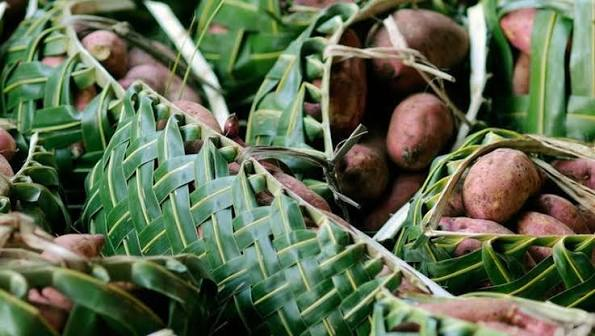
- Staple crops and tubers: Taro roots, bananas, and sweet potatoes (Ipomoea batatas)—the latter serving as crucial evidence of prior contact with South America.
- Livestock: Essential domestic animals, including the Polynesian chicken.
International Media vs. The Chilean Scientific Perspective
While international outlets and universities have described the finding as definitive proof of a direct geographic migration path, Chilean researchers offer an important analytical distinction.
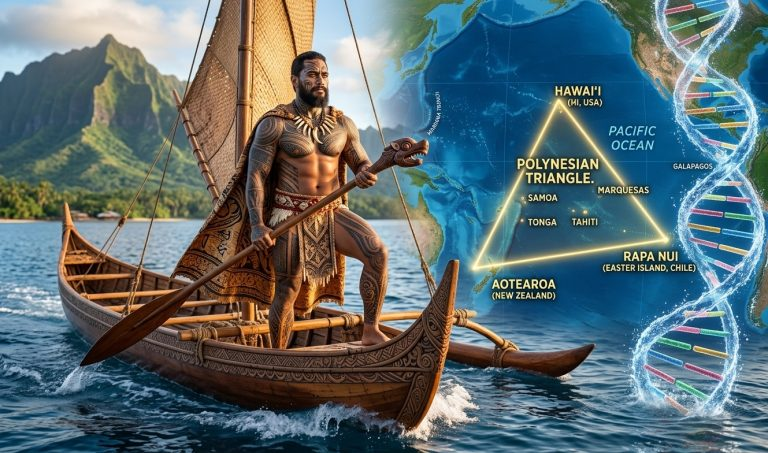
Professor Mauricio Moraga (University of Chile) notes that while genetics confirms unmistakable biological connections between populations, it should not be confused with a ship’s physical logbook:
“Populations on both islands share DNA segments inherited from common ancestors. The proposed interpretation is that their founders belonged to a closely related ancestral population from which groups departed for distant destinations. Genetics supports that shared origin, though it cannot reconstruct specific voyages or prove that the exact same individuals set foot on both islands,” Moraga clarifies.
This distinction highlights Rapa Nui not as an isolated rock at the edge of the map, but as an active, dynamic hub within an interconnected oceanic exploration network.
Founder Effects: The Genetic “Russian Doll” Phenomenon
This historical milestone provides biomedicine with a unique model to study how human genomes evolve when small groups colonize isolated lands. When a small fraction of a population migrates, it carries only a small subset of the original genetic diversity—a process known as the founder effect.
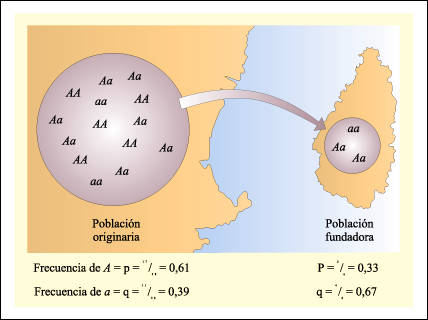
The Science study demonstrates that in Polynesia, this process occurred sequentially, creating what researchers call a nested founder effect or a “Russian doll” (matryoshka) phenomenon: each newly settled island contained an increasingly smaller fraction of the ancestral genetic variation.
| Genetic Concept | Impact on Rapa Nui & Polynesian Populations | International Comparison |
| Nested Founder Effect | Progressive and dramatic reduction in genetic variation following each migration step. | The intensity of this effect in Polynesia is 10 times higher than in traditional European populations. |
| Genetic Bottleneck | Random amplification and fixation of rare genetic variants. | Concentration of mutations that are completely absent from global databases such as gnomAD. |
| Biomedical Consequence | Elevated hereditary predisposition to specific renal and ocular conditions. | Groups like the Amish or Ashkenazi Jews have established clinical screening protocols that Pacific Islanders currently lack. |
From Historical Discovery to Future Medicine
Beyond rewriting Pacific anthropology, this breakthrough opens vital avenues for public health and medical equity across Polynesia.
Because genetic bottlenecks occurred repeatedly, certain rare DNA variants became unusually common in island populations. Within the analyzed cohort, the research team identified three key genetic mutations present in 2% to 3% of East Polynesians:
- FAN1 Gene: A variant linked to a rare but severe form of karyomegalic interstitial nephritis (kidney disease).
- ADAMTSL4 Gene: A variant associated with ectopia lentis (dislocation of the eye’s lens).
- PDE6B Gene: A mutation tied to progressive vision loss and retinal dystrophy.
These variants remained virtually invisible to global medicine due to the historical underrepresentation of Indigenous peoples in international genomic databases.
The Urgent Need for Preventive Genetic Screening
Populations such as the Amish, Finnish, and Ashkenazi Jewish communities have benefited from public preventive genetic screening programs for decades. In contrast, Native Hawaiians—who outnumber the Amish population in the United States two-to-one—currently lack standardized clinical guidelines or insurance coverage for these hereditary conditions.
However, Chilean scientists again urge methodological caution. Professor Mauricio Moraga emphasizes that clinical findings observed in French Polynesia cannot be automatically extrapolated to Rapa Nui:
“For Rapa Nui, the prevalence of these variants and their actual clinical risks must be studied directly on the island. We cannot assume identical health parameters without conducting direct research alongside the Rapa Nui community,” Moraga concludes.
This discovery honors the unmatched skill of ancient Rapa Nui Navigators while laying the groundwork for a new era of personalized, preventive, and equitable genomic medicine for all peoples of the Pacific.