
Hare Paenga or Hare Paeŋa, known as “boat-houses,” are structures that form part of the island’s most fascinating archaeological heritage. They allow us to understand how ancient Rapa Nui society lived, how it was organized, and what their deep relationship with the sea and Polynesian navigation meant to them.
When many people think of Rapa Nui, they immediately imagine the Moai. However, an important part of the island’s ancient life can also be understood through its traditional dwellings.
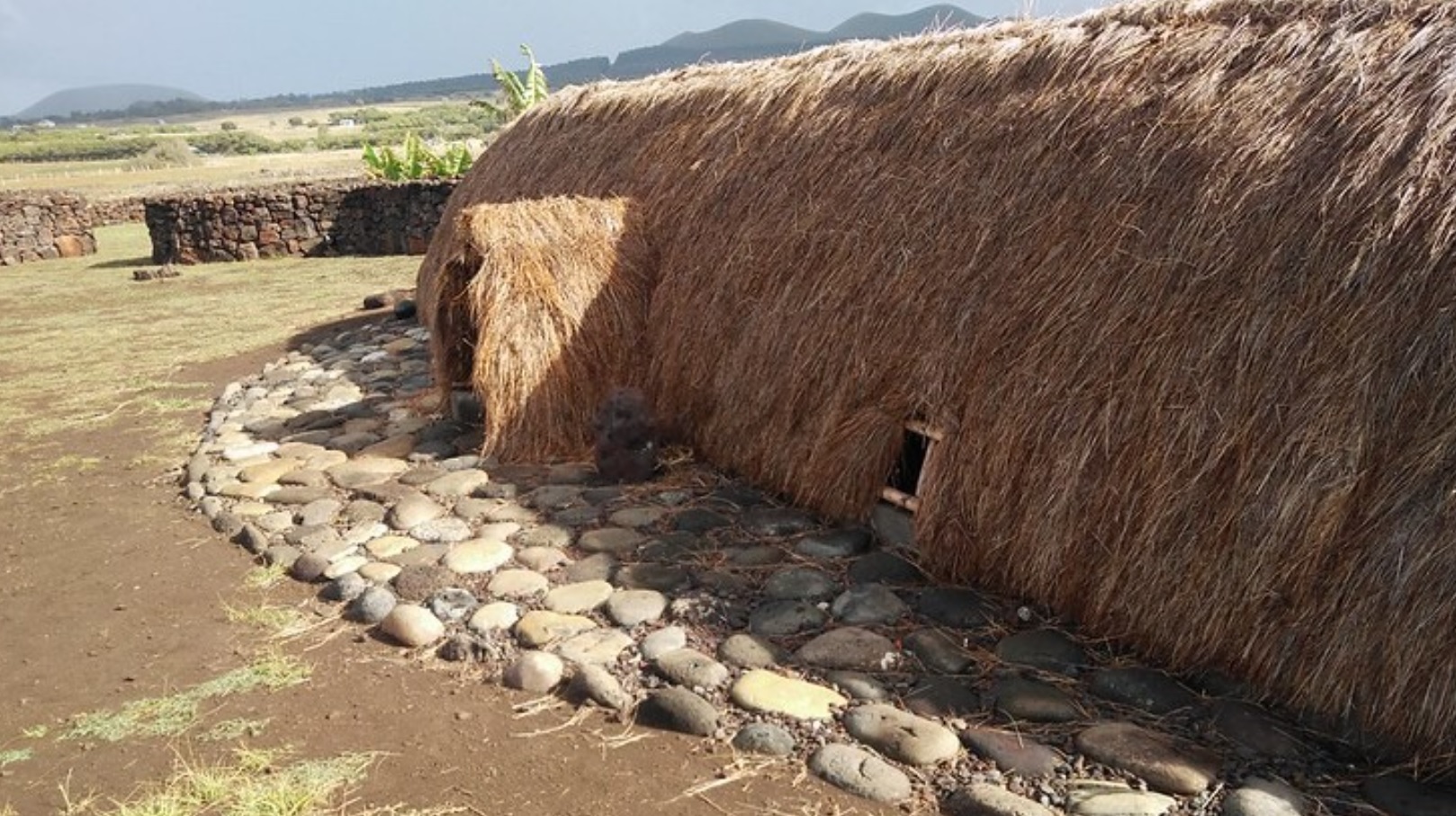
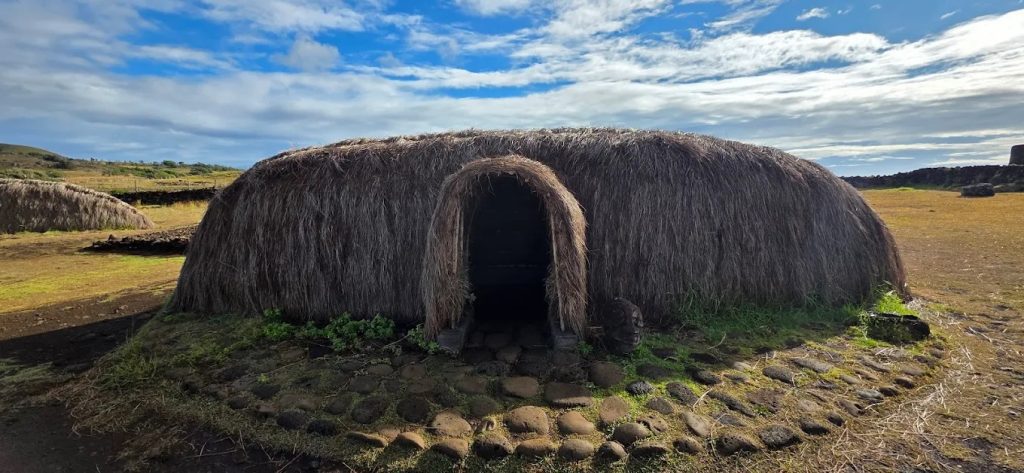
Today, some archaeological remains can still be found scattered across the island, while interpretive sites like Puku Manu Mea allow us to imagine what these dwellings looked like centuries ago.
What Does Hare Paenga Mean?
In the Rapanui language, hare means “house”, while paenga has different meanings associated both with the carved stones that formed the house foundations and with the idea of extended family or lineage.
For this reason, Hare Paenga can be interpreted as:
- “House built on carved stones”
- or “family house”
Over time, researchers and travelers began referring to them as “boat houses” because of their distinctive shape, similar to the inverted hull of a Polynesian canoe.
Why Were Hare Paenga Shaped Like Boats?
The shape of the Hare Paenga was not accidental. Navigation played a fundamental role for the ancient Polynesian peoples who reached Rapa Nui after crossing enormous distances across the Pacific Ocean.
Several researchers have linked the architecture of these homes to the double-hulled canoes used by Polynesian navigators. Some theories even suggest that the first dwellings may have been directly inspired by overturned canoes used by the island’s earliest settlers.
Their design also had practical advantages:
- better resistance to the island’s constant winds,
- improved rainwater drainage,
- and better heat retention inside the structure.
On an isolated, windy island exposed to the ocean, this architecture made sense both culturally and functionally.
What Did the Ancient Boat Houses of Rapa Nui Look Like?
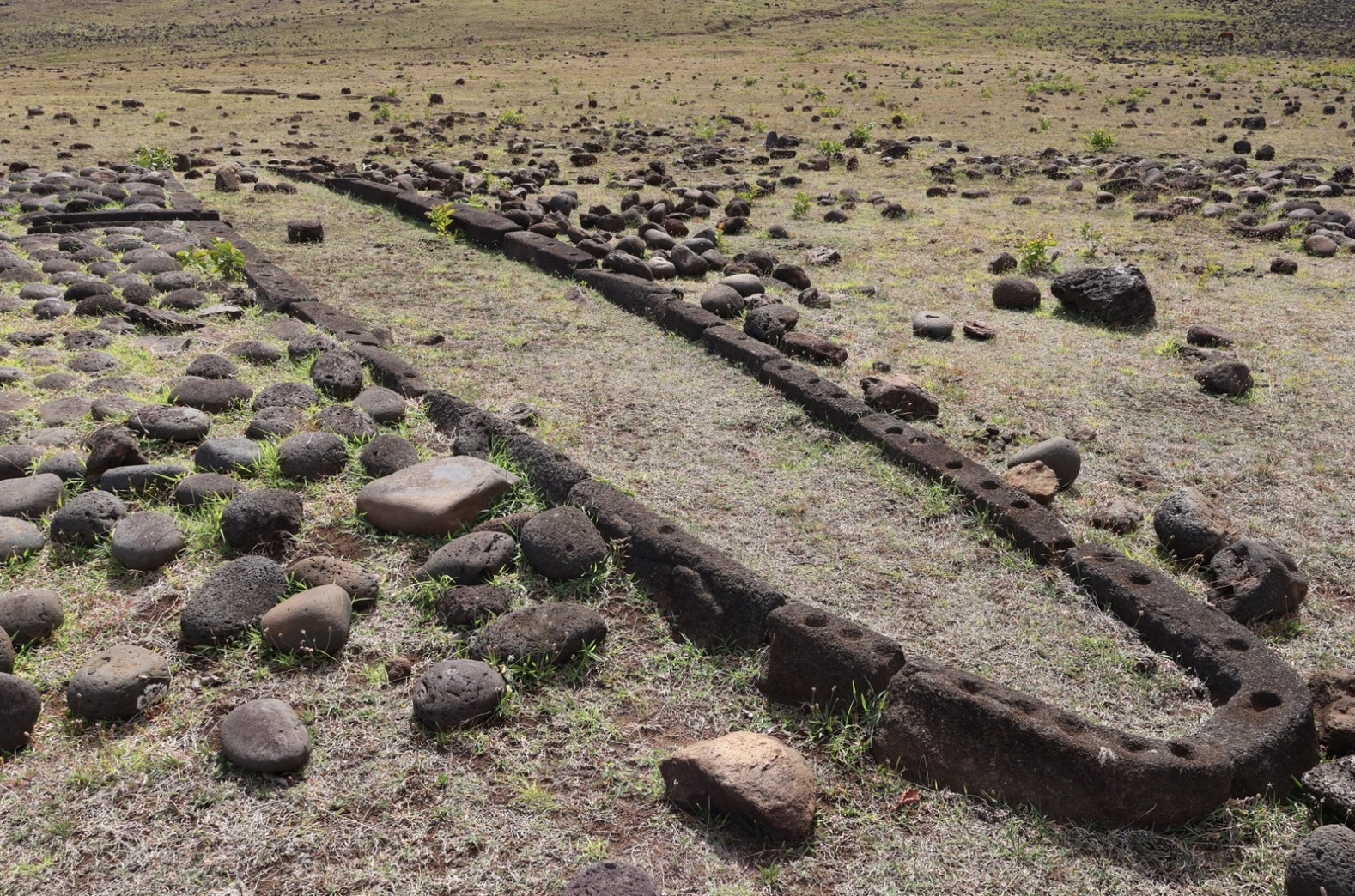
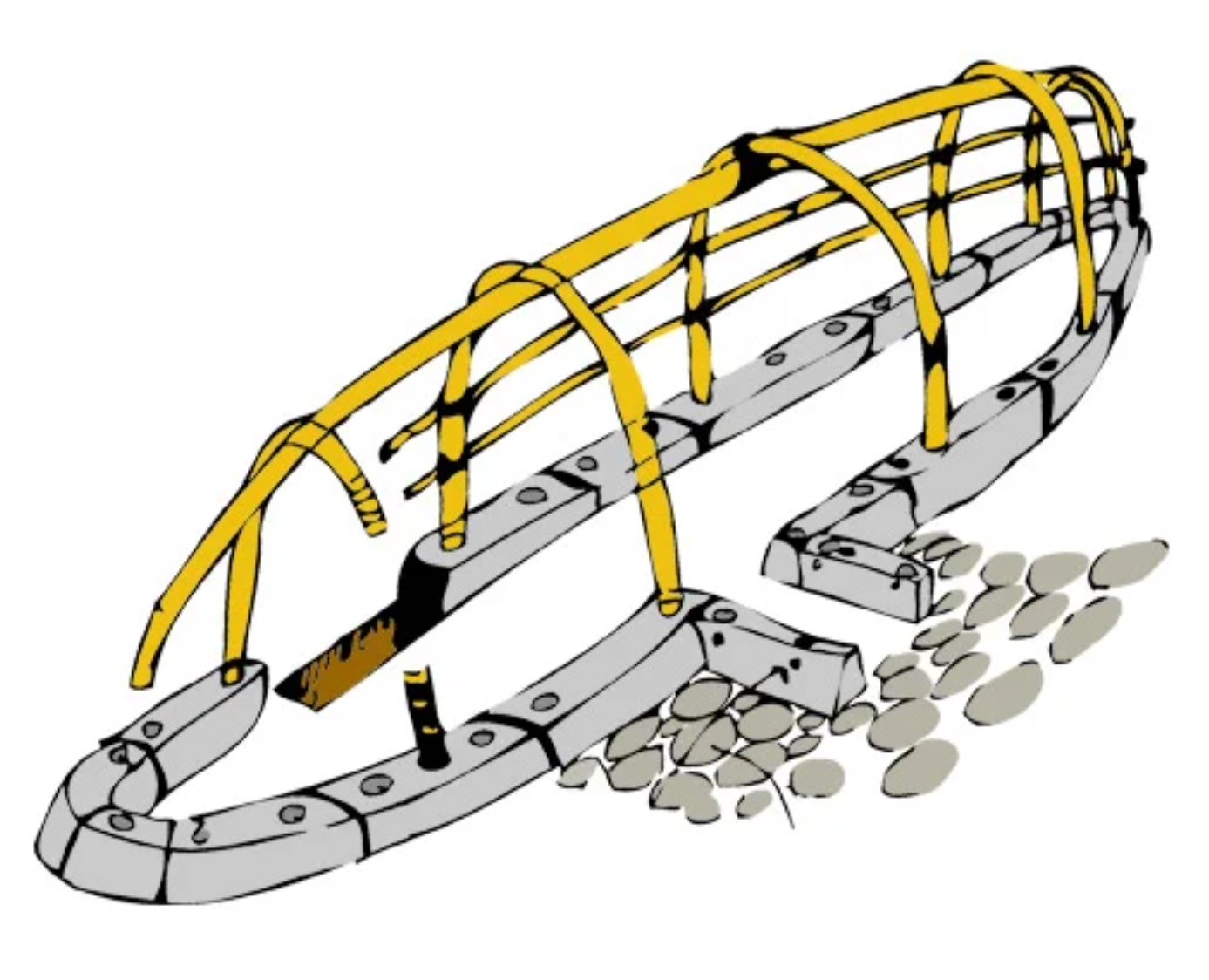
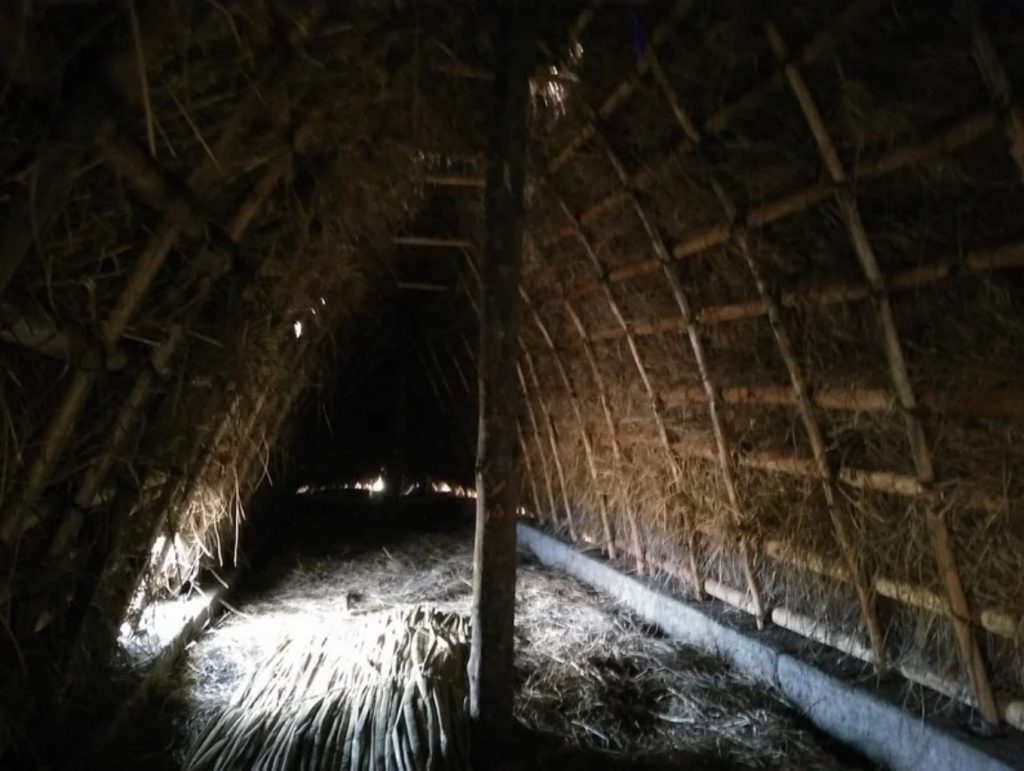
Hare Paenga were built on long basalt stones called paenga, carefully shaped and partially buried into the ground. These stones contained holes where wooden posts were inserted to create the curved roof structure.
The entire structure was then covered with natural materials such as:
- Totora reeds
- plant fibers
- sugar cane leaves
- and dry grass
The houses were low and elongated, usually between 12 and 16 meters long, although some ceremonial structures called hare nui could be significantly larger.
One of their most striking features was the extremely small entrance: so low that people had to crawl or deeply bend to enter. Some archaeologists believe this helped preserve interior temperature while reinforcing the symbolic feeling of entering a different space.
Who Lived in the Hare Paenga?
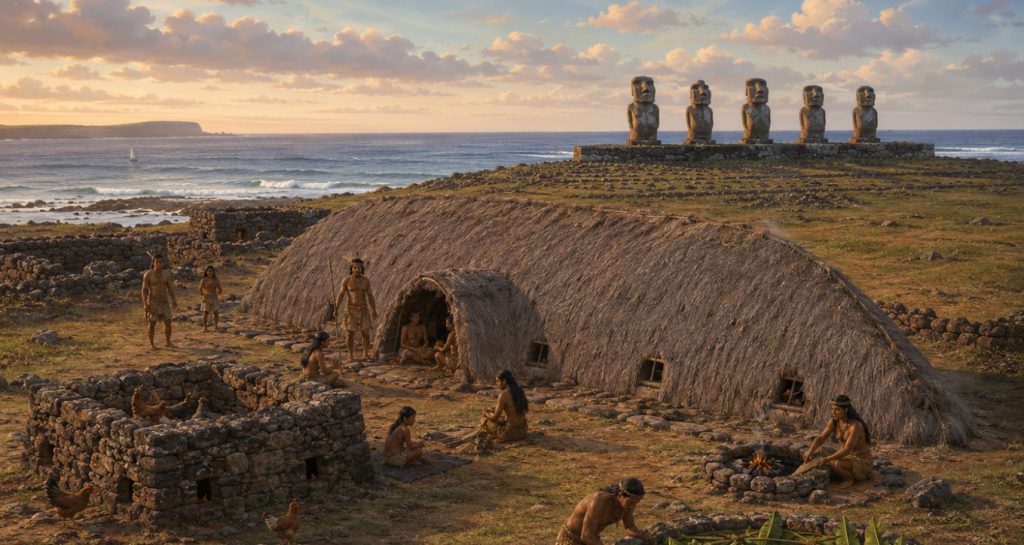
Hare Paenga were not simple common houses. Many were associated with ceremonial sectors near the ahu platforms and likely belonged to high-ranking families, priests, or important leaders of Rapanui society.
In places such as Tahai, historical and archaeological records show that these homes coexisted alongside ceremonial platforms, stone chicken houses (hare moa), Polynesian earth ovens (umu pae), and water reservoirs (taheta).
This demonstrates that ancient Rapanui settlements were complex spaces where daily life, spirituality, and social organization coexisted closely together.
Where Can You See Hare Paenga in Rapa Nui?
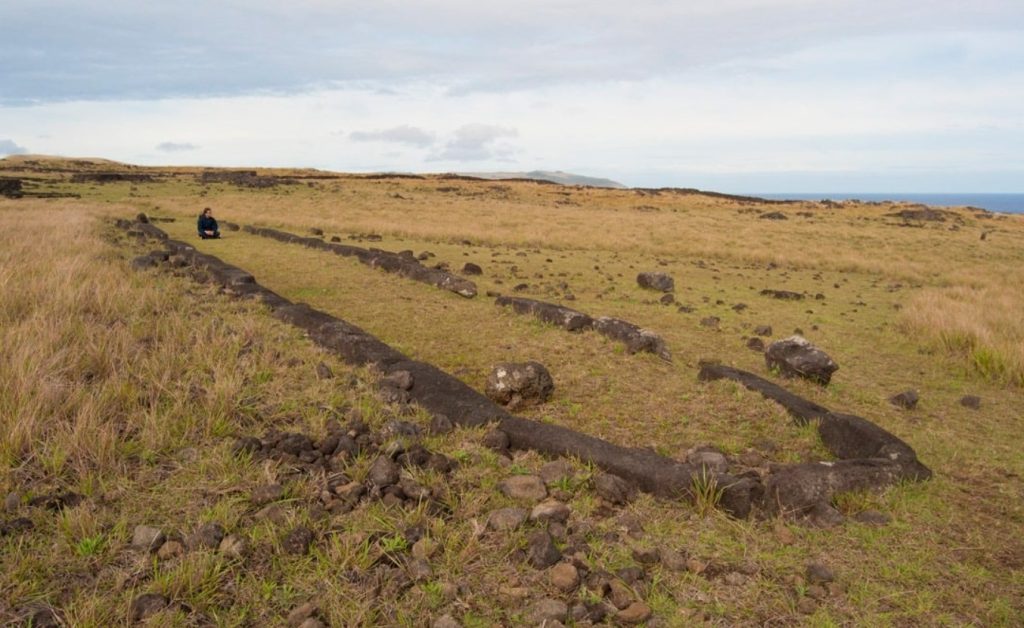
Today, numerous archaeological remains of Hare Paenga can still be found across the island. In most cases, what remains visible are their stone foundations.
Some of the best-known sites where they can be seen include:
- Ahu Akahanga
- Tahai
- Vaihu
- Tepeu
At Tepeu, archaeologists documented one of the largest Hare Paenga ever recorded, measuring approximately 45 meters long.
Visiting a Hare Paenga at Puku Manu Mea
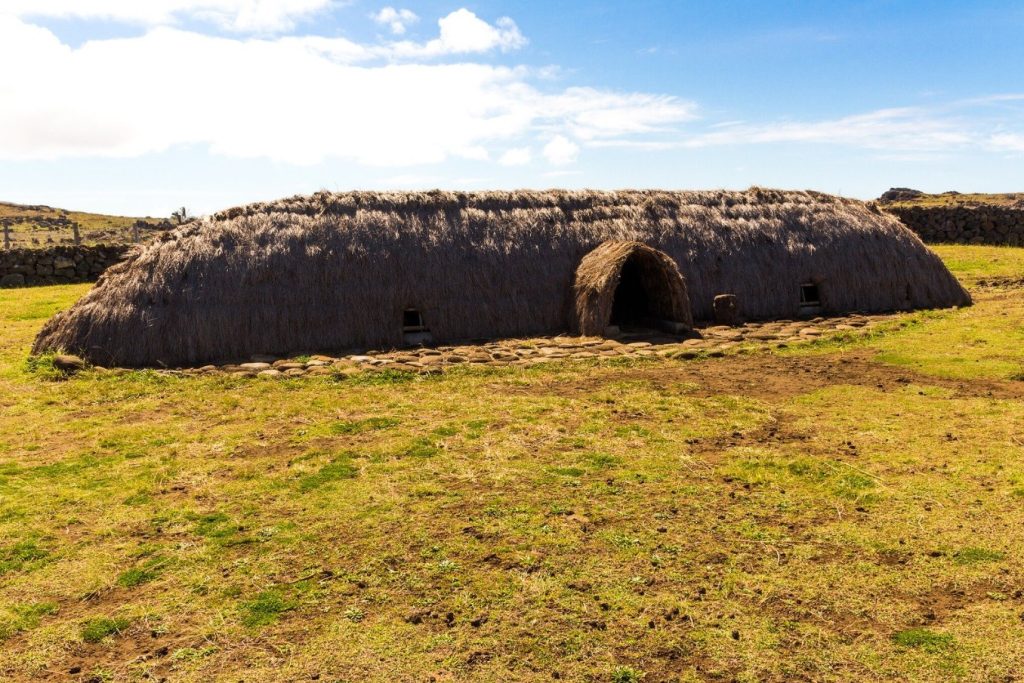
One of the most interesting places to understand what these homes looked like is the interpretive village of Puku Manu Mea, located in Vaihu.
Here, visitors can explore reconstructions that help visualize:
- what these structures originally looked like
- how interior spaces were organized
- and what daily life may have been like for the island’s ancient inhabitants
Visiting this interpretive center in Rapa Nui reveals that ancient islanders did not only focus their monumental culture on the moai, but also developed a society deeply connected to navigation, nature, and communal life.
Archaeological Studies About Hare Paenga
Hare Paenga have been studied for decades by local and international archaeologists interested in understanding Rapanui architecture and social organization.
Researchers from institutions such as University College London and specialists in Polynesian archaeology have analyzed:
- their distribution across the island
- their dimensions
- their orientation
- and their relationship with ceremonial centers
Some studies have even explored the sensory experience of inhabiting these dark, enclosed structures, interpreting them as spaces with strong symbolic and spiritual meaning within the ceremonial landscape of Rapa Nui.
Hare Paenga represent an essential part of Rapanui cultural identity. They speak of navigation, adaptation, hierarchy, community, and connection with the environment.
And although today only their stone foundations or interpretive reconstructions remain, they still communicate something powerful: the ability of an isolated culture in the middle of the Pacific Ocean to develop a unique architecture fully adapted to its territory and way of life.
If you want to experience this side of Rapa Nui beyond the Moai, our private tours take you through places like Tahai, Akahanga, Vaihu and Tepeu, where the ancient Hare Paenga or boat-houses still form part of the island’s landscape and living history.
Accompanied by local guides, you’ll understand how ancient Rapa Nui people lived, how their villages were organized, and why these structures remain so important within our culture.
Exploring Rapa Nui with us allows you to learn through history how a people of navigators adapted to one of the world’s most remote and isolated places.
Learn more: